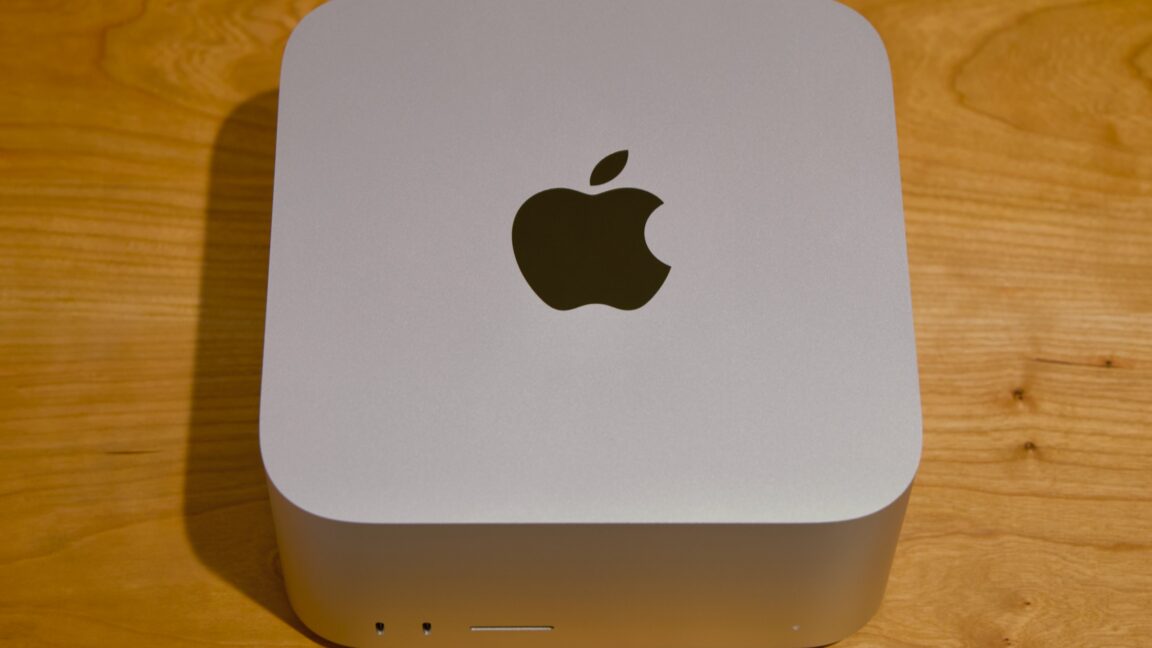
The landscape of high-end professional computing has shifted permanently with the arrival of the M5 Ultra Mac Studio. For decades, the pinnacle of the Mac lineup was defined by the tower—a modular, expandable beast that allowed users to swap components at will. However, Apple has now signaled the definitive end of that era, retiring the Mac Pro in favor of a compact, integrated powerhouse. This transition is not merely a change in form factor; it represents a fundamental shift in how professionals interact with hardware, particularly in the emerging field of local artificial intelligence and “vibe coding.”
What happened
Apple has officially discontinued the Mac Pro, marking the end of the traditional expandable tower in its lineup. In its place stands the M5 Ultra Mac Studio, a machine that prioritizes the efficiency of unified architecture over the modularity of the past. While the Mac Studio’s design remains familiar, the internal capabilities of the M5 Ultra chip have reached a threshold where local AI execution is not just possible, but fluid.
The centerpiece of this hardware evolution is its ability to facilitate “vibe coding”—a workflow where developers use natural language and local Large Language Models (LLMs) to generate and iterate on code rapidly. By leveraging the massive unified memory pool of the M5 Ultra, users can run sophisticated AI models entirely on-device, bypassing the latency and privacy concerns associated with cloud-based development tools.
Context
The death of the Mac Pro was perhaps inevitable once Apple transitioned away from Intel processors and AMD graphics cards. In the old ecosystem, the ability to add PCIe cards and extra RAM was essential because those components functioned as discrete units. Apple Silicon changed those rules by bringing the CPU, GPU, and memory interface under a single, highly efficient umbrella.
When every component is integrated into the “system on a chip” (SoC), the bottlenecks associated with moving data across a motherboard are virtually eliminated. This integration is precisely why a compact Mac Studio can now outperform a massive tower from five years ago. For the M5 Ultra, the focus has shifted toward maximizing memory bandwidth and neural engine performance. This makes the machine uniquely suited for the current AI boom, where the primary constraint for running large models is often the speed and capacity of available RAM.
Why it matters
The retirement of the Mac Pro and the rise of the M5 Ultra Mac Studio signal a new priority for Silicon Valley: the democratization of local AI. For a long time, running high-parameter LLMs required expensive server-grade GPUs or complex cloud subscriptions. The M5 Ultra changes the math by providing a consumer-accessible (though expensive) platform that handles these workloads locally.
This matters for two reasons. First, it addresses the growing demand for data privacy. Developers can feed proprietary codebases into local AI models without fear of their data being used to train third-party systems. Second, it fundamentally changes the “vibe” of development. When the feedback loop between an idea and a working prototype is shortened by high-performance local hardware, the barrier to entry for complex software creation drops significantly.
While the price point remains a significant hurdle for many, the M5 Ultra Mac Studio proves that Apple’s bet on integrated architecture has paid off. The era of the modular tower is over, replaced by a new age where performance is defined by how well a single chip can simulate a human-like coding partner.