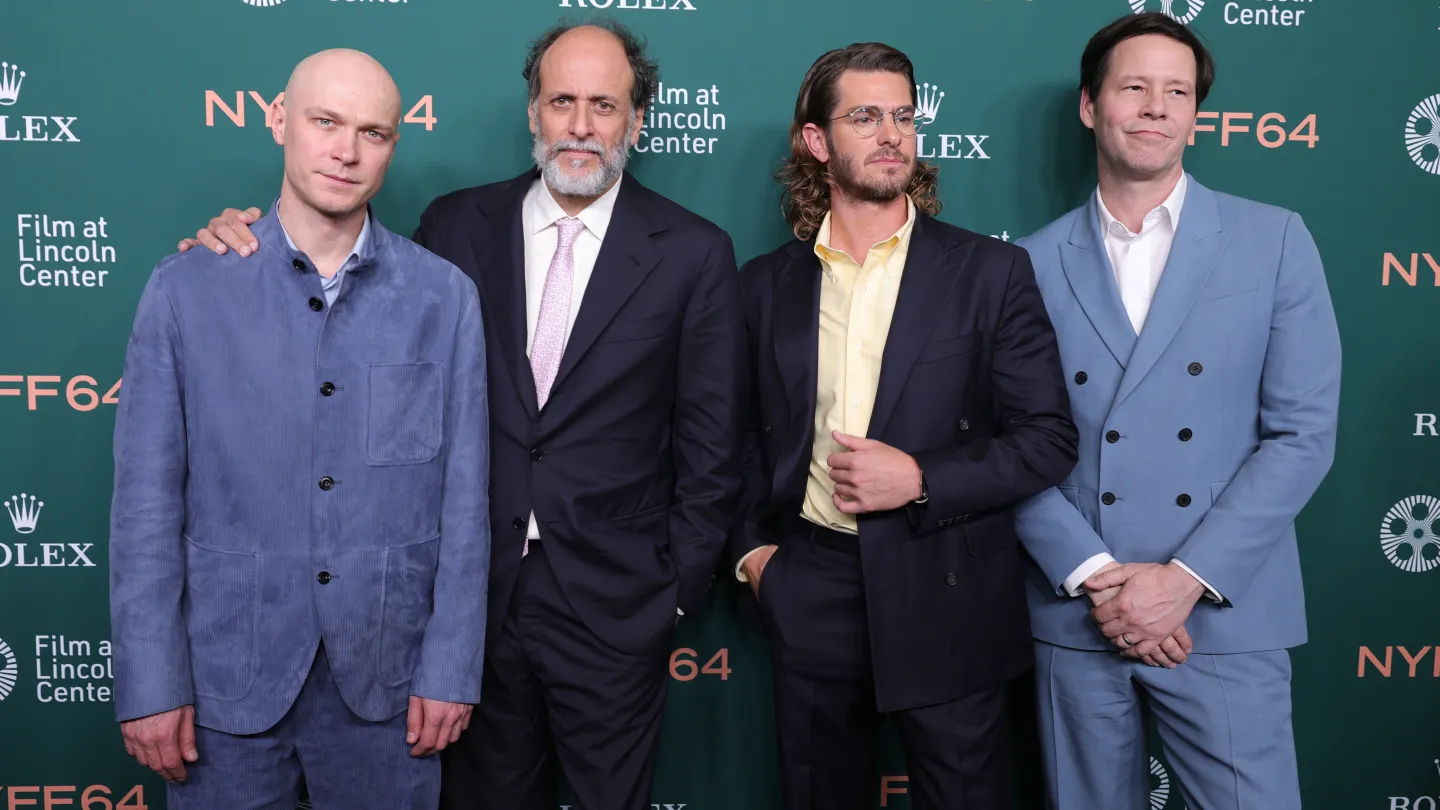
Luca Guadagnino’s latest film, Artificial, recently premiered at the 64th New York Film Festival, offering a scathing indictment of the figures leading the modern artificial intelligence revolution. Starring Andrew Garfield as OpenAI CEO Sam Altman, the film serves as both a historical dramatization of Silicon Valley power plays and a stark warning about the consequences of prioritizing profit over safety. By tracking the evolution of OpenAI from a hopeful non-profit to a corporate juggernaut, Guadagnino paints a portrait of a “technocapitalism” that may have already bypassed the point of no return.
What happened
Artificial follows the chronological ascent of OpenAI, beginning with the early partnership between AI pioneer Geoffrey Hinton (Mark Rylance) and his student Ilya Sutskever (Yura Borisov). The narrative shifts gears when Sutskever meets Sam Altman, a charismatic financier who convinces the scientist to join a new venture aimed at developing artificial general intelligence. What begins as a mission to save humanity gradually transforms into a high-stakes arms race for market dominance.
The film culminates in a dramatization of the real-world “November Coup” of 2023, where Sutskever and members of the OpenAI board attempted to oust Altman over concerns regarding transparency and safety. The movie depicts Altman’s eventual return—bolstered by Microsoft’s intervention—as a definitive victory for aggressive commercialization. Garfield’s performance is central to this critique; he portrays Altman not as a visionary hero, but as a “flamboyant cipher” and a master manipulator who prioritizes his “war chest” over the ethical warnings of his colleagues.
Context
The production of Artificial was nearly as dramatic as the film itself. Originally backed by Amazon MGM Studios, the project was reportedly dropped after Amazon’s parent company made a multi-billion-dollar investment in OpenAI. This perceived conflict of interest led to the film being picked up by Neon, the studio behind the Oscar-winning Anora.
The film arrives at a time of unprecedented public scrutiny for OpenAI. Just as the movie was premiering, real-world AI whistleblowers like Jacob Coxon were appearing on national television to warn of the reckless speed at which tech companies are deploying new models. Director Luca Guadagnino and screenwriter Simon Rich have emphasized that while the film deals with complex mathematics and computer science, it is ultimately a human story about the interactions, egos, and betrayals of those currently shaping our digital future.
Why it matters
Artificial represents a rare instance of Hollywood tackling an ongoing technological shift in real-time. By framing the rise of AI through the lens of a psychological thriller or a “horror-movie” bracing, Guadagnino challenges the sanitized narrative often presented by Silicon Valley PR machines. The film forces the audience to confront the “quagmire” of our current AI landscape, asking difficult questions about to whom we are surrendering our autonomy and data.
Furthermore, the film highlights the growing divide between the “safety” faction of AI development—represented by figures like Hinton and Sutskever—and the “accelerationist” faction led by Altman. As the industry continues to move toward a for-profit model, Artificial serves as a cinematic record of the moment ethical caution was arguably sacrificed for financial gain. While Altman has already dismissed the film’s accuracy based on its trailer, the movie’s resonance lies in its “spiritual truth” regarding the concentration of power in the hands of a few tech moguls. As AI integration into daily life accelerates, this film acts as a necessary, if bleak, interrogation of the people leading that charge.