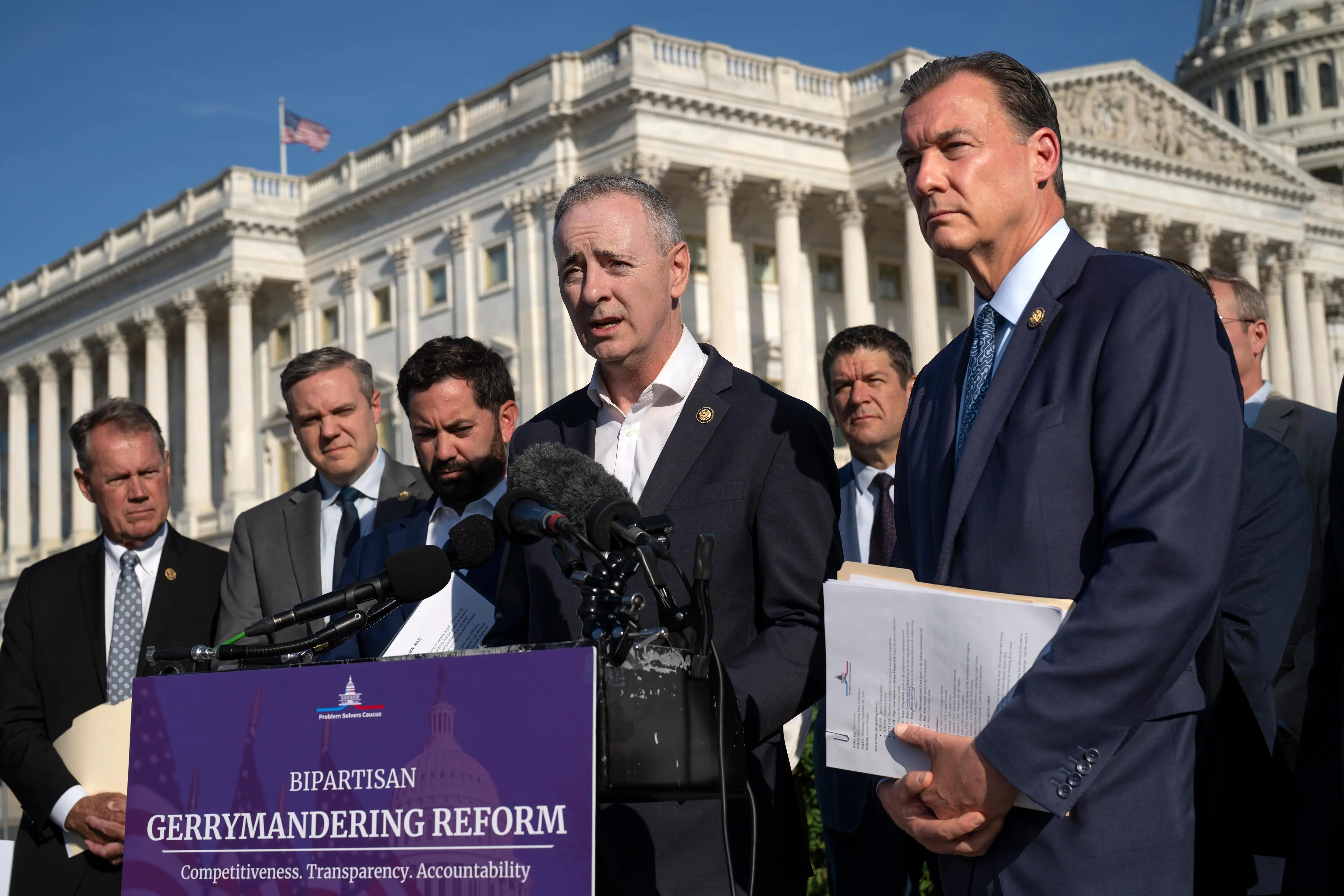
In the highly contested suburbs of Philadelphia, Republican Congressman Brian Fitzpatrick is once again testing the limits of political independence. As a rare GOP incumbent representing a district that favored the Democratic ticket in recent presidential cycles, Fitzpatrick’s survival has long depended on his ability to distance himself from the more polarizing elements of his party. However, as the midterms approach, a shifting electorate and a well-known Democratic challenger are making that balancing act more difficult than ever.
What happened
As the race for Pennsylvania’s 1st Congressional District intensifies, Fitzpatrick is facing pressure from both ends of the political spectrum. Some traditional Republican voters, weary of the national party’s direction and the influence of former President Donald Trump, are beginning to look elsewhere. One such voter is Mary Ryan, a registered Republican who has historically supported Fitzpatrick but now plans to vote for his Democratic opponent, Bob Harvie.
Harvie, a former social studies teacher and a twice-elected county commissioner, is positioning himself as a candidate who can restore trust in government institutions. He argues that the current political climate has turned neighbors into enemies and that a change in leadership is necessary to protect the foundations of the country. For his part, Fitzpatrick continues to emphasize his role as a moderate arbiter in a divided Washington, though some constituents remain skeptical that he can truly remain independent from his party’s leadership.
Context
Fitzpatrick’s political career has been defined by his status as a “survivor.” The 1st District is a quintessential swing area; it backed Joe Biden in 2020 by five points and leaned toward Kamala Harris in 2024. Despite this Democratic tilt at the top of the ticket, Fitzpatrick has consistently outperformed the national GOP. In 2024, he secured his seat by 13 percentage points, even as the district narrowly went for Harris.
To maintain this crossover appeal, Fitzpatrick has frequently broken ranks with his party on high-profile issues. He has voted against signature Republican tax legislation, opposed tariffs, and supported measures to limit presidential authority regarding military action in Iran. Most recently, he notably avoided attending a high-profile Republican convention in Dallas. This track record has led some political analysts to compare Democratic efforts to unseat him to “Charlie Brown trying to kick the football”—a recurring effort that has yet to yield a different result.
Why it matters
The outcome of this race carries significant implications for the balance of power in the U.S. House of Representatives. With Republicans holding a slim majority, every moderate seat is a vital defensive point. Fitzpatrick represents one of the few remaining “purple” districts where a Republican can still win by appealing to the center.
However, the current economic and social climate presents new hurdles. While Fitzpatrick attempts to focus on local issues and his independent voting record, national factors—such as fluctuating fuel prices and the approval ratings of national leaders—often dictate voter behavior in midterm cycles. If voters like Mary Ryan continue to defect because of their dissatisfaction with the broader GOP brand, Fitzpatrick’s historical resilience will be put to its toughest test yet. The race serves as a bellwether for whether a moderate identity can still shield a candidate from the intense polarization currently defining American politics.