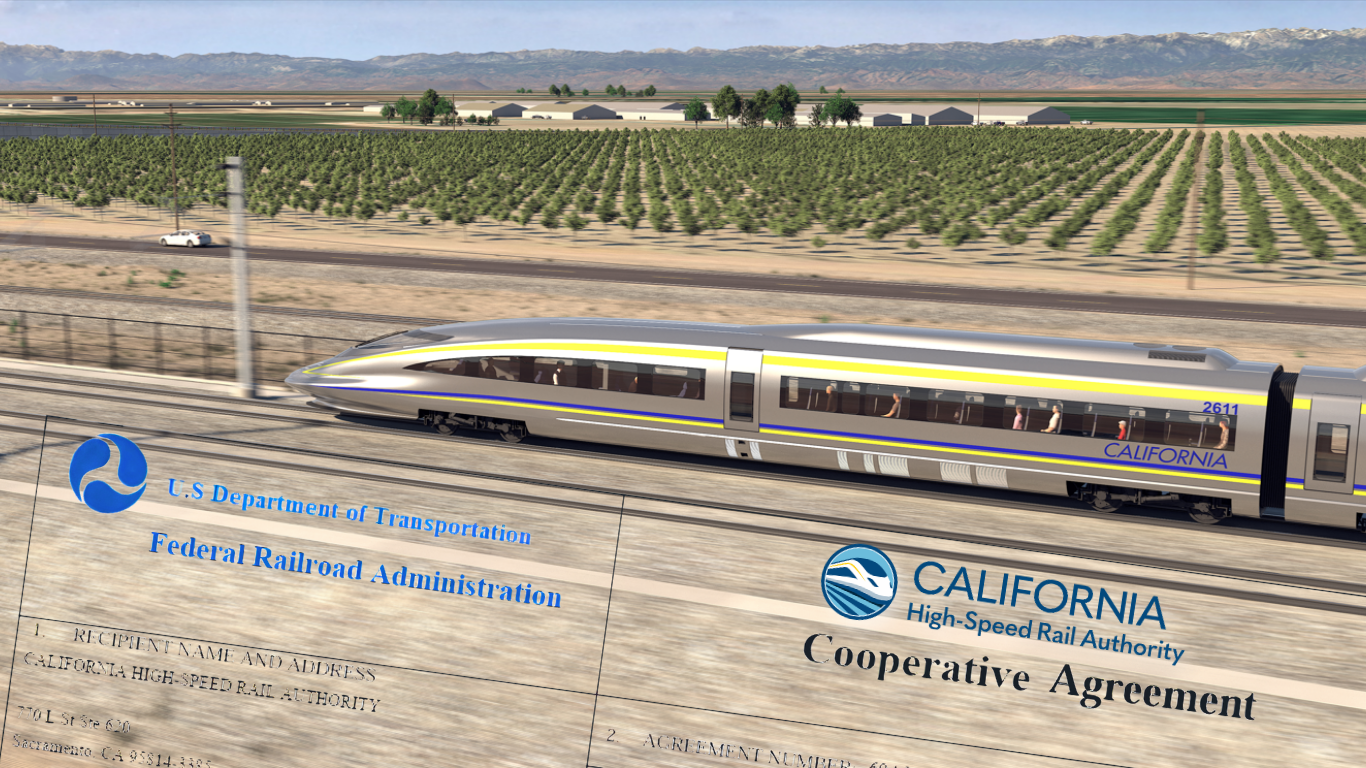
California’s ambitious high-speed rail project has hit a significant roadblock following the loss of $4 billion in federal funding. While state officials initially framed the funding withdrawal as a politically motivated maneuver, a recent investigation reveals that the California High-Speed Rail Authority repeatedly failed to meet critical deadlines for purchasing trainsets. These failures, compounded by a lack of tangible progress on the ground, led federal officials to conclude that the project no longer presented a viable path toward its stated goals.
What happened
The loss of $4 billion in federal support traces back to a series of missed milestones regarding the procurement of the actual trains. According to grant agreements established during the Biden administration, California was required to finalize a contract for its trainsets by the end of 2024. When that deadline passed without action, federal officials under the subsequent administration moved to terminate the funding, citing a failure to deliver on promised results.
In response, California Governor Gavin Newsom and Attorney General Rob Bonta filed a lawsuit to block the funding cut, characterizing the move as an attempt to punish the state. To bolster their case, the rail authority assured a federal judge in sworn filings that a contract would be signed by December 1, 2025. However, that second deadline was also missed after the authority abruptly canceled the board meeting intended for the contract’s approval. Weeks later, the state quietly dropped its lawsuit without public explanation, while the timeline for purchasing the trains remains listed as “to be determined.”
Context
The vision for California’s high-speed rail began in 2008, when voters approved a bond to build a system connecting Los Angeles and San Francisco. The original promise was an electric rail line capable of speeds up to 220 mph, shortening a grueling 10-hour-plus journey to under three hours. However, sixteen years and $15 billion later, the project’s scope has been dramatically narrowed.
Current efforts are focused exclusively on a 171-mile segment in the Central Valley, stretching from Merced to Bakersfield. This “middle section” was chosen to avoid the high costs and engineering complexities of tunneling through mountain ranges. Despite the simplified route and massive expenditures, federal officials pointed out that the state had failed to lay any actual tracks. Transportation Secretary Sean Duffy emphasized that federal grants are contingent upon performance, arguing that the project had transformed from a statewide network into a localized line that might only “connect two random endpoints” rather than major metropolitan hubs.
Why it matters
The loss of $4 billion represents more than just a budgetary shortfall; it highlights a growing crisis of confidence in the management of one of the nation’s largest infrastructure projects. For taxpayers, the “TBD” status of the train procurement is particularly concerning given that service was projected to begin by 2033. Without the rolling stock, the massive investments in bridges and viaducts in the Central Valley remain unusable.
Furthermore, the state’s decision to drop its lawsuit shortly after missing a court-promised deadline suggests an admission of administrative failure. If the High-Speed Rail Authority cannot meet procurement deadlines even under the pressure of a federal lawsuit and the threat of losing billions, the long-term viability of the project comes into question. As the state moves forward without the $4 billion and without a clear date for acquiring trains, the dream of a high-speed link between California’s largest cities remains as distant as ever.