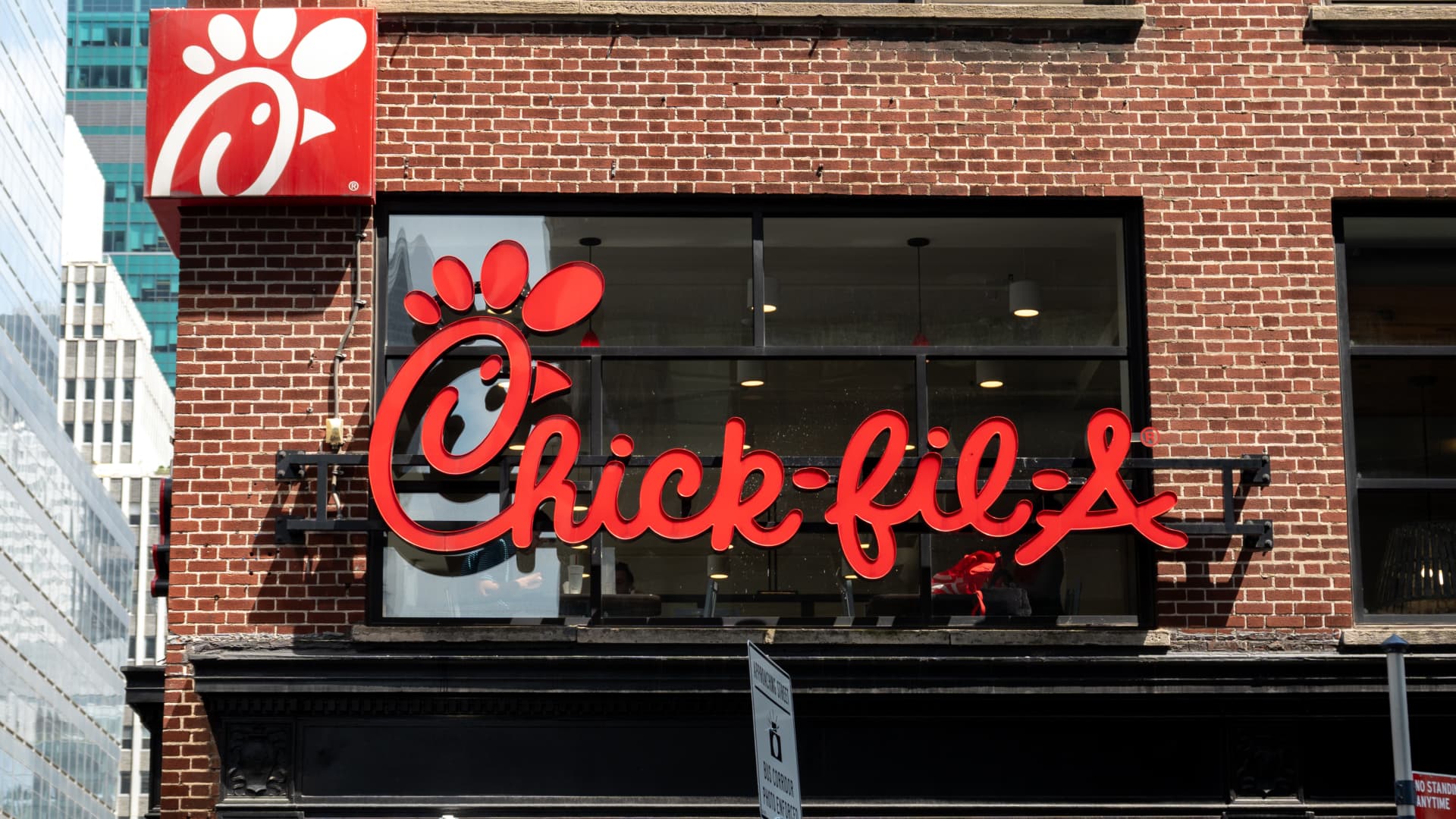
Since taking the helm nearly five years ago, Andrew Cathy has guided Chick-fil-A through a period of significant transition and record-breaking financial success. While the Atlanta-based company remains deeply rooted in the values established by founder S. Truett Cathy, the third-generation leader is steering the brand toward a massive global footprint. From its traditional strongholds in the American Southeast to new ventures in Singapore and the United Kingdom, the chain is managing to outperform its largest competitors even as the broader restaurant industry grapples with shifting consumer habits and economic pressures.
What happened
Despite a volatile economic climate, Chick-fil-A continues to see robust growth. According to recent franchise disclosures, the company’s revenue surged 14% to reach $10.3 billion in 2025, with net income rising to $1.05 billion. With roughly 3,000 locations, the brand generated nearly $24 billion in system-wide sales last year. This performance has solidified its position as the third-largest restaurant chain in the United States by sales, trailing only McDonald’s and Starbucks.
CEO Andrew Cathy recently reaffirmed that despite this massive scale, the company has no intention of pursuing an initial public offering or seeking outside investors. Instead, the firm is doubling down on a “calculated” expansion strategy. This includes the opening of 179 new restaurants in the last year alone and a $1 billion commitment to international growth. Beyond its core chicken sandwich offerings, the company is also experimenting with new concepts, such as Daybright, a beverage-focused restaurant designed to capture a different segment of the fast-casual market.
Context
Andrew Cathy succeeded his father, Dan Cathy, during a period of high inflation and increased competition in the “chicken wars” segment. While many major fast-food players like KFC, Popeyes, and McDonald’s have reported sluggish traffic and disappointing quarterly results, Chick-fil-A appears to be bucking the trend. Cathy attributes this resilience to the company’s focus on service fundamentals and “hospitality,” a core tenet of the brand’s identity.
The decision to remain a private, family-owned entity provides a distinct competitive advantage in the current market. Many publicly traded restaurant stocks have struggled recently, with some new entries seeing double-digit declines shortly after their market debuts. By avoiding the pressures of Wall Street, Chick-fil-A is able to prioritize long-term stability over short-term quarterly expectations. Cathy notes that the company’s governance structure allows them to plan for the next twenty-five years rather than focusing solely on the next three months.
Why it matters
The success of Chick-fil-A serves as a case study in balancing tradition with modernization. While the company maintains its famous policy of remaining closed on Sundays, it is simultaneously evolving its operational model. This includes a “human plus” approach to technology, where digital tools are used to enhance rather than replace the personal interaction the brand is known for.
Furthermore, Cathy’s leadership philosophy emphasizes a forward-looking mindset. He likens managing the business to driving a high-performance vehicle, suggesting that while it is essential to be grounded in the company’s historical mission, the focus must remain on the larger opportunities ahead. As the brand continues its international push into Canada, Europe, and Asia, its ability to maintain its signature service culture in diverse markets will be the ultimate test of its “conservative” yet ambitious growth strategy. For the industry at large, Chick-fil-A’s ability to drive traffic in a cooling economy suggests that consumers are still willing to spend, provided the value and experience meet their rising expectations.