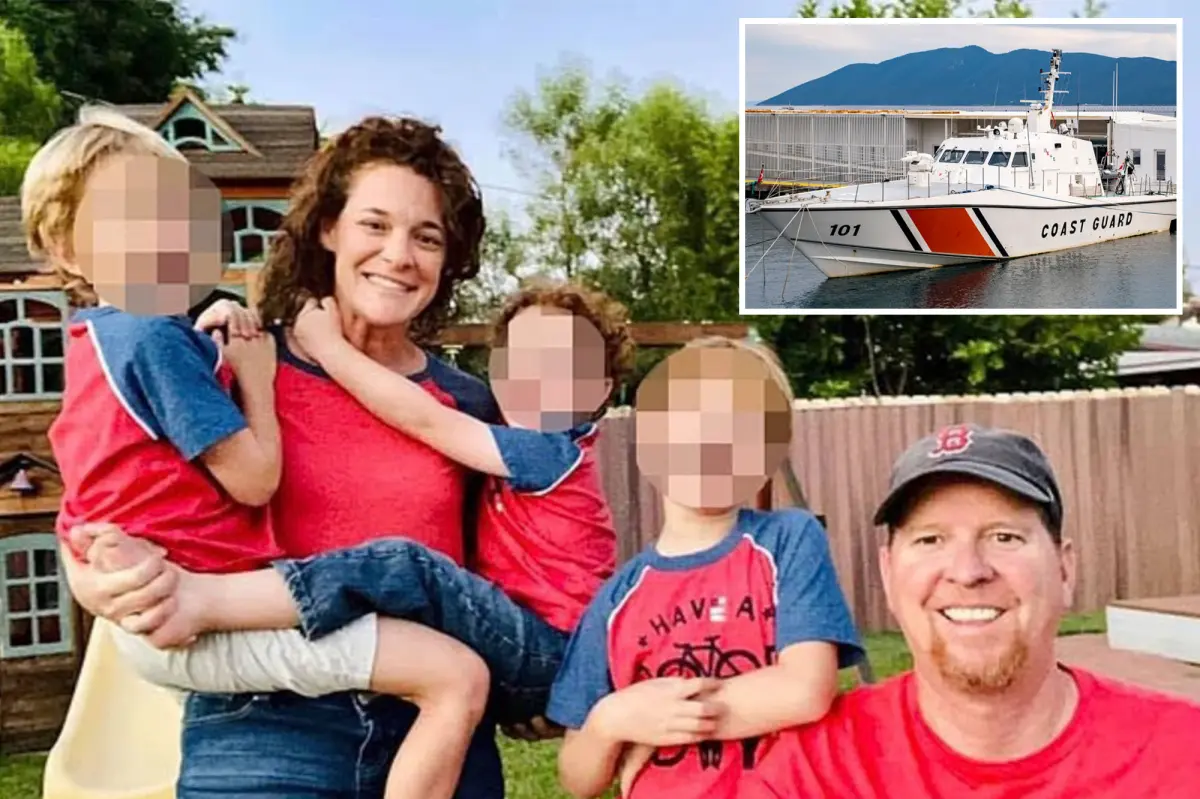
The search for a California father who went missing from a cruise ship near the Mexican coast has been officially suspended. Thomas Gigler, a 56-year-old resident of Redlands, is now presumed dead following an intensive multi-day operation by maritime authorities. The tragic incident occurred during what was meant to be a celebratory anniversary voyage, leaving a family and a community in mourning as federal officials conclude their active rescue efforts.
What happened
The U.S. Coast Guard announced the suspension of search operations on Wednesday after failing to locate Gigler in the waters off the coast of Mexico. The incident began late Friday night or early Saturday morning as the Carnival Panorama was navigating approximately 57 miles from land. According to official reports, Gigler was last seen on the vessel at roughly 11:30 p.m. on Friday. However, the ship did not report him missing to the Coast Guard’s Rescue Coordination Center in Alameda until approximately 1:30 p.m. the following afternoon.
In the wake of the report, a massive SAR (search and rescue) operation was launched. Over the course of 41 hours, crews from the United States and Mexico combed an area spanning more than 1,700 square miles of the Pacific Ocean. The response included multiple Coast Guard fixed-wing aircraft and a Mexican Navy vessel. Additionally, six “good Samaritan” ships—private or commercial vessels that were in the vicinity—assisted in the effort to find the missing passenger.
Despite the breadth of the search and the favorable coordination between international agencies, no sign of the 56-year-old was found. Captain Jessica Davila, the chief of incident management for the Coast Guard’s Southwest District, expressed the difficulty of the decision to halt the mission, extending condolences to Gigler’s family while noting that such choices are only made after an exhaustive review of all available data.
Context
Thomas Gigler was a well-established member of the Redlands community, located east of Los Angeles. He was a devoted father of three and a long-term professional in the tech industry, having served as a computer programmer for the geographic information system company Esri for 24 years. The cruise was intended to be a milestone celebration, as he and his wife, Michelle, were marking their wedding anniversary aboard the Carnival Panorama.
The ship was on a return leg of its itinerary, traveling from Puerto Vallarta back toward its home port in Long Beach, California. Carnival Cruise Line confirmed that the ship’s crew initiated an immediate internal investigation once the disappearance was noted. This included a comprehensive review of onboard surveillance footage to determine the timing and circumstances of Gigler going overboard. While the surveillance confirmed he had gone over the side of the ship, the specific details surrounding the event have not been publicly disclosed.
Why it matters
This incident highlights the inherent risks and logistical complexities associated with “man overboard” situations on large cruise vessels. While cruise lines have improved surveillance and safety protocols over the last decade, the vastness of the ocean and the time delay between an incident and its discovery often make successful rescues extremely difficult.
The coordination between the U.S. Coast Guard, the Mexican Navy, and the Automated Mutual-Assistance Vessel Rescue (AMVER) system demonstrates the international framework designed to respond to maritime emergencies. However, even with state-of-the-art technology and multiple aircraft, the window for survival in open water is limited, particularly when an individual is not immediately reported missing.
For the travel industry, such events serve as a somber reminder of the need for rigorous safety monitoring. For the family and colleagues of Thomas Gigler, the suspension of the search marks the end of a harrowing period of uncertainty and the beginning of a difficult grieving process for a man described as a pillar of his family and professional organization.