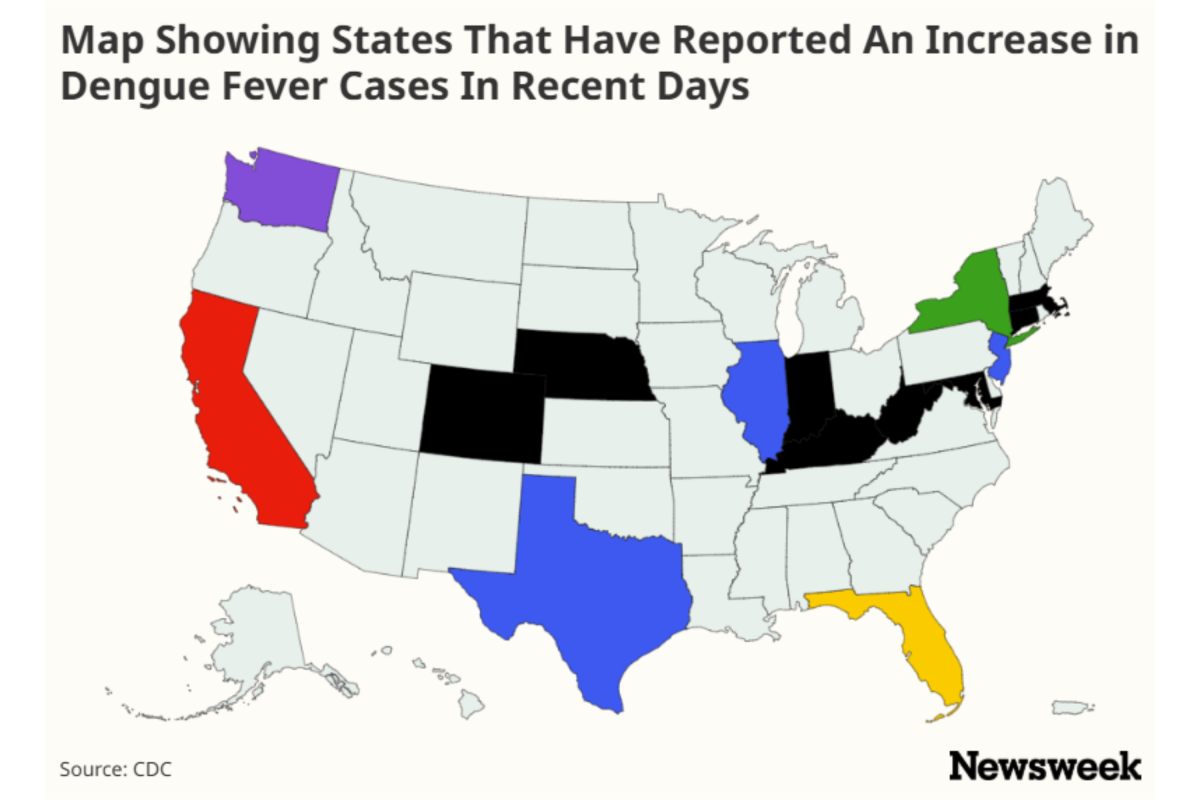
Recent data released by the Centers for Disease Control and Prevention (CDC) indicates a sharp rise in dengue fever infections across the United States. While the virus is typically associated with international travel to tropical regions, a significant outbreak in Florida has shifted the focus toward local transmission within the continental U.S. Health officials are now monitoring at least 15 states where case numbers have climbed, marking one of the most substantial increases in domestic dengue activity in decades.
What happened
According to the latest figures from the CDC, reported dengue fever cases have seen a notable uptick in several regions, with Florida serving as the primary driver of the national trend. In a short period, Florida’s confirmed cases jumped from 392 to 485, representing an increase of 93 infections. This surge is particularly concerning because a large portion of these cases are locally acquired, meaning the individuals were bitten by infected mosquitoes within the state rather than while traveling abroad.
The outbreak has been most concentrated in the Tampa Bay area, prompting local officials to issue emergency declarations in several counties to bolster mosquito control efforts. Beyond Florida, California reported the second-highest increase, with case counts rising from 31 to 45. In total, more than a dozen states have reported higher infection numbers since the previous update, signaling that the virus is becoming a broader national concern.
Context
Dengue fever is a viral illness spread to humans through the bite of an infected Aedes species mosquito, specifically Aedes aegypti and Aedes albopictus. These mosquitoes are common in tropical and subtropical climates but have established populations in many parts of the southern and coastal United States.
The typical cycle of transmission in the U.S. begins when a traveler returns from a region where dengue is endemic—such as parts of Latin America, Southeast Asia, or the Caribbean—while carrying the virus in their bloodstream. If a local mosquito bites that infected individual, the mosquito can then transmit the virus to other people in the community.
The symptoms of dengue fever often resemble a severe flu. Patients may experience high fever, intense headaches, pain behind the eyes, joint and muscle pain, nausea, and skin rashes. While many people experience mild symptoms or none at all, the virus can progress into severe dengue. This more dangerous form of the disease can lead to internal bleeding, organ failure, and a life-threatening drop in blood pressure known as shock.
Why it matters
The current situation in Florida represents the largest outbreak of its kind in the continental United States in several decades. The rise of locally acquired cases suggests that the virus has found a foothold in domestic mosquito populations, which complicates public health efforts to contain the spread.
Public health experts attribute the rising case counts to a combination of increased international travel and environmental factors that favor mosquito activity. As global travel returns to pre-pandemic levels, the frequency of “imported” cases increases, providing more opportunities for local transmission cycles to begin. Furthermore, the presence of the Aedes mosquito in more northern latitudes has expanded the geographic area at risk for potential outbreaks.
For the general public, this surge serves as a reminder of the importance of mosquito bite prevention. Health departments are urging residents in affected areas to drain standing water, use EPA-approved insect repellents, and wear protective clothing. As the CDC continues to track the spread across the 15 identified states, the focus remains on preventing the virus from becoming an endemic fixture in the American landscape.