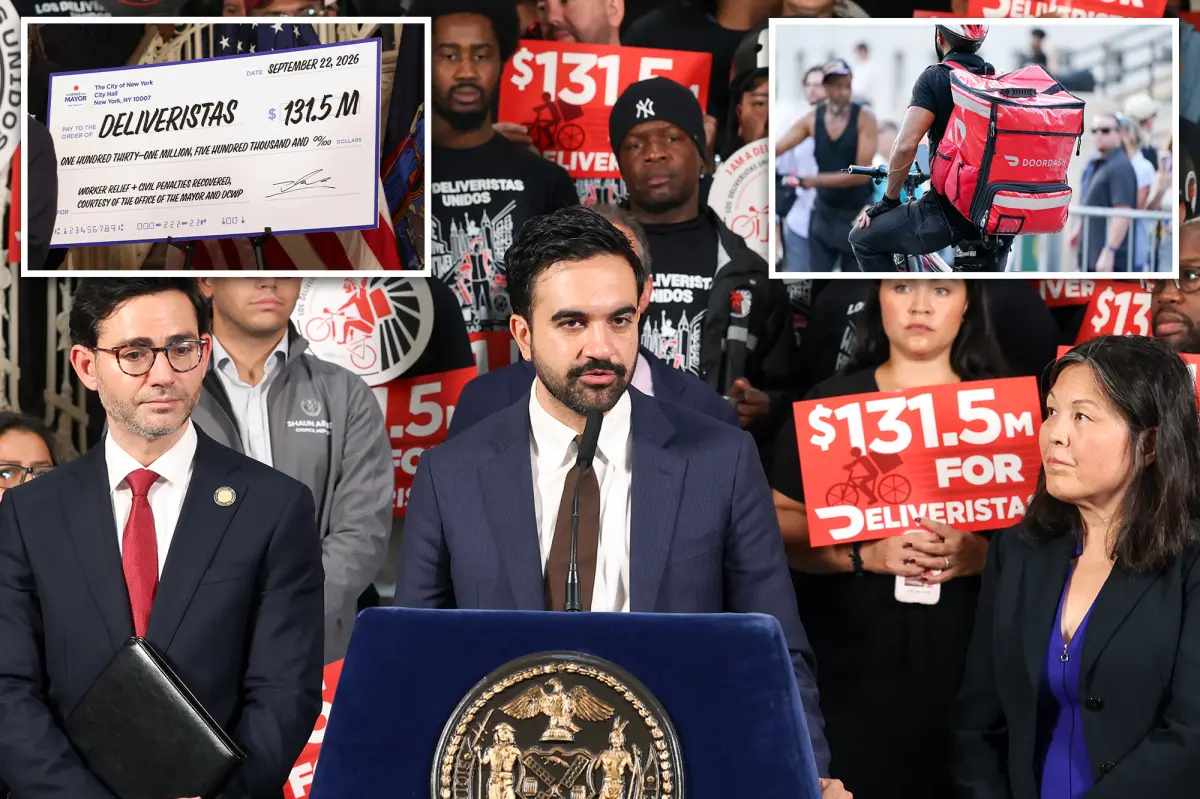
In a landmark resolution for the gig economy, DoorDash has agreed to a $131 million settlement with New York City following allegations that the platform failed to properly compensate its delivery workforce. The agreement effectively ends a contentious legal struggle between the delivery giant and City Hall, marking the largest worker-related settlement in the city’s history. The payout is intended to rectify systemic errors that resulted in couriers receiving late payments or being underpaid for their labor.
What happened
The settlement, coordinated through the city’s Department of Consumer and Worker Protection, addresses several specific failures in DoorDash’s payment infrastructure. According to company disclosures, the bulk of the settlement—approximately $83 million—is earmarked to resolve disputes regarding how pay was calculated for couriers who were logged into the application and available for work but not actively transporting an order.
An additional $12.3 million will be distributed to workers who were either underpaid or received their earnings past the legal deadline. DoorDash officials took an unusually blunt stance on the matter, admitting to the failures and stating that the company had “screwed up.” While the company maintained that the errors were unintentional and stemmed from technical complexities, they acknowledged that the mistakes were unacceptable.
Company representatives attributed the payment discrepancies to several factors, including technical software bugs and the logistical difficulties of managing deliveries that crossed municipal boundaries. They also noted that some errors occurred during orders with multiple stops or those that were canceled mid-delivery. Despite the large total sum, DoorDash indicated that the errors affected less than 1% of its total payments in the city, with the median payout for affected couriers estimated at roughly $48.
Context
This settlement is the culmination of an intensive investigation launched by New York City after dozens of delivery workers reported inconsistent or missing pay. Mayor Zohran Mamdani celebrated the deal as a major victory for labor rights in the “Big Apple,” emphasizing that the city would not tolerate companies withholding wages from its workforce. The mayor noted that more than 260,000 workers were impacted by DoorDash’s accounting errors, and this settlement ensures they are made whole.
The legal pressure on DoorDash does not exist in a vacuum. Earlier this year, the Department of Consumer and Worker Protection released a report accusing major delivery platforms, including DoorDash and Uber Eats, of depriving workers of hundreds of millions of dollars through complex tipping systems. New York City has remained at the forefront of the national movement to regulate the gig economy, implementing minimum pay rates and stricter transparency requirements for app-based services.
Why it matters
The scale of this $131 million settlement sends a clear signal to the tech industry that “operational excellence” must include legal compliance and worker protection. For the 260,000 affected “Dashers,” the resolution provides a tangible, if modest, financial restitution for work already performed. For the city, it reinforces the authority of local regulators to hold multi-billion-dollar corporations accountable for administrative and technical failures that impact low-wage workers.
Furthermore, this case highlights the growing friction between the automated, algorithm-driven nature of gig work and traditional labor standards. As companies like DoorDash continue to dominate the urban landscape, the demand for timely and accurate compensation becomes a central issue for labor advocates. This settlement serves as a precedent, suggesting that as delivery apps become essential infrastructure, the “technical bugs” that lead to underpayment will be treated with the same severity as intentional wage theft. For the broader gig economy, the message is clear: the cost of administrative errors can now carry a nine-figure price tag.