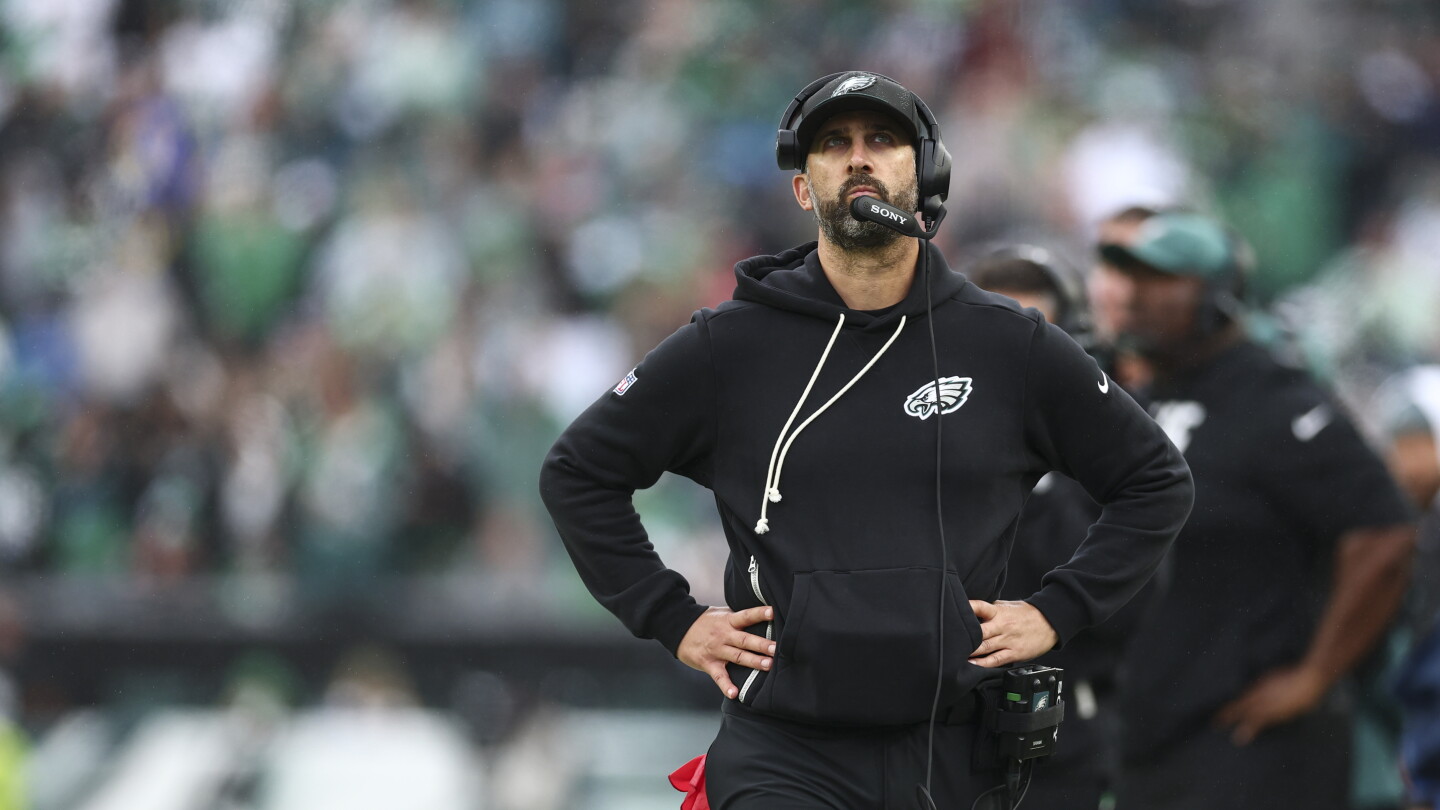
The atmosphere at Lincoln Financial Field turned hostile on Sunday as the Philadelphia Eagles’ offense failed to find any semblance of rhythm. Home fans voiced their frustration early and often, witnessing a performance that statistically ranks among the most stagnant in recent franchise history. With a total lack of explosive plays and a complete inability to move the chains when it mattered most, the Eagles fell to the Los Angeles Rams in a game that raises serious questions about the team’s current identity and execution.
What happened
The statistical output from Sunday’s loss was staggering for all the wrong reasons. Philadelphia managed a meager 172 total yards of offense, with the passing game accounting for only 68 net yards. Perhaps most damning was the team’s performance on third down; the Eagles finished the afternoon 0-for-12 in those critical situations. This continues a troubling trend for the unit, which has now converted only two of its last 21 third-down attempts over the past two matchups.
In the aftermath of the defeat, head coach Nick Sirianni refused to point the finger at one specific area. When questioned about whether the struggles stemmed from the scheme, the play-calling, or the players on the field, Sirianni emphasized that the failure was collective. He noted that while the team avoided some of the “long-yardage” situations that plagued them in previous weeks, they simply could not find a way to convert when the game was on the line. Quarterback Jalen Hurts echoed this sentiment, repeatedly citing “poor execution” and a lack of offensive “flow” as the primary reasons for the second-half collapse.
Context
While the performance was disappointing, it did not occur in a vacuum. The Eagles entered the contest severely shorthanded on the offensive side of the ball. The team was forced to play without star wide receiver DeVonta Smith and reliable tight end Dallas Goedert. The situation worsened just before kickoff when veteran right tackle Lane Johnson was ruled out.
The most significant blow, however, came on the very first offensive series. Star running back Saquon Barkley, who has been the engine of the offense this season, suffered a hamstring injury on his first and only carry of the game. Deprived of their primary playmakers, the Eagles’ offense appeared disjointed and lacked the explosive potential required to stress the Rams’ defense. Without the threat of Barkley in the backfield or Smith on the perimeter, the Rams were able to stifle Jalen Hurts and a depleted offensive line.
Why it matters
This loss signals a potential turning point for a season that is beginning to slip away from elite status. The Eagles no longer look like the dominant force that controlled the NFC in recent years. Currently, the team appears to be a step below the league’s top-tier contenders, and the road ahead does not get any easier.
The schedule makers have not done Philadelphia any favors. The team must now travel to London to face a 3-1 Jacksonville Jaguars squad on short notice. Following their trip across the Atlantic, the Eagles face a stretch of games against the Panthers, Cowboys, Commanders, and Giants. To remain viable playoff contenders, the team likely needs to win at least three of these next five games before reaching their Week 10 bye.
If the Eagles enter the late-season stretch with a losing record, the path to the postseason becomes incredibly narrow. Beyond just the win-loss column, the lack of offensive identity is a major concern. If the coaching staff and players cannot find a way to “execute” and regain their rhythm—regardless of who is healthy—this version of the Eagles may struggle to make any significant noise in the postseason, should they get there at all.