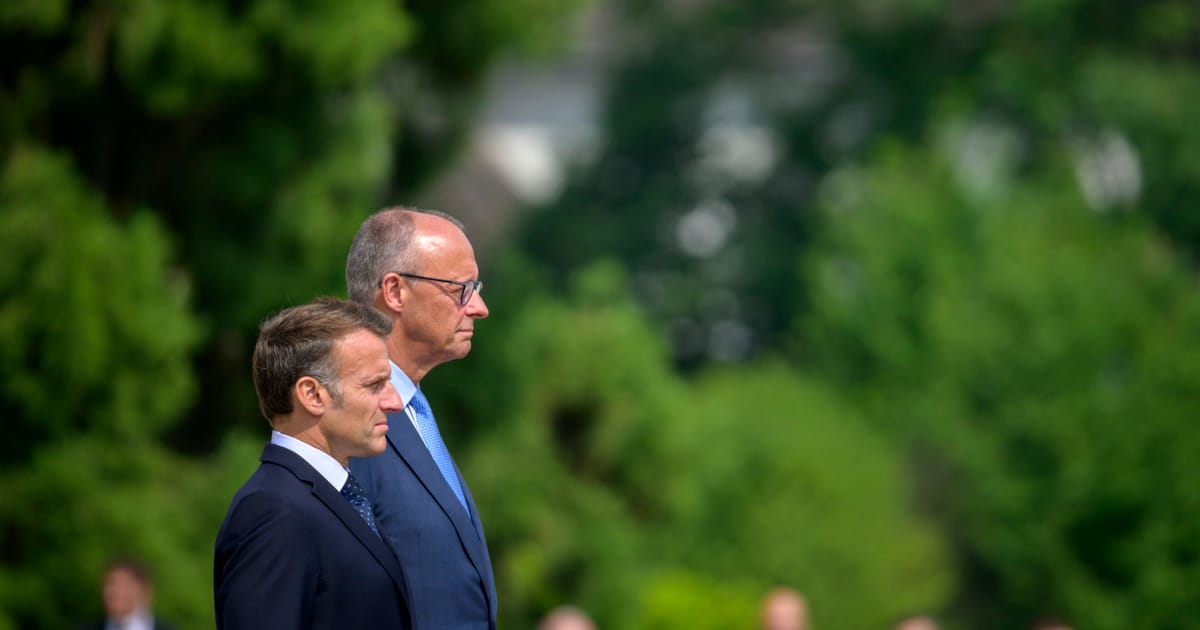
In a significant shift toward a more assertive trade policy, the leaders of the European Union’s two largest economies are calling for the bloc to sharpen its defensive tools. German Chancellor Friedrich Merz and French President Emmanuel Macron have issued a joint appeal to the European Commission, urging the implementation of mechanisms that would allow Brussels to block harmful imports with unprecedented speed and authority.
What happened
In a joint letter and position paper released this week, Chancellor Merz and President Macron argued that the European Union’s current methods for handling trade disputes are no longer adequate for the modern geopolitical landscape. They are proposing a new “comprehensive framework” that would grant the European Commission the power to restrict or entirely halt imports from nations that cause systematic and severe distortions within the European single market.
The proposal aims to streamline the decision-making process. Currently, trade actions often require lengthy investigations and the consensus of various EU capitals, a process that can take months or even years. The Franco-German plan suggests a “reverse qualified majority” voting system. Under this rule, the Commission’s proposed trade measures would take effect automatically unless a significant majority of member states voted to stop them. This shift would make it much harder for individual countries to stall or block retaliatory trade actions.
Context
This move comes at a critical juncture for European trade relations. EU Trade Commissioner Maroš Šefčovič is currently engaged in high-stakes negotiations with Beijing to address a massive trade deficit and concerns over Chinese industrial overcapacity. While the joint letter does not explicitly name China, the subtext is clear: Europe is struggling to compete with state-subsidized goods that flood its markets.
The proposal is also a response to a global environment where trade is increasingly used as a weapon. Officials in Berlin and Paris have noted that other global powers, such as the United States and China, already possess “second-strike” capabilities—referring to the ability to impose sweeping tariffs or restrict access to critical supply chains almost instantly. By comparison, the EU’s existing “bazooka,” the Anti-Coercion Instrument (ACI), is often viewed as too slow and bureaucratically heavy to serve as an effective deterrent in a fast-moving trade war.
Why it matters
The adoption of these powers would represent a fundamental change in how the EU interacts with the global economy. By moving toward a more reactive and “lean” trade defense toolbox, the EU is signaling that it will no longer prioritize long-term dialogue over immediate economic protection. As one French official noted, while dialogue remains a tool, it should not come at the expense of protecting the most vulnerable industrial sectors in Europe.
For businesses and member states, this change would mean a more empowered Brussels. If the Commission gains the ability to act without first seeking a green light from every capital, the EU becomes a more credible and formidable player on the world stage. However, it also raises questions about the balance of power within the bloc, as smaller member states may find it more difficult to influence the direction of trade policy once the Commission sets its sights on a specific target. Ultimately, Merz and Macron are betting that a faster, more decisive Europe is the only way to survive an era of escalating global trade tensions.