Spanish international Ferran Torres has found himself at the center of a social media firestorm following his nation’s recent World Cup triumph. While the team should have been basking in the glory of their victory over Argentina at MetLife Stadium, the conversation quickly shifted to a specific wardrobe choice made by the forward. During the team’s celebratory parade, Torres was seen sporting a red hat that mirrored a well-known American political slogan, leading to intense speculation about the player’s intentions and his views on the political landscape.
What happened
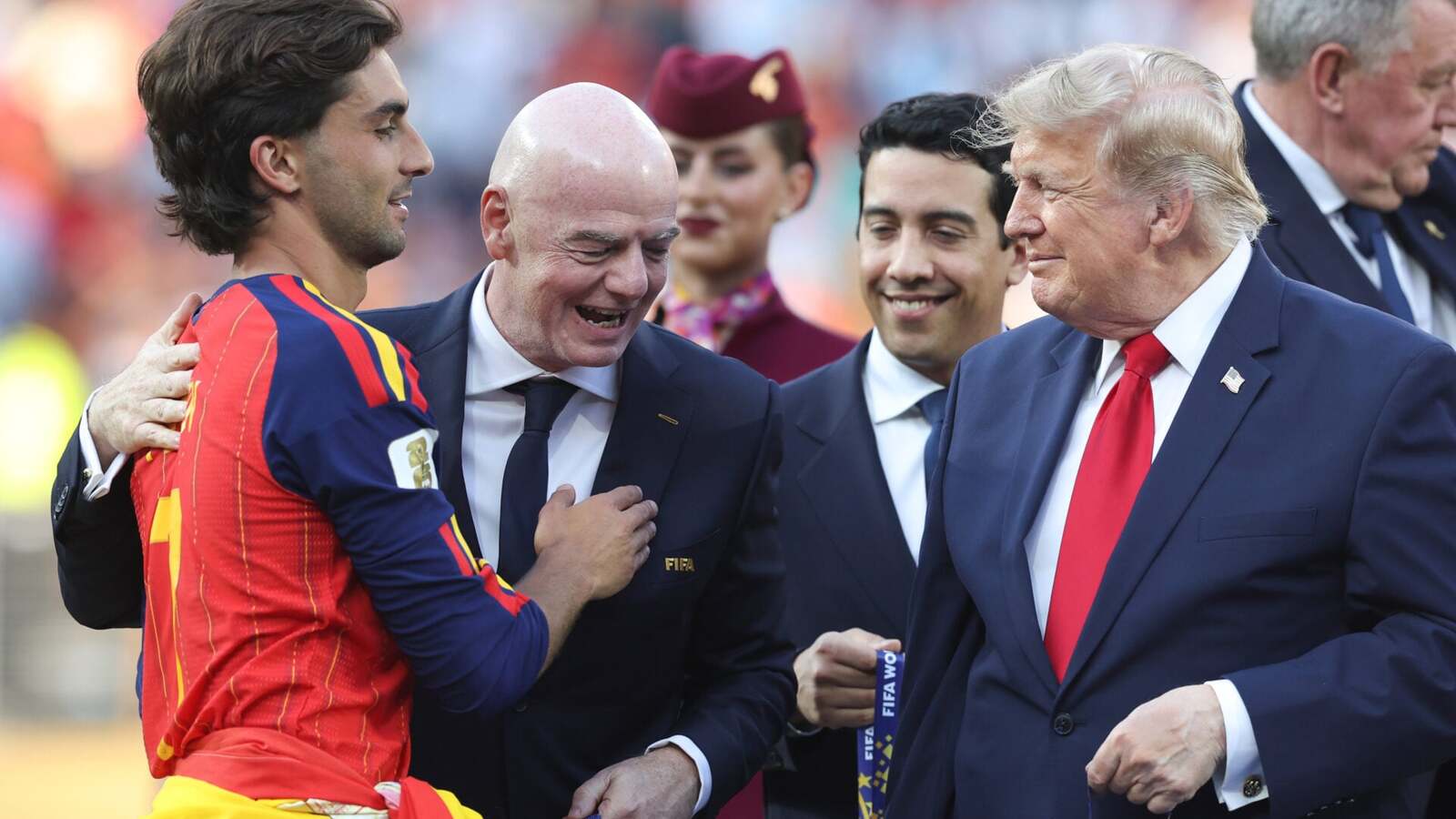
The controversy began a day after Spain secured the World Cup trophy. During the official victory parade in Spain, Torres wore a red cap featuring the phrase “Make Spain Great Again.” The design was an unmistakable reference to the “Make America Great Again” campaign popularized by Donald Trump. This choice of attire was particularly pointed given that Trump had personally handed out the winners’ medals to the Spanish squad just a day prior during the trophy ceremony in New Jersey.
In a recent sit-down with CNN, Torres was asked to explain the motivation behind the hat. The Barcelona attacker downplayed the significance of the gesture, characterizing it as a lighthearted moment rather than a calculated political endorsement. Torres stated that the decision was intended to be “funny” and was born out of a desire to see his country return to the top of the footballing world. He further claimed that he has very little knowledge of politics and that the hat was simply a way to celebrate with his inner circle, insisting there was no deeper message intended for the public.
Context
The timing of Torres’ choice added fuel to an already simmering fire regarding the tournament’s organization. The World Cup final at MetLife Stadium was marked by the prominent presence of Donald Trump, who broke with several FIFA traditions during the post-match celebrations. Rather than the usual football dignitaries taking center stage, Trump was the primary figure presenting the medals and the trophy to the Spanish players.
This involvement was not the only point of contention during the tournament. Throughout the competition, there were persistent whispers regarding Trump’s influence over FIFA operations. Specifically, many fans and analysts were unsettled by the decision to rescind a red card suspension for USMNT star Folarin Balogun, a move many felt was a result of political pressure. The close relationship between FIFA President Gianni Infantino and the former US President has led to accusations that the governing body is allowing external political interests to dictate the terms of the sport.
Why it matters
The Ferran Torres incident is more than just a story about a piece of clothing; it represents the growing tension between global sports and political branding. For many “purist” football fans, the perceived encroachment of political figures into the World Cup ceremony felt like an overstep that compromised the neutrality of the game. When a high-profile athlete adopts the iconography of a political movement—even under the guise of a joke—it forces a conversation about the responsibilities players have as role models.
Furthermore, the situation highlights a potential disconnect between athletes and the weight of their public actions. Torres’ defense—that he “doesn’t know about politics”—strikes some as a convenient shield, while others see it as a genuine reflection of a player focused solely on his sport. Regardless of his intent, the episode has left a lasting impression on how fans view the integrity of the tournament’s leadership. It serves as a reminder that in the modern era of hyper-connectivity, no gesture is too small to be scrutinized, and the intersection of the pitch and the political stage is more crowded than ever.