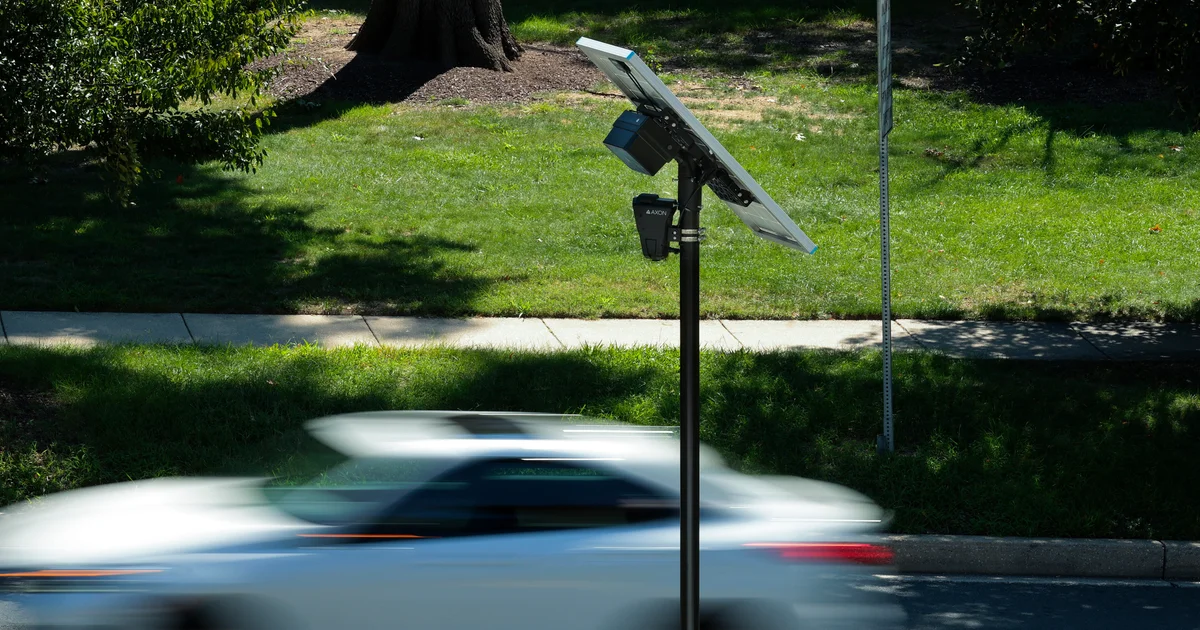
Flock Safety, a prominent startup specializing in automated license plate recognition (ALPR) technology, has recently come under fire for its bold public relations claims regarding its impact on American crime rates. For months, the company’s leadership has touted a specific, impressive figure: that its technology helped solve more than one million crimes in 2025 alone. However, a closer look at the company’s internal data and public statements suggests that this figure may be more of a marketing projection than a verified statistical reality.
What happened
The controversy centers on comments made by Flock Safety CEO Garrett Langley across multiple media appearances and official company communications throughout early 2026. In various interviews, Langley asserted that the company’s technology was responsible for clearing or solving over a million criminal cases annually. These statements were often positioned as a counter-argument to growing concerns regarding the privacy implications of widespread surveillance.
A review by CBS News, however, found that the “one million” figure is not supported by rigorous, audited evidence. When pressed for clarification, Flock’s representatives adjusted the terminology. A company spokesperson noted that the figure actually refers to a broader category of “investigations and incidents” supported by the tech, rather than confirmed clearances. This category includes everything from active investigations and cross-jurisdictional assistance to simple database searches that may or may not have led to an arrest or a conviction.
Furthermore, the company’s own “2025 Impact Census” revealed that its findings were based on a limited survey of approximately 700 law enforcement agencies. While some agencies provided raw data, many others provided only percentage estimates of how often they believed the technology assisted them. Flock later admitted in footnotes that these figures were “directional estimates” rather than audited totals, acknowledging that their methodology was still a work in progress.
Context
Flock Safety has grown rapidly by selling its camera systems to both police departments and private neighborhood associations. The technology works by capturing license plate data and vehicle characteristics, allowing law enforcement to track suspects across different jurisdictions in real time. Because this level of surveillance naturally draws scrutiny from privacy advocates, the company has a strong incentive to prove that the loss of anonymity is justified by a significant increase in public safety.
The company’s reliance on the 20% clearance rate—another figure cited in their reports—also stems from the same Impact Census. To reach this number, Flock cross-referenced the estimates provided by participating agencies with FBI crime and clearance data. However, crime data experts have pointed out that relying on self-reported estimates from agencies that are already invested in the technology can create a “confirmation bias” loop, making the resulting statistics less than reliable for objective analysis.
Why it matters
The discrepancy between “solving a crime” and “supporting an investigation” is significant in the realm of public policy. When tech companies provide tools to the government, the justification for their use often rests on their efficacy. If the actual impact of surveillance technology is lower than advertised, the balance between public safety and individual privacy may need to be reevaluated.
Experts, including those who generally support the use of ALPR technology, have noted that while these tools do have a positive effect on crime clearance, the magnitude of that effect is likely smaller than the “one million” claim suggests. For lawmakers and police departments considering million-dollar contracts, the lack of audited, transparent data makes it difficult to measure the true return on investment. As surveillance tech continues to expand into more American cities, the demand for verified performance metrics over “directional estimates” is likely to increase.