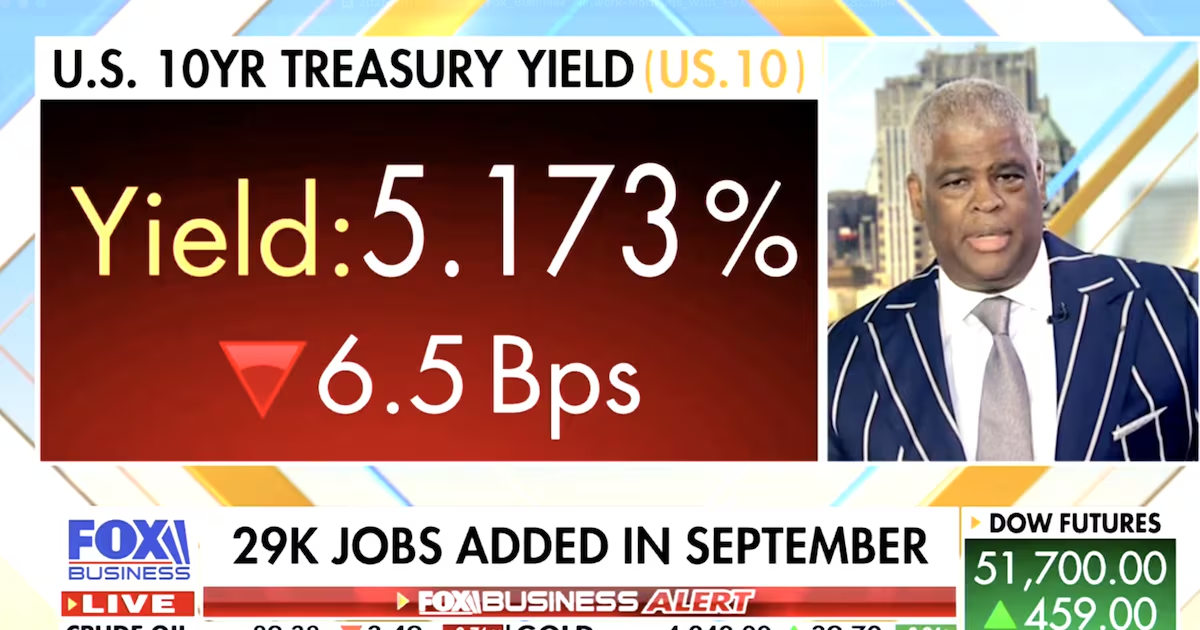
A live broadcast on Fox Business took a somber turn Friday morning as a panel of economic experts and commentators reacted in real-time to a surprisingly weak employment report. The data, which serves as a critical barometer for the nation’s financial health, revealed a cooling labor market that caught many analysts off guard. The atmosphere in the studio shifted from anticipation to concern as the specific figures were read aloud, signaling potential trouble for the current administration’s economic narrative.
What happened
The September jobs report fell significantly short of even the most conservative estimates. According to the data released during the broadcast, the economy added only 29,000 jobs during the month, a figure that stands in stark contrast to the 90,000 positions that analysts had projected. This massive miss was accompanied by an increase in the national unemployment rate, which climbed from 4.1 percent to 4.2 percent.
The report indicated that approximately 78,000 more Americans joined the ranks of the unemployed. Beyond the headline employment numbers, the data regarding worker compensation was equally troubling. Average month-over-month earnings grew by a mere 0.13 percent, failing to meet the 0.3 percent expectation. On an annual basis, wage growth sat at 3 percent, missing the 3.2 percent forecast and suggesting that the momentum of pay increases has slowed considerably.
Context
The timing of this economic downturn is particularly sensitive for President Donald Trump, as the country is only one month away from the midterm elections. While the administration has frequently touted economic strength as a primary achievement, these latest figures provide ammunition for critics and may alienate voters who are already feeling the pressure of a shifting economy.
During the panel discussion, contributors attempted to find silver linings, though the overall mood remained heavy. Economist E.J. Antoni noted that despite the poor monthly showing, nearly a million more Americans have found employment over the last two months combined. Similarly, Lou Basenese argued that the long-term trends remain more relevant than the “noise” of a single month’s data. However, Steve Moore, a former economic adviser to the president, conceded that the numbers were undeniably “disappointing,” as he had hoped for growth at least three times higher than what was actually recorded.
Why it matters
The implications of this report extend far beyond political optics; they have an immediate impact on monetary policy and financial markets. Before these numbers were released, there was significant speculation that the Federal Reserve might implement an interest rate hike in October. However, the sudden weakness in the labor market appears to have eliminated that possibility. Analysts now suggest that the Federal Open Market Committee (FOMC) will be forced to pause any aggressive tightening to avoid further destabilizing the economy.
For the average consumer, the combination of stagnant wage growth and rising costs for essentials like gasoline creates a difficult “inflationary situation.” If paychecks do not keep pace with the cost of living, consumer confidence—a major driver of the U.S. economy—could continue to erode.
Interestingly, Wall Street responded to the bad news with a rally. Stock futures for the Dow Jones Industrial Average, the S&P 500, and the Nasdaq all climbed following the announcement. This counterintuitive reaction is largely driven by the expectation that the Federal Reserve will keep interest rates lower for longer, providing a temporary boost to equity markets even as the broader labor landscape shows signs of distress. Meanwhile, bond yields fell as investors sought the safety of government debt in the wake of the report.