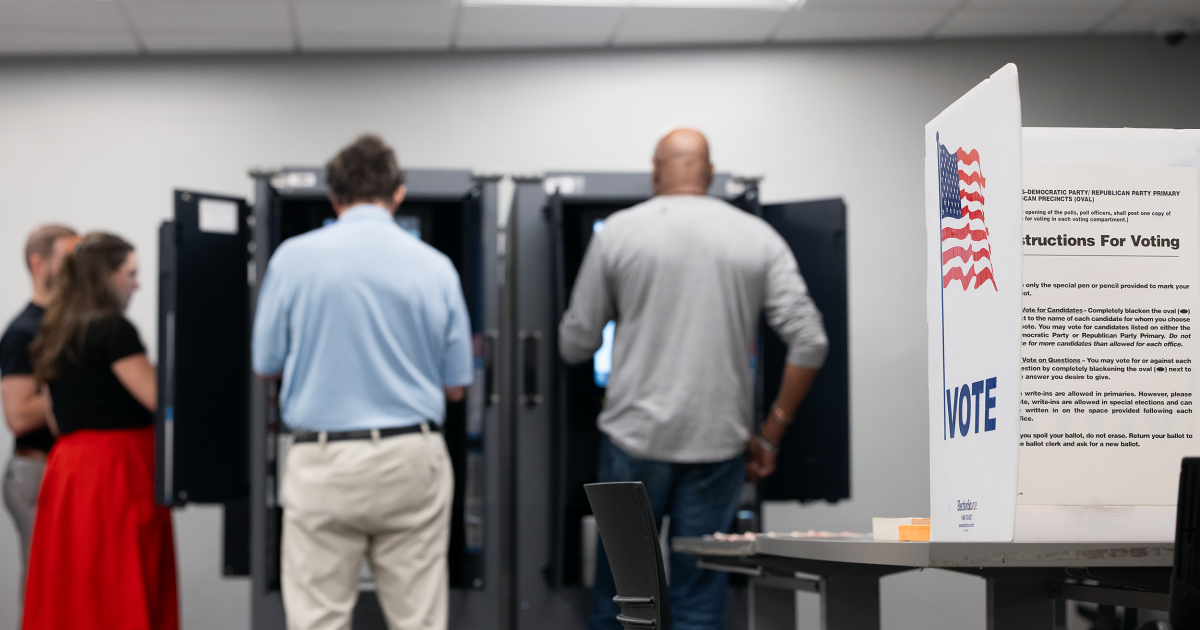
In a move that has intensified the political climate in the Southeast, the Georgia State Election Board has formally requested federal oversight of the state’s electoral infrastructure. With the November midterms rapidly approaching, the board is seeking an investigation into the very systems designed to facilitate the democratic process. This request represents a significant escalation in the ongoing internal friction between various factions of Georgia’s election leadership.
What happened
The push for federal involvement came via a letter authored by James Mills, the executive director of the Georgia State Election Board. In the correspondence addressed to federal officials—including Attorney General Todd Blanche, Homeland Security Secretary Markwayne Mullin, and Assistant Attorney General for Civil Rights Harmeet Dhillon—Mills called for an immediate “investigation and intervention” regarding several aspects of the state’s voting framework.
The board’s concerns are broad, ranging from the technical specifics of ballot tabulation to the management of sensitive data. Specifically, the letter highlights the use of QR codes on ballots, the potential for voting machinery to be compromised by common items like ballpoint pens, and various alleged technical glitches. Furthermore, the board is seeking “specific relief” in six distinct categories. These include mandates for immediate software updates, stricter protocols for ballot secrecy, and a review of how voter registration and motor vehicle data are shared with external entities.
Crucially, the letter does not just target technology; it also targets leadership. Mills requested that the Department of Justice hold Georgia Secretary of State Brad Raffensperger accountable if he attempts to block the board’s review or refuses to share necessary information.
Context
This request for federal intervention does not exist in a vacuum. It comes at a time when Georgia is once again at the center of a national conversation regarding election integrity. Secretary of State Brad Raffensperger, a Republican, gained national prominence following the 2020 election for his refusal to yield to pressure from then-President Donald Trump to alter the state’s vote counts.
Conversely, James Mills has been a vocal proponent of various unsubstantiated claims regarding the legitimacy of the 2020 election results. His history of pushing theories about widespread voter fraud provides a stark contrast to the stance held by the Secretary of State’s office.
The timing of this request is also critical. Early in-person voting in Georgia is scheduled to begin on October 13. The Secretary of State’s office reported that it was not consulted or even notified before the board dispatched its letter to federal authorities. This lack of communication underscores the deep divide within the state’s election administration just weeks before voters head to the polls.
Why it matters
The State Election Board’s request has drawn sharp criticism from those within the Secretary of State’s office, who view the move as an attempt to undermine public trust. A spokesperson for Raffensperger’s office characterized the board’s actions as an effort to “inject chaos” into the final stages of the election cycle, asserting that the state is prepared to conduct a fair and efficient election despite these internal challenges.
Gabe Sterling, the former chief operating officer for the Secretary of State, went further, labeling the board’s majority actions as “irresponsible” and “extralegal.” According to Sterling, the board’s request lacks legal authority and serves primarily to confuse the electorate.
For voters, the primary concern is whether these disputes will impact the actual mechanics of voting or the speed and accuracy of the results. As one of the nation’s most pivotal swing states, any perceived instability in Georgia’s voting process could have wide-reaching implications for national confidence in the midterm outcomes. This move by the State Election Board ensures that the eyes of the country will remain fixed on Georgia’s election officials through November.