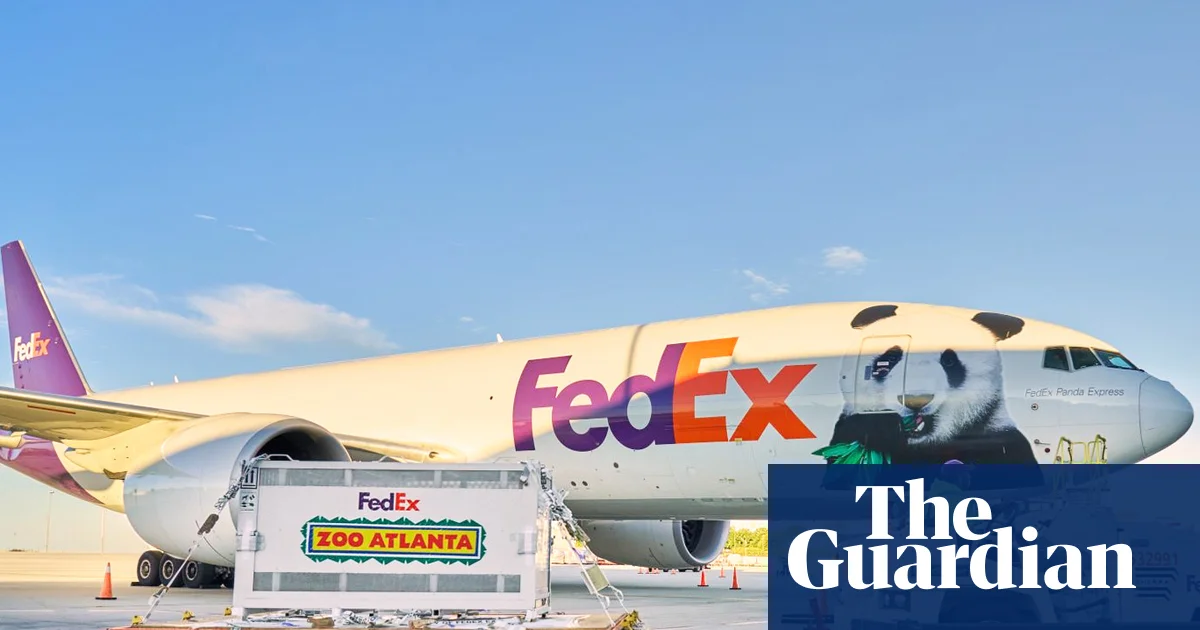
A new era of wildlife conservation and international cooperation has officially touched down in Georgia. On Sunday morning, Zoo Atlanta welcomed two high-profile arrivals from China, marking a significant milestone for both the city and the broader landscape of American-Chinese relations. The arrival of these giant pandas restores a beloved tradition in Atlanta and signals a moment of diplomatic goodwill between two of the world’s most influential nations.
What happened
The two giant pandas, a male named Ping Ping and a female named Fu Shuang, arrived in Atlanta following a long-haul flight from Chengdu in southwestern China. The journey was completed aboard a specialized “FedEx Panda Express” Boeing 777, a dedicated aircraft designed to ensure the comfort and safety of the animals during their trans-Pacific transit.
Both pandas were born in 2020 and were previously housed at the Chengdu Research Base of Giant Panda Breeding. While they share the iconic black-and-white appearance of their species, officials have noted distinct physical characteristics that set the pair apart: Ping Ping is known for the deep, dark circles around his eyes, while Fu Shuang features a slightly protruding forehead. Under the terms of a newly minted agreement with the China Wildlife Conservation Association, the pair will remain at Zoo Atlanta for a 10-year loan period.
The arrival comes at a critical time for the zoo. Earlier in 2024, Atlanta bid farewell to its previous panda residents, leaving the facility’s specialized habitats vacant. With the arrival of Ping Ping and Fu Shuang, Zoo Atlanta becomes one of only three zoological institutions in the United States currently authorized to house giant pandas.
Context
The logistics of the pandas’ arrival were finalized following a high-stakes diplomatic summit in Washington, D.C. During a three-day state visit with Donald Trump, Chinese President Xi Jinping personally announced that the bears would be sent to Atlanta as a gesture of friendship.
The summit itself was characterized by a mix of formal pageantry and complex negotiations. While the two leaders discussed various long-standing points of contention—including trade policies and geopolitical security—the panda loan emerged as one of the few tangible results of the meeting. This “panda diplomacy” has been a staple of Chinese foreign policy for decades, where the loaning of the rare bears serves as a barometer for the health of bilateral relations. When tensions are low, loan agreements are often established or renewed; conversely, when diplomatic friction increases, these agreements are sometimes allowed to expire without extension.
Why it matters
The presence of giant pandas in the United States carries weight far beyond local tourism. For Zoo Atlanta, the arrival of Ping Ping and Fu Shuang represents a massive win for conservation education. These animals serve as global ambassadors for their species, allowing researchers to study their behavior and biology while inspiring the public to support international wildlife preservation efforts.
On a geopolitical level, the arrival of the pandas is a carefully choreographed move. By fulfilling the loan agreement, Beijing is signaling a desire to maintain a level of “people-to-people” friendship with the United States, even as the two governments navigate difficult political waters. President Xi Jinping specifically highlighted the program as an example of the bond between the Chinese and American people.
For the residents of Atlanta and the millions of visitors who frequent the zoo, the return of the giant pandas is a cultural event. For the next decade, Ping Ping and Fu Shuang will not only be the stars of the zoo’s exhibits but will also stand as living symbols of the complex, ongoing dialogue between two superpowers.