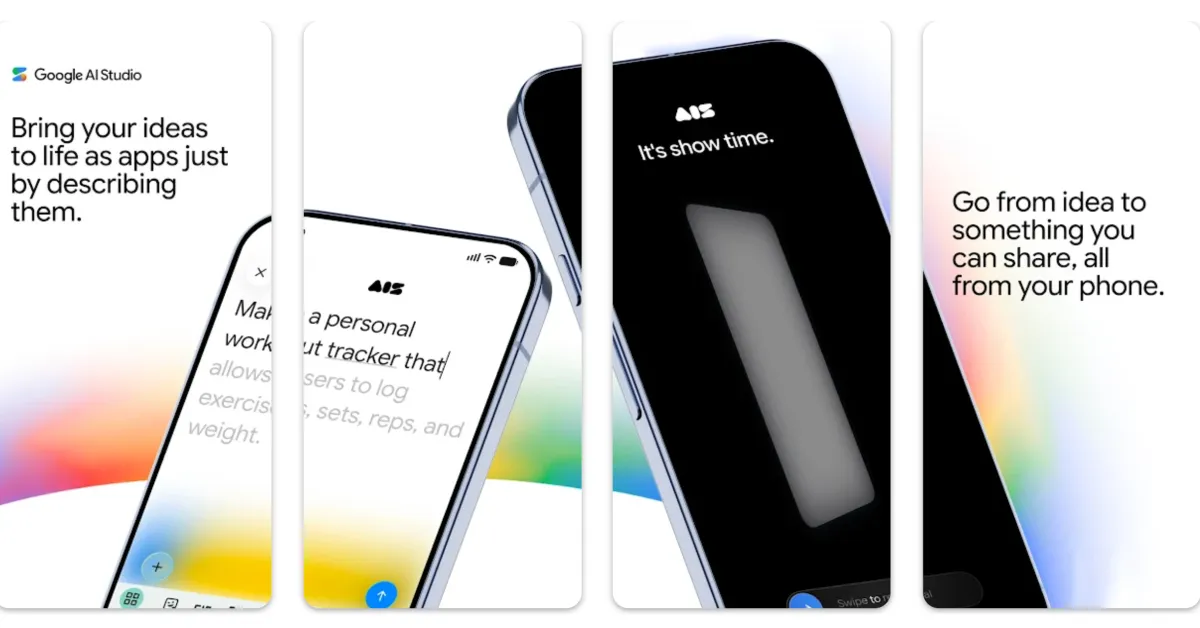
Google is fundamentally shifting its approach to how users will build and interact with software on mobile devices. Following a period of anticipation for a dedicated AI Studio application, the company has decided to scrap the standalone mobile tool in favor of a more ambitious goal: embedding app-creation capabilities directly into the Gemini ecosystem. This move signals a transition toward “generative user interfaces,” where software is not just downloaded from an store, but birthed through natural conversation.
What happened
During the Google I/O 2026 event, the company initially teased a mobile version of AI Studio designed for Android and iOS. The goal was to provide developers and enthusiasts with a way to prototype ideas while away from their desks. The interest was significant, with over 800,000 users signing up to pre-order the application on the Google Play Store and Apple App Store.
Despite this clear demand for mobile development tools, Google has officially pulled the listings and canceled the app’s release. The company explained that rather than forcing users to manage another separate application, it wants the creation of software to occur organically within the Gemini chat experience. The AI Studio team is now collaborating closely with the Gemini app team to ensure that the transition from a simple prompt to a functional prototype happens seamlessly within the existing AI interface.
Context
AI Studio was originally envisioned as a mobile companion to the existing web platform, allowing users to “capture an idea on the go.” While the mobile app has been shelved, the AI Studio website remains active and will continue to be the primary hub for those looking to build professional prompts or scale their ideas into full-fledged businesses.
For the time being, users who want to access AI Studio on their mobile devices can still use the Progressive Web App (PWA) through a mobile browser, which remains functional. However, the shift in focus away from a native app suggests that Google sees the current “app-per-task” model as an obstacle. By moving these features into Gemini, Google is positioning its AI as a central operating layer that can generate tools as needed, rather than just acting as a static assistant.
Why it matters
The cancellation of a dedicated app might seem like a setback, but it actually reveals a more profound vision for the future of mobile computing. This pivot suggests that Google is moving toward a future defined by generative user interfaces. In this model, the AI doesn’t just give you information; it builds the specific interface you need to solve a unique problem in real-time.
For example, a user interested in starting a garden could prompt Gemini for help. Instead of just receiving a list of text instructions, Gemini could generate a bespoke mini-app within the chat. This temporary, custom-built tool could include specific tabs for plant logging, localized watering schedules based on weather data, and interactive lessons.
This evolution has the potential to change how we think about software. Instead of searching the App Store for a tool that mostly fits our needs, we may soon rely on Gemini to construct perfect, hyper-specific applications on demand. While features like Gemini Canvas and PWAs have laid the groundwork for this, a deep integration into a native mobile environment could make custom software creation accessible to everyone, regardless of their coding knowledge.