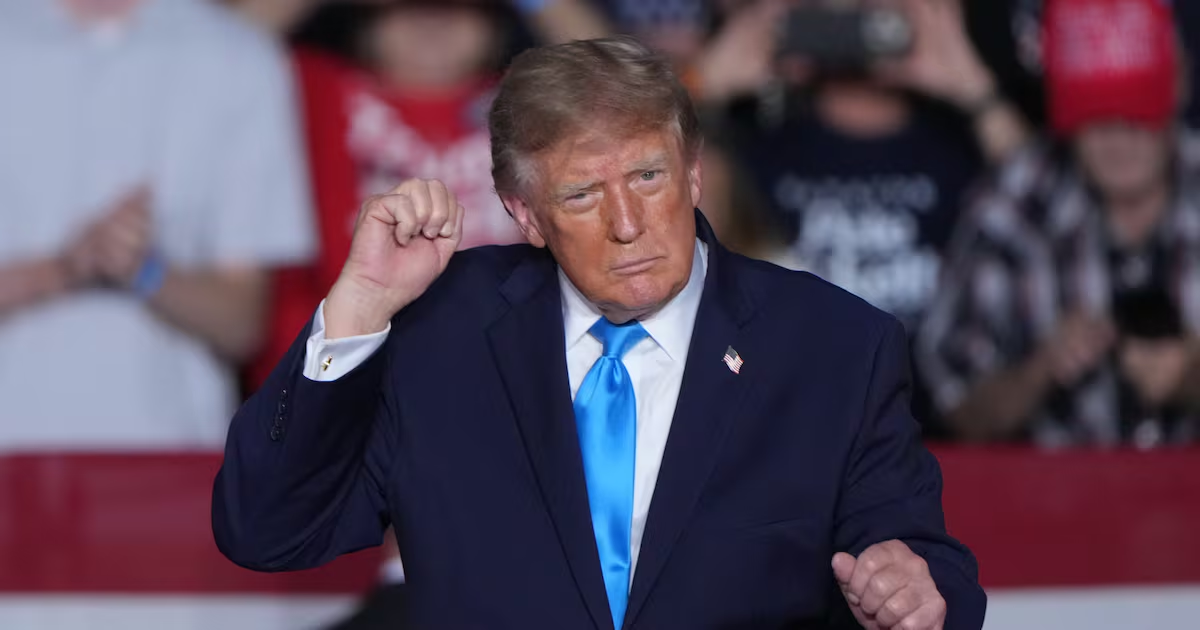
As the midterm elections move into their final month, the Republican Party finds itself in a paradoxical position. While they possess a staggering $1 billion war chest intended to secure a legislative majority, internal party anxiety is reaching a fever pitch. GOP strategists are increasingly concerned that this massive financial advantage may be neutralized by the unpopularity of former President Donald Trump and a series of strategic missteps regarding how and when that money is being spent.
What happened
The Republican financial strategy has been spearheaded by MAGA Inc., a massive super PAC aligned with Donald Trump. By the end of August, this single entity held roughly $416 million in liquid assets. However, the group did not begin its major spending blitz until September. This delay has proven costly. Because television stations have limited airtime as an election approaches, rates for political advertisements skyrocket in the final weeks.
Internal reports suggest that by waiting until the final two months of the campaign, Trump-affiliated groups are paying significantly higher premiums—sometimes up to five times more—than organizations that reserved their advertising slots during the spring. In one glaring example from the Austin, Texas, media market, a candidate’s campaign paid approximately $50,000 for a television spot, while a super PAC was forced to pay $450,000 for the exact same airtime.
Context
The financial disparity between candidate-led campaigns and independent super PACs is a structural hurdle for the GOP. Under federal law, broadcast stations must offer candidates the “lowest unit rate” for advertising. Super PACs, however, do not enjoy these protections and are often charged the highest possible market rates. Because the GOP has funneled a vast portion of its $1 billion into these outside groups rather than directly into candidate accounts, their purchasing power is effectively diluted.
While Republicans rely on this late-stage “shock and awe” spending, Democrats have taken a different approach. Despite having less overall cash, Democratic candidates have remained competitive by capitalizing on anti-Trump sentiment and focusing their messaging on specific issues like government corruption. By placing their ad buys earlier and through candidate committees, the Democratic Party has managed to keep its message on the airwaves more consistently and at a much lower cost.
Why it matters
This election cycle serves as a high-stakes test of the influence of money in modern politics. The GOP’s predicament suggests that having a billion dollars is not a guarantee of success if that capital is deployed inefficiently. Longtime Republican pollster Neil Newhouse has noted that advertising becomes significantly less effective after Labor Day, as many voters have already made up their minds or become desensitized to the barrage of political messaging.
If the GOP fails to make significant gains despite their record-breaking fundraising, it may force a reckoning within the party regarding their reliance on outside groups and the timing of their media buys. Furthermore, it highlights a growing trend where the sheer volume of cash in politics is being offset by the logistical realities of a crowded media landscape. In the end, the midterms may prove that while money is essential for a campaign, the timing and method of its distribution are what truly determine the outcome.