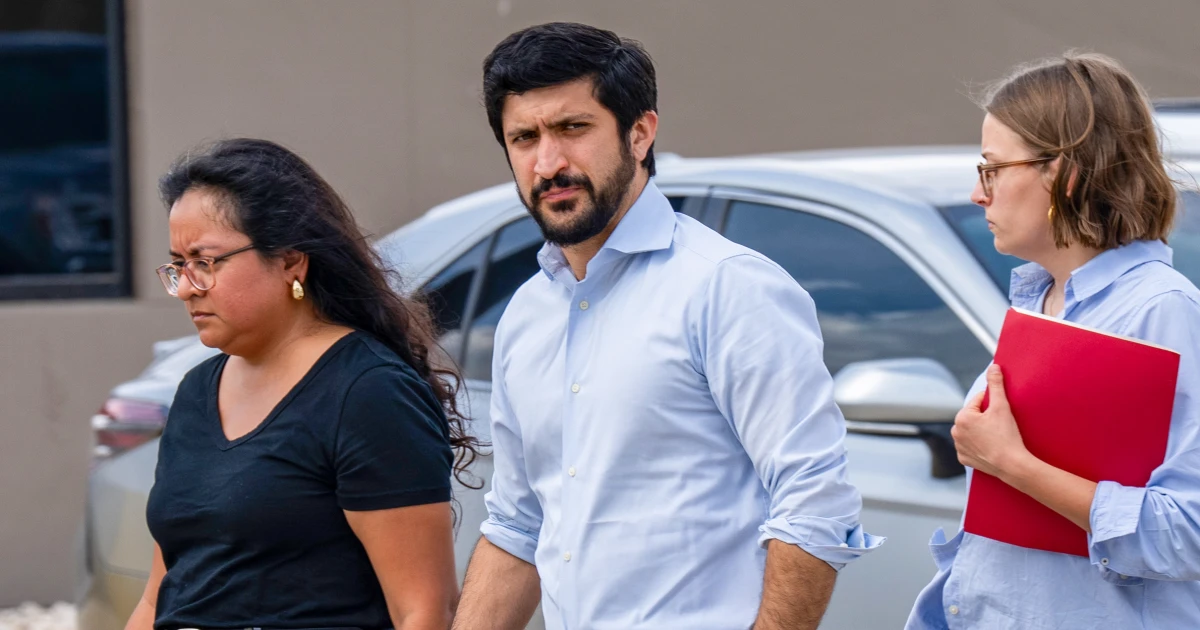
A Venezuelan asylum seeker who was shot by federal immigration agents in Austin earlier this week remains in custody despite requiring urgent medical intervention. Wilber Rafael Garces Perez, 28, is currently being held at a federal detention facility in South Texas with a bullet still lodged near his spine. Following a personal visit to the facility, U.S. Representative Greg Casar is calling for the man’s release to a hospital, highlighting the gravity of his medical condition and the circumstances surrounding his arrest.
What happened
The incident occurred on a Sunday in Austin while Garces Perez was working as a DoorDash delivery driver. According to his legal counsel, unmarked vehicles operated by U.S. Immigration and Customs Enforcement (ICE) twice struck his car before an officer opened fire. Garces Perez was initially taken to a hospital but was quickly transferred into ICE custody.
During a visit on Wednesday, Congressman Casar reported that Garces Perez is currently confined to a wheelchair and experiencing significant pain. A medical specialist has reportedly determined that surgery is necessary to remove the projectile from his back. Casar noted that the wound remains open and requires several gauze changes throughout the day. While the Department of Homeland Security (DHS) maintains that the detainee is receiving consistent medical attention and pain management, Casar argued that true care would involve allowing the family to seek surgery in a traditional hospital setting rather than a detention environment.
DHS has defended its actions, stating that the shooting occurred during a “targeted vehicle stop.” The agency also denied allegations that Garces Perez was forced to sleep on the floor and clarified that while they provide medical oversight, they do not dictate specific surgical decisions for detainees.
Context
Garces Perez arrived in the United States in 2024 through the CBP One program, a federal initiative designed to allow migrants to schedule asylum appointments. Despite having a valid work permit, his legal status became complicated due to a missed court date. His attorney explained that a deportation order was issued in his absence because the court summons had been mailed to an outdated address.
The shooting took place against a backdrop of intensified immigration enforcement in Central Texas. Data indicates that ICE operations in the Austin area surged during the summer months, with arrests increasing by over 80% compared to the previous year. Many of these enforcement actions have targeted individuals without criminal records in public spaces, signaling a more aggressive stance by federal authorities in the region.
Why it matters
This case has sparked significant concerns regarding the use of force by federal agents and the adequacy of medical care within the detention system. The lack of clarity surrounding the shooting is exacerbated by the uncertainty of whether the agents involved were equipped with body cameras, despite recent federal mandates requiring their use in the field.
Furthermore, the situation underscores the systemic issues within the immigration court system, where administrative errors—such as incorrect mailing addresses—can lead to severe consequences for asylum seekers who are otherwise following legal protocols. As Garces Perez remains in a wheelchair behind bars, his case serves as a flashpoint for the debate over how the United States balances interior enforcement with humanitarian obligations and due process. The decision of whether to allow him to undergo surgery outside of federal custody remains a critical point of contention between his advocates and government officials.