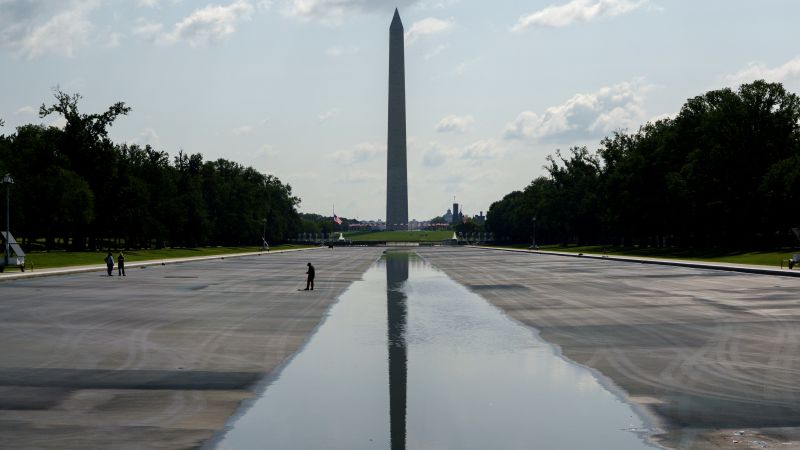
The Department of Justice recently abandoned its high-profile criminal case involving the alleged vandalism of the Lincoln Memorial Reflecting Pool. This move, announced during a typical Friday evening disclosure, concludes a controversial effort to prosecute an individual for damage that the government now admits was likely caused by poor workmanship rather than criminal intent. While the dismissal ends the legal threat against the accused, it has ignited a fresh wave of scrutiny regarding how the administration handled the renovation of one of America’s most iconic landmarks.
What happened
On Friday, the Department of Justice (DOJ) moved to drop all charges against David Hearn, a former Olympic canoeist who had been accused of damaging the national monument. In a surprising admission, federal prosecutors stated that the damage to the Reflecting Pool was “the result of a botched installation and not vandalism.”
The DOJ’s filing also shifted blame toward the Department of the Interior (DOI), accusing the agency of withholding vital information. Prosecutors claimed that the DOI was not forthcoming with evidence that would have demonstrated the structural nature of the damage much earlier. According to the DOJ, if the Interior Department had provided the information clearly in its possession at the start of the case, the government would never have sought a grand jury indictment against Hearn. This internal friction highlights a significant breakdown in communication between two major federal agencies.
Context
The controversy surrounding the Reflecting Pool began in mid-June, shortly after the administration initiated a hurried renovation project. President Donald Trump had pushed for the pool to be ready in time for Independence Day celebrations, leading to the hiring of a no-bid contractor to complete the work on a tight schedule. When the pool began to deteriorate almost immediately, reporters and critics suggested that the rush-job and shoddy installation were to blame.
The administration, however, resisted this explanation. Instead, officials and the President himself insisted that the damage was the work of “radical-left” activists. This narrative culminated in the felony prosecution of Hearn, who spent a month defending himself against the weight of the federal government. Even following the DOJ’s recent admission, President Trump has remained defiant. On social media, he publicly disagreed with U.S. Attorney Jeanine Pirro’s decision to drop the case, maintaining that the presence of nearby graffiti and grass etchings proved that the site had been targeted by vandals.
Why it matters
The collapse of the case against Hearn is more than just a legal reversal; it is a significant indictment of how political narratives can influence the judicial system. For weeks, an innocent man faced the prospect of a felony conviction primarily because his prosecution supported a specific political talking point. The DOJ’s admission that it brought a “shoddy case” without having all the facts suggests a rush to judgment intended to shield the administration from criticism over its management of the renovation.
Furthermore, the accusations of withheld evidence by the Department of the Interior suggest a disturbing lack of transparency within the executive branch. When government agencies prioritize political optics over the truth, the integrity of the legal process is compromised. This debacle serves as a cautionary tale about the consequences of bypassing standard oversight—such as no-bid contracts and accelerated deadlines—and the human cost of using the legal system to settle political scores.