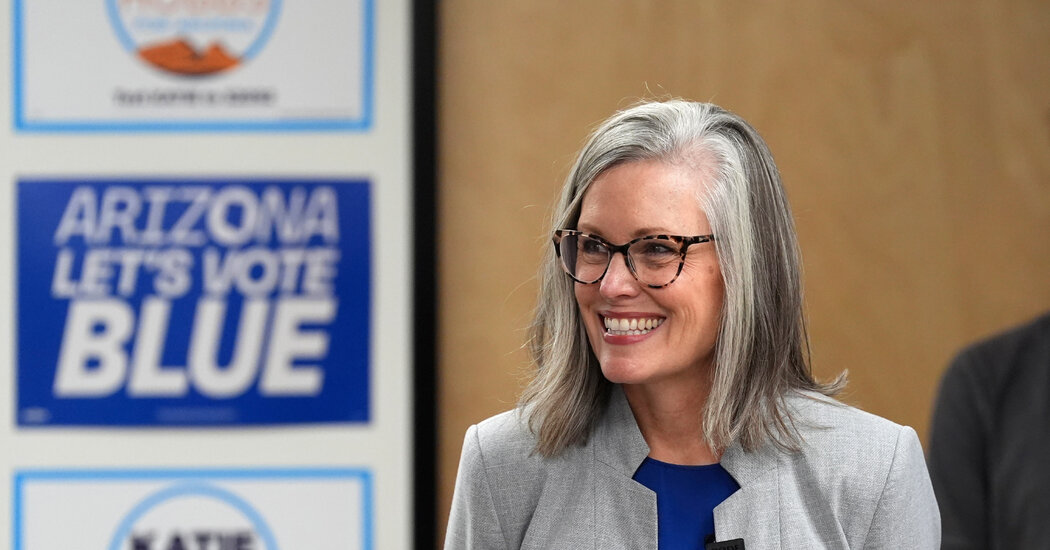
In a bold departure from traditional partisan politics, Arizona Governor Katie Hobbs has reportedly signaled her intention to form a bipartisan ticket for her upcoming re-election campaign. According to sources familiar with the strategy, the Democratic incumbent plans to select John Giles, the longtime Republican and former mayor of Mesa, as her running mate for the position of lieutenant governor. This move represents a calculated effort to appeal to a broad coalition of voters in a state where political margins remain razor-thin.
What happened
Governor Katie Hobbs, who faces a rigorous battle to retain her seat, is reaching across the aisle to solidify her standing with moderates and independents. Her choice for the lieutenant governor slot—a role that will be filled for the first time in Arizona’s history following a recent constitutional change—is John Giles. Giles is a well-known figure in Arizona politics, having served as the mayor of the state’s third-largest city.
Though a lifelong Republican, Giles has become a prominent voice for bipartisanship in recent years. By selecting a member of the opposing party, Hobbs is positioning her administration as one focused on stability and consensus rather than ideological purity. The decision is expected to be formally announced as the campaign shifts into its next phase, emphasizing a “country over party” narrative that both Hobbs and Giles have previously championed.
Context
Arizona has transitioned from a Republican stronghold to one of the most competitive battlegrounds in the United States. Hobbs’ narrow victory in 2022 highlighted the necessity of securing support from suburban voters and disaffected Republicans who are uncomfortable with the current direction of the state’s GOP.
John Giles fits this demographic perfectly. As the former leader of Mesa, a suburb of Phoenix with a historically conservative but pragmatic voting base, Giles has frequently broken ranks with his party. He gained national attention for endorsing Democratic candidates, including Mark Kelly and Joe Biden, arguing that the modern Republican platform in Arizona had moved too far toward the fringes. His inclusion on the Hobbs ticket is not just a symbolic gesture but a strategic play for the “Mesa vote” and similar suburban enclaves that often decide statewide outcomes.
Furthermore, the office of Lieutenant Governor is a new addition to the Arizona executive branch. Previously, the Secretary of State was first in the line of succession. This change allows governors to run on a joint ticket with a handpicked partner, giving Hobbs the unique opportunity to redefine the executive branch’s image through this unconventional pairing.
Why it matters
The selection of Giles is a high-stakes gamble that could redefine the 2024 electoral map in Arizona. For Hobbs, the primary benefit is insulation against claims of being an “ultra-liberal” leader. By sharing the ticket with a fiscal conservative and experienced administrator like Giles, she can more effectively pitch herself as a centrist focused on governance rather than culture wars.
However, the move is not without risk. Hobbs may face pushback from the more progressive wing of the Democratic Party, who might view the inclusion of a Republican on the ticket as a dilution of their policy goals. Conversely, Giles is likely to face intense criticism from the Republican establishment, who have already labeled him a “Republican in Name Only” (RINO) for his past endorsements of Democrats.
Ultimately, this partnership serves as a litmus test for the viability of bipartisan coalitions in a polarized era. If the Hobbs-Giles ticket proves successful, it could provide a blueprint for other Democratic incumbents in purple states looking to withstand the pressures of a divided electorate. In the immediate future, it ensures that the Arizona gubernatorial race will remain one of the most watched and unconventional contests in the nation.