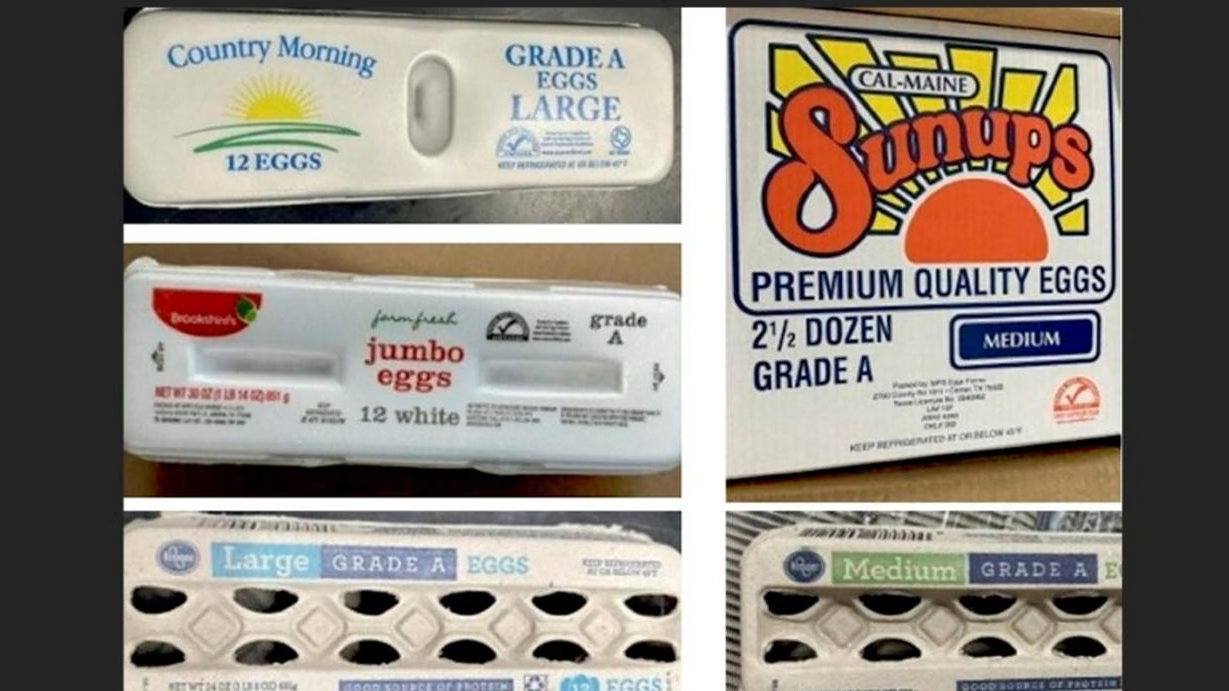
Public health authorities have issued an urgent warning following the recall of over 1.5 million cartons of eggs linked to a multistate salmonella outbreak. The massive recall affects several major grocery chains and brands across 17 states, resulting in dozens of reported illnesses and hospitalizations. As federal investigators work to contain the spread, consumers are being urged to immediately check their refrigerators for specific identification codes that mark potentially contaminated products.
What happened
The recall involves approximately 1.5 million cartons of both brown cage-free and white shell eggs. These products were distributed in a variety of sizes, ranging from small six-count cartons to large 60-count bulk packs. According to the Centers for Disease Control and Prevention (CDC), the affected eggs were sold under several recognizable brand names, including Kroger, Simple Truth, Brookshire’s, Cal-Maine, and Country Morning.
The primary distribution points were Kroger locations in Texas and Louisiana, as well as Brookshire Grocery stores in Texas, Arkansas, Oklahoma, and Louisiana. Other smaller retail outlets and foodservice providers in New Mexico and Mississippi were also impacted. While the bulk of the distribution was concentrated in the South and Southwest, the reach of the outbreak has expanded to include 17 states in total.
Consumers can identify the recalled eggs by looking at the side of the carton for specific markings. The affected products bear the plant codes P-1950 or 0840962. Additionally, they feature a Julian date—a three-digit number representing the day of the year—between 157 and 184. The “best by” or “sell by” dates on these cartons fall between July 20 and August 17.
Context
The investigation into this outbreak revealed a significant public health impact. To date, the CDC has confirmed 98 cases of salmonella infection tied to this specific strain, leading to 26 hospitalizations. While no fatalities have been reported, the geographical spread of the bacteria is notable. Although the majority of the distribution occurred in the southern United States, cases have appeared as far north as New York, which reported at least one infection as of last month.
Salmonella is a type of bacteria that typically causes gastrointestinal illness. Symptoms generally manifest within six hours to six days after consuming contaminated food. Those infected often experience high fever, persistent diarrhea, and severe stomach cramps. While many people recover without medical intervention, the CDC warns that children under five, elderly individuals, and those with weakened immune systems are at a much higher risk for severe complications that may require hospital care.
Why it matters
This large-scale recall serves as a critical reminder of the complexities within the national food supply chain and the vital importance of food safety vigilance. When a staple product like eggs is compromised, the risk of widespread illness is high because of how frequently they are consumed and used as ingredients in other dishes.
Health officials are emphasizing that simply “looking” at an egg is not enough to determine if it is safe, as salmonella-tainted food often appears, smells, and tastes normal. The CDC’s recommendation is clear: if you have eggs that match the recall criteria, do not eat them. You should either dispose of them immediately or return them to the place of purchase for a refund.
Furthermore, cross-contamination is a major concern. Salmonella can easily spread from the eggs to kitchen surfaces, containers, and utensils. Anyone who has handled the recalled eggs should thoroughly wash their hands and sanitize any surfaces—such as refrigerator shelves or countertops—that the cartons may have touched. Taking these proactive steps is essential to preventing further spread of the infection and ensuring household safety.