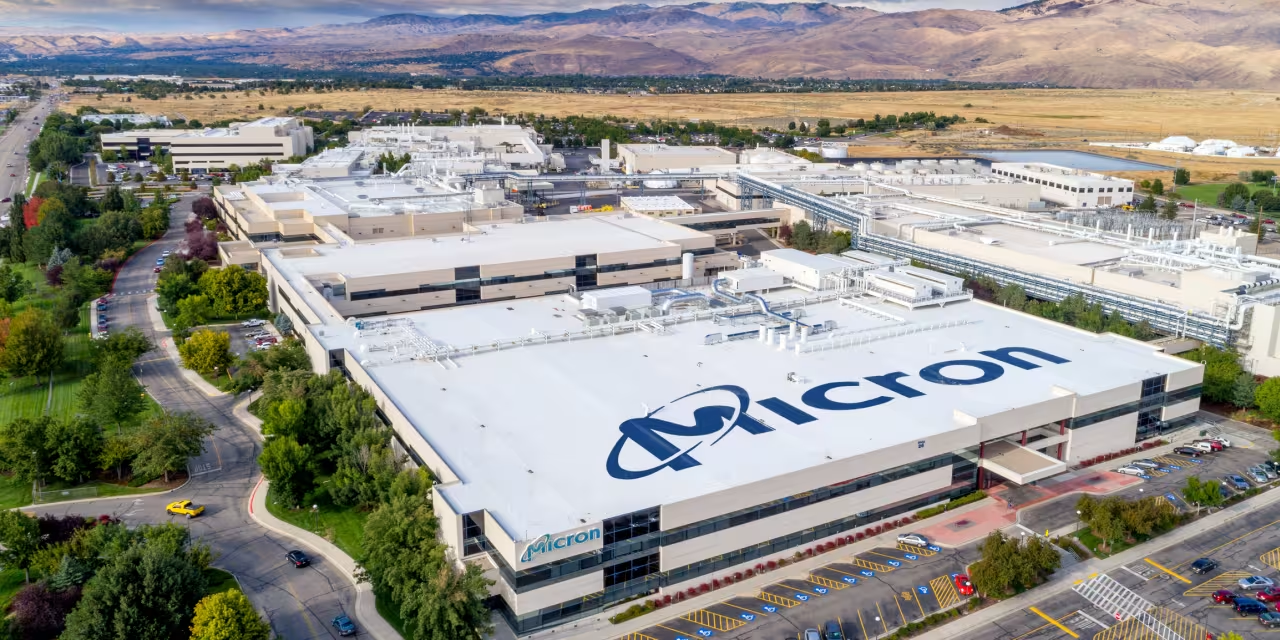
Micron Technology Inc. recently delivered a financial performance that, on paper, should have sent share prices soaring. However, the market responded with a collective shrug, leaving the semiconductor giant’s stock in a precarious position. This divergence between robust quarterly results and investor hesitation highlights a growing anxiety within the tech sector regarding the sustainability of the current chip boom. While the demand for artificial intelligence remains a powerful catalyst, shadow concerns over cyclicality and profit margins are beginning to weigh heavily on market sentiment.
What happened
Micron reported what many analysts described as “blowout” earnings, surpassing expectations across several key financial metrics. Typically, such an over-performance would trigger a significant rally. Instead, the stock has struggled to maintain momentum, recently languishing as investors weigh the immediate gains against future risks. The primary drivers of this unease are twofold: the potential peaking of the current semiconductor cycle and the long-term outlook for profit margins.
Despite the positive numbers, the market appears to be looking past the current balance sheet to identify potential structural weaknesses. The volatility suggests that investors are no longer satisfied with current growth alone; they are increasingly focused on the “quality” of that growth and whether the company can maintain its current trajectory as the industry landscape shifts.
Context
To understand the current skepticism, one must look at the historical nature of the memory chip market, specifically DRAM and NAND. Unlike specialized microprocessors, memory chips are often treated as a commodity, making them subject to intense and often unpredictable boom-and-bust cycles. When demand—currently driven by the explosive growth of generative AI—exceeds supply, prices and profits climb rapidly. However, these periods are historically followed by an inevitable downturn as manufacturers increase production capacity, eventually leading to a market glut.
Investors are currently fretting over whether the industry is approaching the “top” of this cycle. Furthermore, while High Bandwidth Memory (HBM) is in high demand for AI applications, the traditional markets for memory, such as personal computers and smartphones, have shown a much slower and more uneven recovery. This creates a lopsided demand profile that makes the company’s long-term revenue streams appear more vulnerable. There are also concerns regarding the massive capital expenditures required to stay competitive in the AI space, which could potentially erode profit margins if price growth begins to plateau.
Why it matters
Micron is frequently viewed as a bellwether for the broader semiconductor industry and the health of the global tech supply chain. When a company of its stature posts exceptional earnings but fails to see a corresponding rise in stock value, it signals a shift in investor psychology. It suggests that the market is moving from a phase of “growth at any cost” to a more defensive, skeptical posture.
This shift has significant implications for the broader “AI trade.” If investors become convinced that chipmakers have hit their peak earnings potential, it could lead to a cooling effect across the entire technology sector. For stakeholders, the current situation serves as a reminder that in the world of semiconductors, financial excellence in the present does not always guarantee confidence in the future. The focus has moved from asking how much the company is making to asking how much longer such performance can be sustained before the inevitable cyclical correction takes hold.