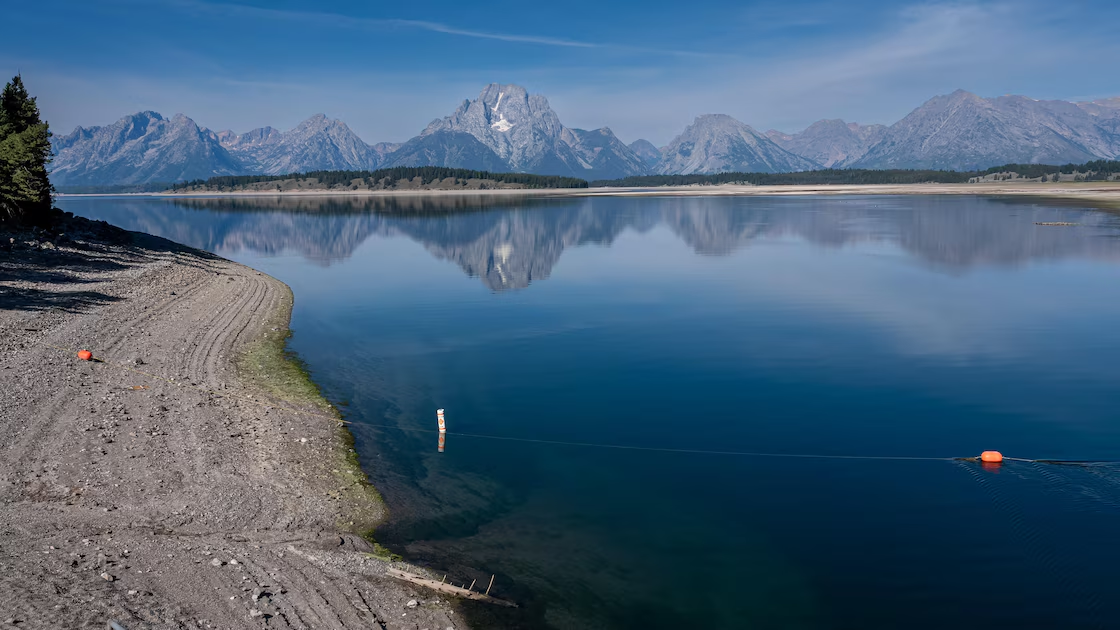
Major League Baseball has officially shelved its ambitious proposal to host a regular-season game within the borders of Grand Teton National Park. Despite initial interest and preliminary logistical assessments, Commissioner Rob Manfred confirmed that the league will no longer pursue the Wyoming site for a future marquee event. The decision marks a rare retreat for the league’s “special events” initiative, which has successfully brought professional baseball to several unconventional locations over the last decade.
What happened
The shift in strategy was revealed in a letter sent by Commissioner Manfred to Teton County officials, as first reported by The Athletic. In the correspondence, Manfred explained that while the league had conducted significant due diligence regarding a potential game at Grand Teton, they ultimately decided to terminate the project. The primary catalyst for the cancellation was the vocal opposition from the local community.
According to the Commissioner, once reports of the potential game surfaced, it became evident that residents and local stakeholders had significant reservations. Manfred emphasized that MLB has no desire to force a game into a community that expresses concern over the venue or the impact of such a large-scale event. Consequently, the league has ceased all evaluation of the park as a potential site.
The project had previously seen some momentum behind the scenes. Reports from the Washington Post indicated that MLB had been in discussions with federal officials to facilitate a game on protected land. Frank Lands, the Deputy Director of the National Park Service, had reportedly scouted three specific locations within Grand Teton National Park to determine the feasibility of constructing a temporary stadium. Had the project moved forward, the league was targeting the 2028 season for the event.
Context
For several years, Major League Baseball has leaned heavily into a “destination game” format to grow the sport’s reach and provide unique broadcast opportunities. These events began in earnest with a 2016 game at Fort Bragg in North Carolina and expanded into the popular “Field of Dreams” series in Dyersville, Iowa. Other notable locations have included Rickwood Field in Birmingham, Alabama, and the annual Little League Classic in Williamsport, Pennsylvania.
While these events have been largely successful, a national park presented a unique set of hurdles. Unlike a cornfield or a historic minor league park, a national park is subject to intense federal regulations, environmental protections, and conservation mandates. Building a temporary stadium capable of hosting thousands of fans, along with the necessary infrastructure for broadcasting, parking, and security, would have required navigating an unprecedented amount of administrative hurdles and environmental impact studies.
Why it matters
The cancellation of the Grand Teton project highlights the inherent tension between professional sports marketing and environmental stewardship. While the visual of a Major League game played against the backdrop of the Teton Range would have provided a historic aesthetic for television, the logistical footprint of such an event posed a threat to the park’s natural tranquility.
This outcome also demonstrates the influence of local advocacy. By listening to the concerns of Teton County residents, MLB avoided a potential public relations crisis that could have overshadowed the game itself. It signals that while the league remains committed to exploring creative venues—with future games already slated for the Field of Dreams and Williamsport—there are clear boundaries to how far it will go to create a spectacle. For the foreseeable future, the “Great Outdoors” will remain a place for conservation rather than professional box scores.