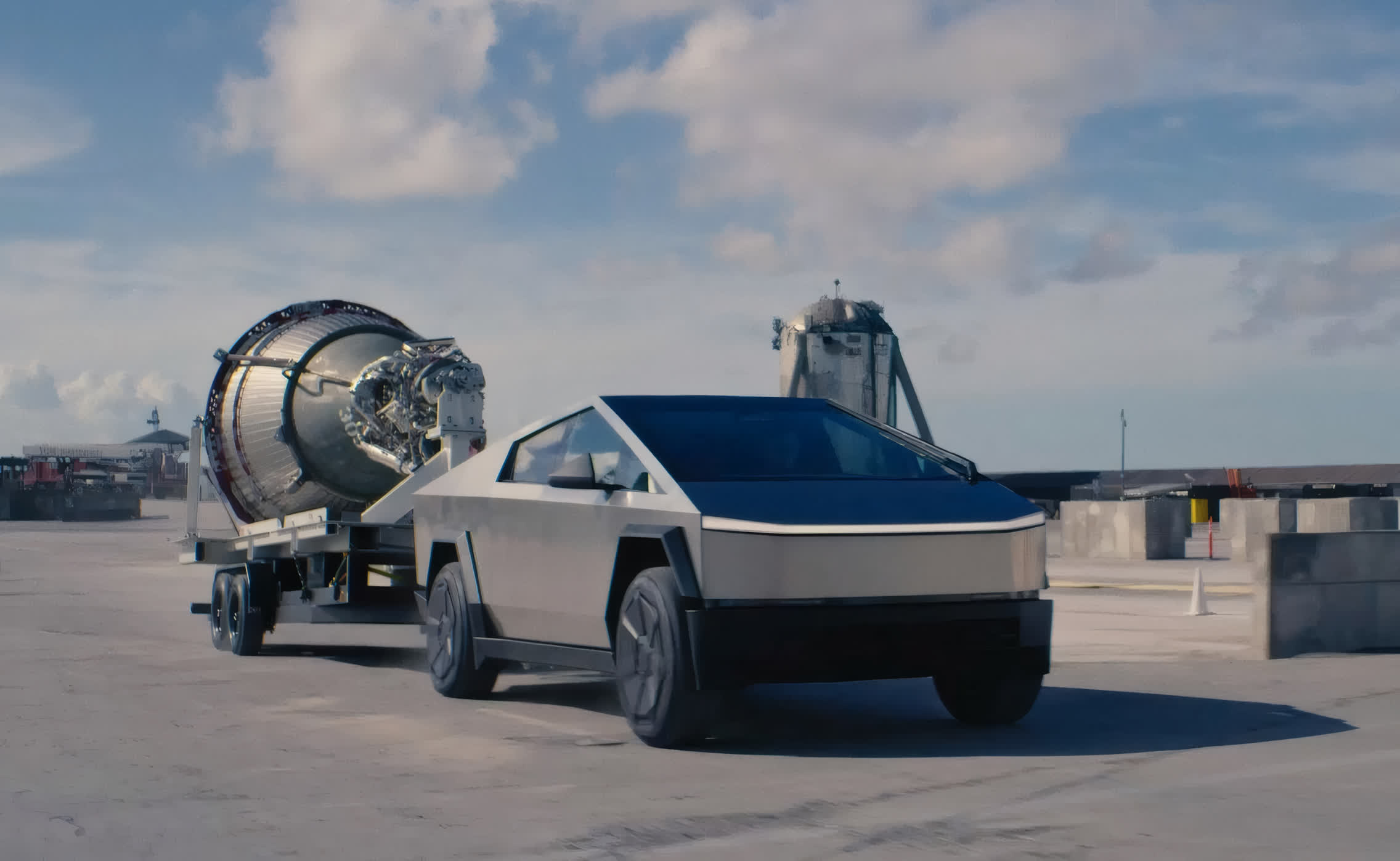
NASA has announced a significant shift in its emergency response protocols for the upcoming SpaceX Crew-13 mission. In a departure from the heavily armored military-grade vehicles traditionally used to whisk astronauts away from a hazardous launch pad, the agency will now rely on the Tesla Cybertruck. While the move is intended to streamline logistics and improve response speed, it has raised questions regarding the durability and reliability of the consumer electric vehicle in high-stakes aerospace environments.
What happened
For the Crew-13 mission, currently scheduled to lift off no earlier than September 12, 2026, NASA will utilize the Tesla Cybertruck as the primary ground-escape vehicle. This role is critical for astronaut safety; should a rocket encounter a catastrophic failure on the pad, the crew must be moved to a safe distance immediately.
Historically, NASA has utilized Mine-Resistant Ambush Protected (MRAP) vehicles for this purpose. These massive, armored machines are designed to withstand explosions and serve as mobile bunkers. However, NASA official Richard Jones recently confirmed that the Cybertruck will take over these duties for the four-person crew consisting of NASA’s Jessica Watkins and Luke Delaney, the Canadian Space Agency’s Joshua Kutryk, and Roscosmos cosmonaut Sergey Teteryatnikov.
The decision was driven largely by logistical necessity. According to Jones, utilizing SpaceX’s existing fleet of Cybertrucks removes the need for NASA to coordinate the transport and staffing of an MRAP. This became particularly important as SpaceX’s launch schedule for Crew-13 overlapped with NASA’s preparation for the Artemis II mission, creating a potential conflict for specialized ground resources.
Context
The transition from an MRAP to a Cybertruck represents a fundamental change in philosophy regarding emergency egress. MRAPs are famous for their extreme durability; their doors alone weigh approximately 600 pounds, and the interior provides a “bank vault” level of protection against heat and debris. If a vehicle were to be immobilized during an explosion, the MRAP is designed to keep the occupants safe inside.
In contrast, the Cybertruck’s primary advantage is agility. Jones noted that the electric vehicles are significantly faster than the lumbering MRAPs, potentially allowing astronauts to clear the blast radius more quickly. Additionally, the interior controls and door handles of the Cybertruck were found to be easier to operate for astronauts wearing bulky, pressurized flight gloves.
However, the Cybertruck’s track record has been a point of contention. To date, the vehicle has been the subject of 11 separate safety recalls by the National Highway Traffic Safety Administration (NHTSA). These recalls have addressed critical mechanical and software failures, including unintended acceleration caused by trapped pedals, drive-inverter malfunctions, and issues with wheel security. Furthermore, while the vehicle features “armor glass,” its resilience has been questioned since a high-profile 2019 demonstration where a metal ball shattered the windows. NASA has confirmed that the Cybertrucks used for Crew-13 will not feature additional armor modifications.
Why it matters
This decision highlights the increasing integration of commercial technology into NASA’s core safety operations. As the agency moves toward more frequent launches and complex mission schedules—such as the simultaneous preparation for International Space Station (ISS) rotations and the Artemis lunar program—it is increasingly looking for ways to reduce the burden on its own infrastructure.
The trade-off being made here is one of “speed versus shielding.” By choosing the Cybertruck, NASA and SpaceX are betting that the ability to rapidly exit the danger zone outweighs the need for a heavily armored shell. While the Cybertruck offers modern amenities and better maneuverability, the reliance on a vehicle with a history of mechanical recalls for a “life-or-death” escape scenario is a calculated risk.
The Crew-13 mission is a vital component of Expedition 75 on the ISS. The astronauts are tasked with conducting high-level scientific research, including bioprinting human tissue and testing artificial intelligence for health monitoring. As NASA pushes the boundaries of science in orbit, the methods used to protect those scientists on the ground continue to evolve, reflecting a new era of public-private partnership in space exploration.