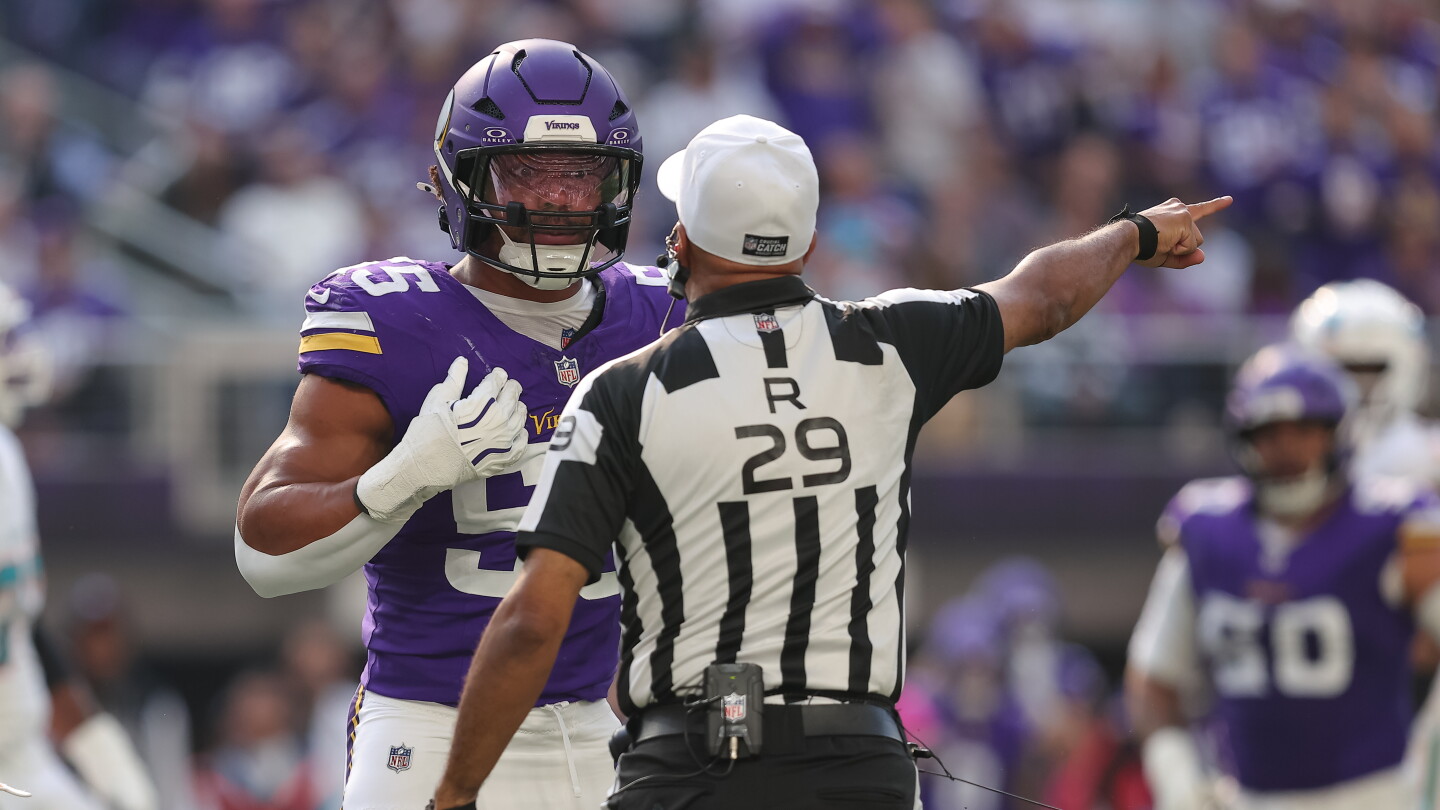
The relationship between the National Football League and its officiating corps is facing a period of significant friction following the league’s decision to sideline two veteran officials. The union representing these game-day workers is formally pushing back against what it describes as an overly aggressive disciplinary approach, marking a rare public dispute over how the league manages its on-field representatives.
What happened
The controversy stems from disciplinary actions taken against Referee Adrian Hill and Line Judge Jeff Seeman following incidents during recent games. Hill received a one-game suspension related to an interaction with Minnesota Vikings linebacker Eric Wilson. Meanwhile, Seeman was handed a more severe two-game suspension regarding comments directed at Arizona Cardinals tight end Trey McBride.
The NFL Referees Association (NFLRA) issued a formal statement on Tuesday, condemning the punishments as “excessive” and “inconsistent with past precedent.” The union announced that it would not only challenge the severity of these specific suspensions but also requested a meeting with the NFL Officiating Department. The goal of this meeting is to clarify the league’s disciplinary standards and ensure that future punishments align with historical practices.
Context
While the NFLRA does not deny that the conduct of Hill and Seeman fell below the league’s professional expectations, the union argues that the league is failing to account for the environment in which officials operate. NFLRA Executive Director Scott Green emphasized that while accountability is necessary, it must be balanced against the reality of the workplace.
Green pointed out that officials are frequently the targets of verbal abuse and highly charged confrontations from both players and coaches. While the union maintains that such abuse does not excuse an official’s own misconduct, they argue it is unfair for the league to demand the highest level of professionalism from officials while seemingly tolerating or minimizing the hostile behavior directed toward them. The union’s stance is that if the league wants to improve on-field conduct, it must address the behavior of everyone on the turf, not just those wearing the stripes.
Why it matters
This dispute is more than just a disagreement over a few missed paychecks; it is a fundamental labor-management issue rooted in the collective bargaining agreement (CBA) between the NFL and the NFLRA. In any unionized environment, disciplinary “precedent” is vital. If the league suddenly increases the severity of punishments without negotiating those changes or providing a clear framework, it creates a volatile workplace where employees feel unfairly targeted.
The final resolution of these suspensions will likely be determined through the arbitration procedures established in the CBA. Beyond the legalities, the NFLRA’s plan to meet with the NFL Players Association (NFLPA) leadership is a significant step. By involving the players’ union, the officials are signaling that the “growing levels of confrontation” on the field are a systemic problem that requires a collaborative solution rather than a purely punitive one.
How the NFL responds to this challenge will set the tone for official-player relations for the remainder of the season. If the suspensions stand as is, it may signal a new era of “zero tolerance” that could further strain the already difficult task of managing high-stakes professional football games.