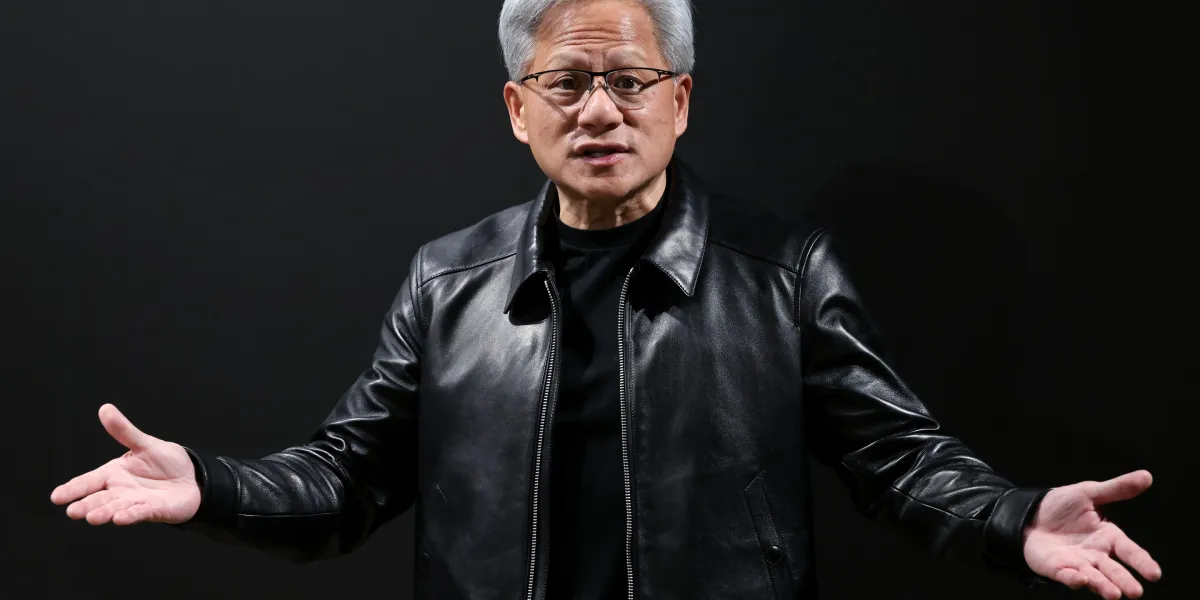
The global conversation surrounding artificial intelligence has long been polarized between those who see it as a revolutionary tool and those who fear it represents an existential threat to humanity. While several high-profile tech leaders have recently leaned into the latter narrative, Jensen Huang, the CEO of Nvidia, is firmly pushing back. Huang, whose company provides the essential hardware powering the AI revolution, recently dismissed “doomsday” scenarios as unscientific and irresponsible, sparking a new debate over the motives of those calling for a slowdown in development.
What happened
In a recent interview with CBS Sunday, Jensen Huang addressed the growing chorus of voices predicting that AI could lead to a global catastrophe as early as 2030. Huang was blunt in his assessment, stating there is a “0% chance” of an AI-driven end-of-the-world scenario by the end of the decade. He characterized the current wave of alarmist rhetoric as being divorced from scientific reality and suggested that the fear-mongering serves no constructive purpose for the public.
Huang went a step further by questioning the intentions of fellow AI pioneers who have been vocal about these risks. He suggested that the leaders of major AI labs might have “ulterior reasons” for stoking fear across the country. According to Huang, the focus should remain on engineering safety and verification rather than crafting apocalyptic narratives. He emphasized that while safety concerns are legitimate, they should be treated as technical challenges to be solved by engineers rather than reasons to halt progress.
Context
Huang’s comments stand in sharp contrast to the positions held by other influential figures in the industry, such as OpenAI CEO Sam Altman and Anthropic CEO Dario Amodei. Both Altman and Amodei have previously advocated for a more cautious approach, suggesting that the industry may need to slow down the release of advanced models to allow society and regulators time to adapt. Amodei has specifically proposed the use of independent safety evaluators and international cooperation to manage the risks associated with “frontier” models.
This internal industry friction comes at a time of significant political shifts regarding tech oversight. Former President Donald Trump has recently voiced opposition to increased AI regulation, arguing that existing civil and criminal laws are sufficient to address potential harms. Trump has framed the issue as a matter of national security and global competitiveness, proposing the creation of an “AI Force” to ensure the United States maintains its lead over China. This “growth-first” mindset aligns with Huang’s view that the U.S. should proceed as quickly as possible, provided safety remains a core engineering priority.
Why it matters
The disagreement between Huang and other AI leaders highlights a fundamental split in how the tech industry views its responsibility to the public. Huang’s most provocative claim is that some companies may be calling for new regulations not to increase safety, but to escape the burden of current legal frameworks. He warned that the “doomsday narrative” could be a smokescreen used by companies seeking to be relieved of existing liabilities.
For Nvidia, the stakes are exceptionally high. As the world’s most valuable company, its growth is tied directly to the continued and rapid expansion of AI infrastructure. If the industry were to face a government-mandated slowdown, Nvidia’s market position could be impacted. However, Huang argues that safety is best served by holding companies accountable under current laws rather than rushing to create new, potentially restrictive regulations that could stifle innovation.
Ultimately, this debate shifts the focus from science-fiction scenarios to the practical realities of corporate accountability and global competition. As AI continues to evolve faster than the Internet or the Industrial Revolution, the tension between those who want to “move fast and break things” and those who want to “slow down and secure things” will likely define the next decade of technological policy.