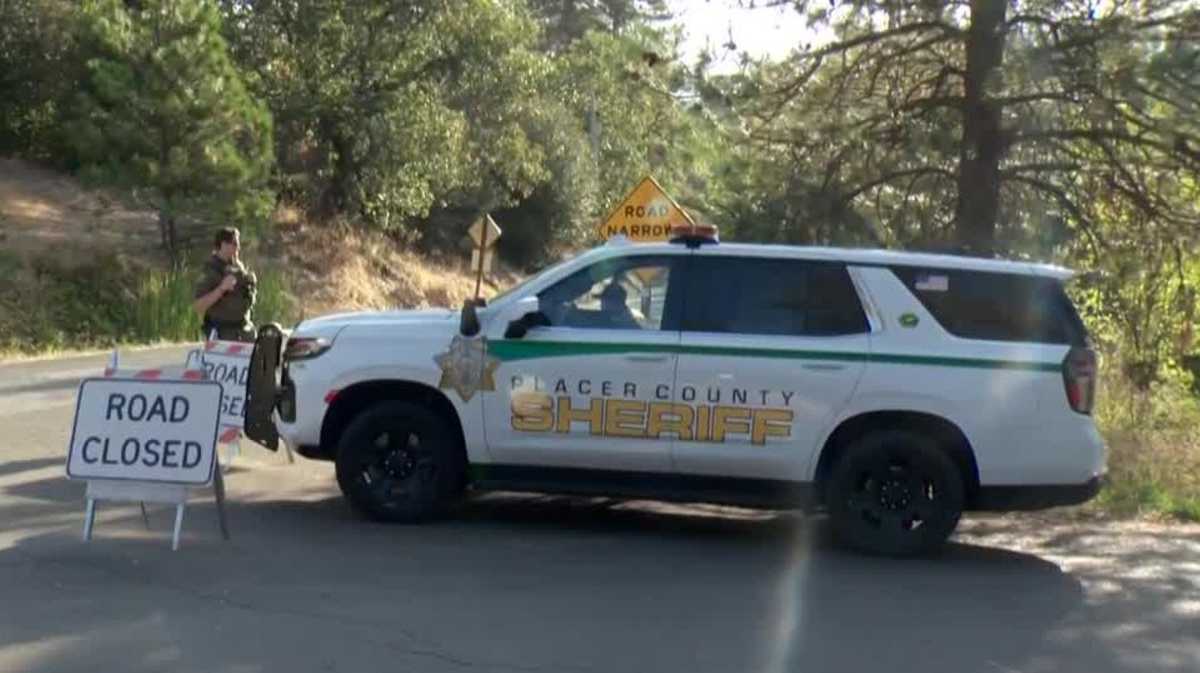
A violent multi-day crime spree across Northern California came to a dramatic and fatal conclusion early Monday morning. Following an intense manhunt that spanned multiple counties, law enforcement officers tracked a murder suspect to the rugged terrain of Iowa Hill. The resulting confrontation involved a prolonged gunbattle and a rapidly spreading wildfire, highlighting the extreme dangers faced by first responders in rural California.
What happened
The final standoff began in the early hours of Monday morning after authorities used infrared technology from a helicopter to locate 44-year-old Derek Spencer. According to Placer County Sheriff Wayne Woo, Spencer was hiding in the steep, heavily wooded area of Iowa Hill. The confrontation evolved into a two-hour shootout that ended shortly after 4:30 a.m. when deputies fatally shot the suspect.
The scene was uniquely perilous due to environmental factors. Investigators believe Spencer ignited several fires during the standoff, including the Mineral Fire, which significantly hampered law enforcement operations. By the time the shootout concluded, flames had advanced to within 90 yards of the location. The fire was so intense that a Washoe County Sheriff’s Office helicopter had to be called in to hoist Spencer’s body from the area, as ground crews could not safely navigate the encroaching blaze.
A massive tactical response was required to manage the situation. Eight separate SWAT teams, including units from as far away as Mono and Inyo counties, converged on the Iowa Hill area to assist. Following the shootout, detectives recovered both a rifle and a handgun from the suspect’s position.
Context
The path to Monday’s fatal shootout began several days earlier. Spencer, a resident of Fair Oaks, had a recent and frequent history with the legal system, having been booked into jail three times in September alone. He had been released on bond as recently as Thursday, September 17.
The most recent wave of violence began on Saturday with an armed carjacking in El Dorado County. By Sunday morning, Placer County deputies spotted Spencer in a stolen vehicle. In a desperate attempt to escape, Spencer rammed a patrol car with enough force to disable the cruiser, preventing a high-speed pursuit.
As the search intensified, deputies made a grim discovery at a nearby residence. Inside, they found the body of 76-year-old Cheryl Macy, who had been shot to death. Sheriff Woo noted that there appeared to be no prior connection between Spencer and Macy, suggesting the killing was a random and senseless act of violence. Spencer’s flight continued into the forest, where he reportedly fired upon both ground deputies and a police helicopter on Sunday afternoon before the final encounter on Monday.
Why it matters
This incident underscores several critical issues currently facing California communities and law enforcement agencies. First and foremost is the tragic loss of an innocent life; the death of Cheryl Macy has left a local community in mourning and serves as a reminder of the unpredictable nature of violent crime.
The case also brings the state’s judicial and bail systems into focus. The fact that the suspect had been arrested and released three times in a single month prior to the alleged murder and shootout is likely to spark renewed debate regarding pretrial release policies and how the justice system handles repeat offenders.
Furthermore, the intersection of criminal activity and environmental hazards presents a growing challenge for emergency services. The “Mineral Fire,” allegedly started by the suspect to evade capture, not only endangered the lives of the deputies and SWAT members on the scene but also diverted critical firefighting resources and delayed the investigation into Macy’s death. The coordination between multiple counties and specialized units demonstrates the complexity of modern policing in rural, fire-prone regions.