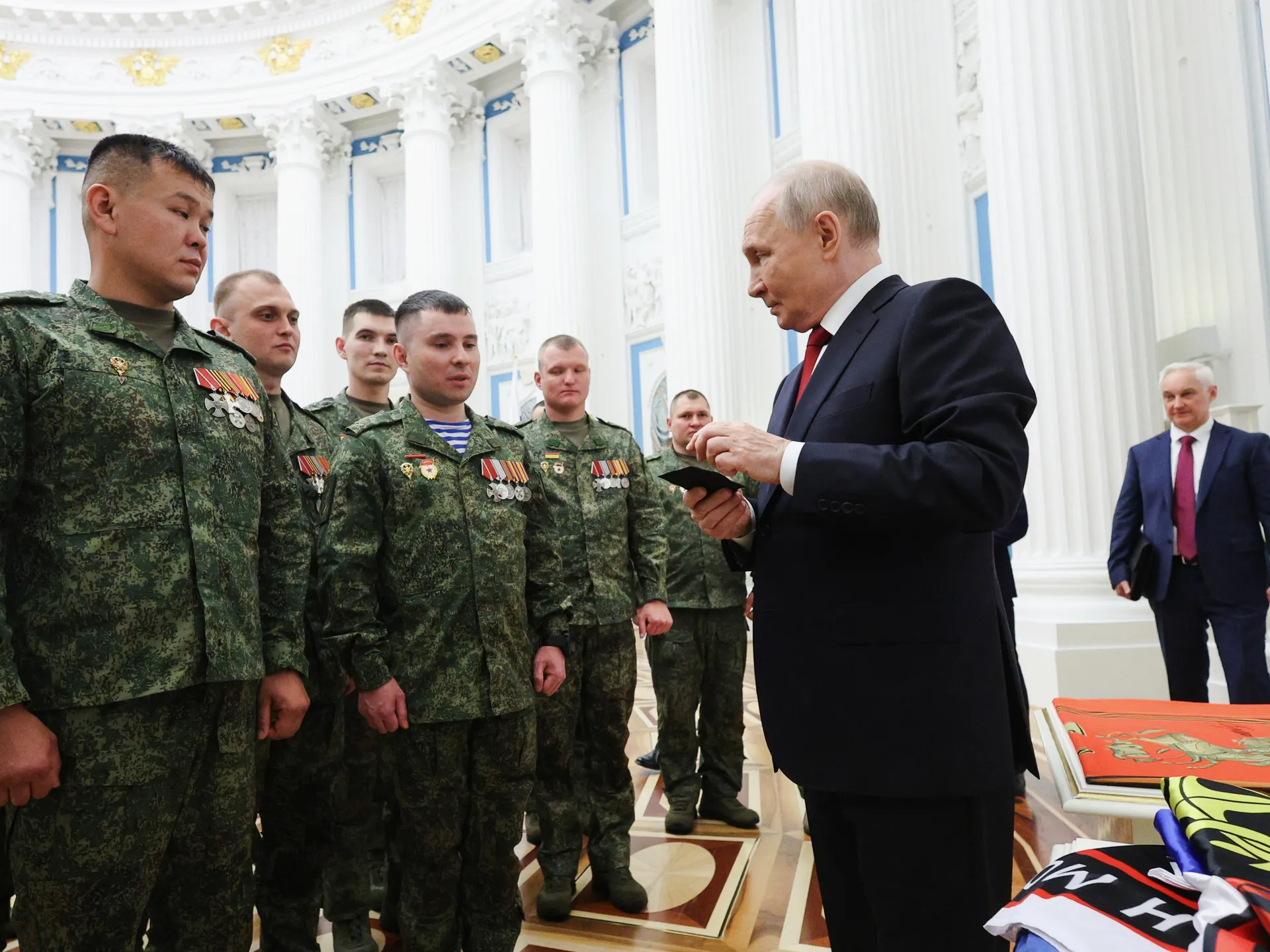
Russian President Vladimir Putin has once again ordered an increase in the authorized strength of the Russian armed forces, signaling Moscow’s preparation for a prolonged conflict. This latest decree adds 15,500 personnel to the military, marking the fourth such expansion in 2024 alone. The decision comes at a critical juncture as the frontlines in Ukraine remain largely static and both nations pivot toward a war of attrition defined by long-range strikes and drone technology.
What happened
On Sunday, President Putin signed a formal decree that raises the total authorized headcount of the Russian military to approximately 2.44 million units. Within this total, the number of active military personnel is set to reach 1,550,500. This move follows a series of similar orders issued in March, June, and July, illustrating a consistent trend of incremental growth in the nation’s combat capacity.
Since the spring of this year, the Russian government has authorized the addition of nearly 48,000 military personnel. Notably, the official decree did not specify the methods for recruitment—whether through volunteer contracts or other means—nor did it provide a detailed justification for the specific timing of this latest boost. While the Kremlin has remained relatively quiet on the logistics, the frequency of these expansions suggests a constant need to replenish ranks amid ongoing hostilities.
Context
The timing of this expansion is significant, as the conflict in Ukraine has entered a phase that many analysts describe as a stalemate. Despite sustained Russian offensives in eastern regions like Donetsk, territorial gains have remained limited and costly. Both the Russian and Ukrainian militaries have increasingly relied on unmanned aerial vehicles (UAVs) and long-range missile strikes to bypass traditional trench warfare, leading to a high-tech but grinding endurance test.
Internally, Russia faces the challenge of maintaining troop levels without triggering widespread domestic unrest. Ukraine has frequently alleged that Moscow is laying the groundwork for a fresh wave of mobilization—a claim the Kremlin has dismissed as disinformation. However, the steady increase in authorized personnel suggests that Russia is looking for ways to bolster its numbers through “soft” mobilization or increased recruitment of contract soldiers to avoid the political risks associated with a mandatory draft.
Why it matters
This personnel increase carries both technical and strategic implications. Some analysts, such as Andrei Kortunov of the Russian International Affairs Council, suggest that the move is largely technical. In his view, an addition of 15,000 troops is unlikely to fundamentally shift the immediate battlefield dynamics given the massive scale of the current theater. Instead, it may be a move to align official military quotas with the reality of current recruitment efforts.
However, from a broader strategic perspective, the expansion indicates that Russia is digging in for a “protracted war.” Experts like Olena Halushka point out that the current battlefield reality contradicts the Kremlin’s earlier expectations of a swift victory or the total capture of the Donetsk region. By continuously raising the ceiling for its military strength, Moscow is signaling to both its domestic audience and the international community that it is prepared to sustain the war effort for years to come.
Furthermore, the expansion suggests that a diplomatic resolution remains a distant prospect. As long as Russia continues to prioritize the expansion of its manpower, the focus remains on military endurance rather than negotiation. For Ukraine and its Western allies, these decrees serve as a reminder that Moscow is committed to a long-term strategy of attrition, requiring a corresponding commitment to long-term defense and support.