United States Secretary of State Marco Rubio has publicly asserted that a recent security breach at RAF Fairford in Gloucestershire bears the hallmarks of a foreign state’s influence. Speaking in a television interview following the weekend’s events, Rubio suggested that the incident was not merely a domestic concern but was likely orchestrated by external forces hostile to American interests. While the investigation remains ongoing, the Secretary’s comments have intensified the diplomatic spotlight on the relationship between Western intelligence and foreign adversaries.
What happened
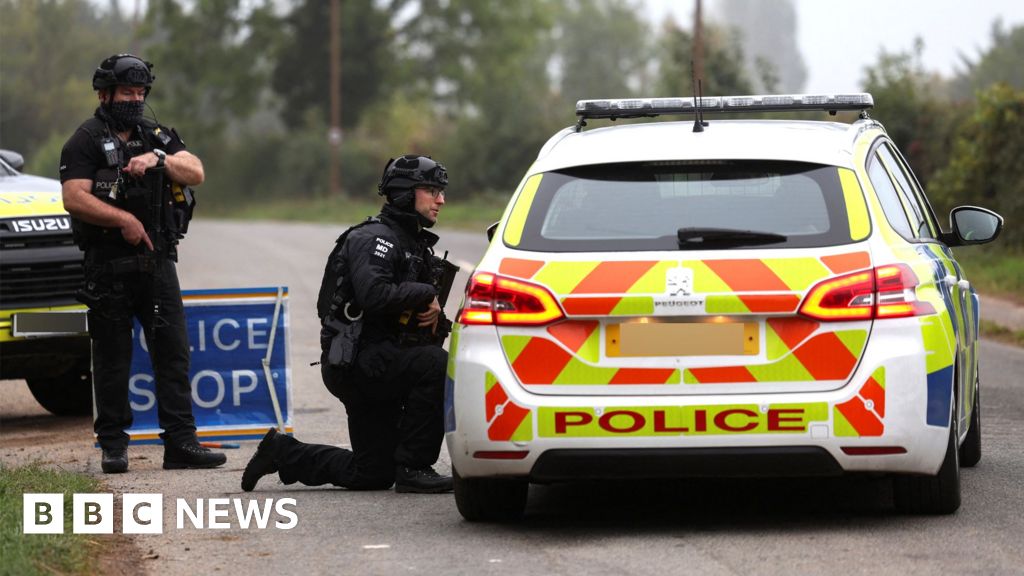
The incident unfolded in the early hours of Sunday morning when police were alerted to three suspicious vehicles positioned near the perimeter of RAF Fairford. The discovery prompted authorities to declare a major incident, leading to the immediate evacuation of dozens of residential properties in the surrounding area. Following a rapid response from law enforcement, five men—all British nationals aged between 23 and 25—were taken into custody on suspicion of committing terrorism-related offenses.
Despite the severity of the initial charges, the suspects were later released on bail pending further inquiries. This decision drew sharp criticism from across the Atlantic, with Donald Trump expressing surprise at the move, suggesting that the individuals should have remained in detention.
Assistant Commissioner Laurence Taylor, the head of Counter Terrorism Policing, confirmed that investigators are exploring the possibility that the suspects were acting as “proxies.” This theory suggests the men may have been recruited or directed by a foreign state, potentially without their full knowledge of who was actually pulls the strings.
Context
RAF Fairford occupies a critical position in global military strategy, serving as a long-standing forward operating base for the United States Air Force. In recent months, its importance has grown as it has been utilized for defensive strikes against Iranian interests in the Middle East. These operations were conducted with the explicit approval of the UK government.
The tension surrounding the base is not new. Earlier this year, the Iranian government issued a warning that any military installation used for “aggression” against its territory would be viewed as a legitimate target. In response to Rubio’s recent allegations, the Iranian embassy in London issued a staunch denial, characterizing the claims as “unfounded and malicious.” They insisted that Tehran had no connection to the events in Gloucestershire and condemned the speculation as an attempt to further strain international relations.
Why it matters
The situation at RAF Fairford highlights the evolving nature of modern security threats, where domestic actors may be utilized to carry out the agendas of foreign governments. If the link to a “foreign actor” is proven, it would represent a significant escalation in the use of proxy tactics on British soil. Secretary Rubio’s decision to name Iran specifically, despite a lack of public evidence at this stage, indicates a high level of concern within the U.S. administration regarding global threats to their military assets.
Furthermore, the incident has exposed a slight rift in rhetoric between U.S. and UK officials. While American leaders have pushed for a more aggressive stance on the suspects’ detention, UK Prime Minister Andy Burnham has taken a more measured approach. Following a Cobra meeting on Monday, the Prime Minister urged the public and political figures alike to avoid speculation, emphasizing the need for the authorities to establish a complete factual record before drawing definitive conclusions.
As the five suspects remain under strict movement and contact restrictions, the international community awaits more information. The outcome of this investigation will likely have lasting implications for how the UK and the US coordinate their defense of shared military installations against both internal and external threats.