A devastating wave of Russian missile and drone strikes hit the Kyiv region overnight on Wednesday, resulting in at least 17 deaths and dozens of injuries. The attack, which targeted several locations across the capital and its surrounding districts, underscored the growing vulnerability of Ukrainian airspace as the country’s defensive resources reach a breaking point. While rescue teams spent the day combing through the wreckage of civilian infrastructure, the incident has sparked renewed calls from the Ukrainian government for urgent international military support.
What happened
The aerial assault lasted approximately two hours, during which a combination of missiles and drones bypassed regional defenses. According to President Volodymyr Zelenskyy and state emergency services, the casualties were widespread, with 44 people reported wounded in addition to those killed. One of the deadliest incidents occurred in the Brovary district, where a strike on a train station claimed the lives of eight individuals.
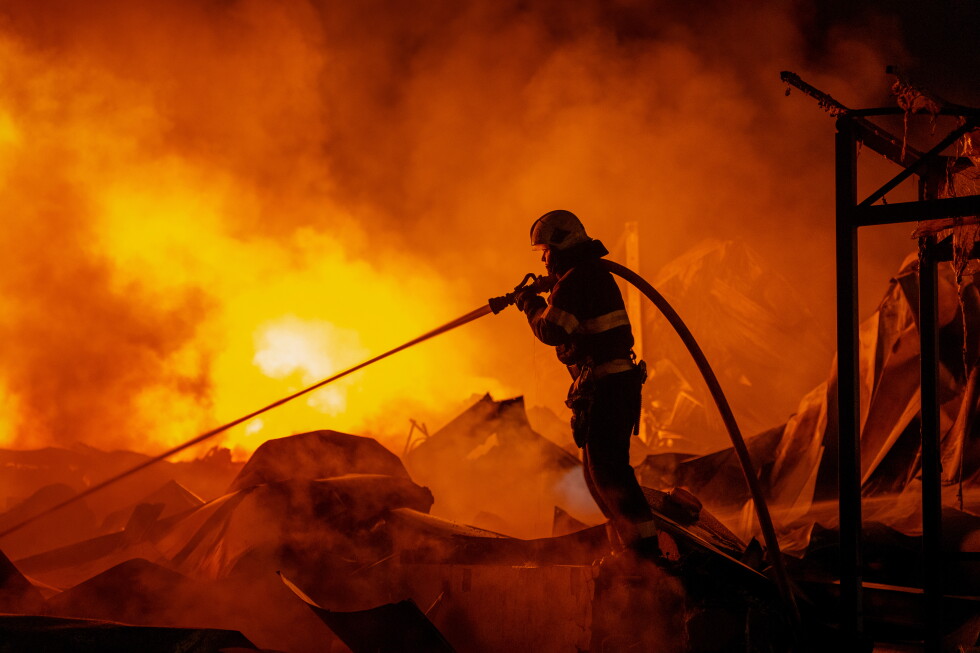
In the capital itself, the barrage ignited massive fires at several commercial and logistical sites. Among the locations hit were a construction materials warehouse, a brewing company, and a mail sorting facility. Emergency crews were filmed battling intense blazes at a food warehouse as they searched for survivors among the ruins. While the Ukrainian government maintained that these sites were strictly civilian and had no connection to the ongoing hostilities, the Russian Defense Ministry countered by claiming that the businesses were being used to mask military operations.
Context
This latest bombardment follows a pattern of large-scale strikes that have plagued the Kyiv region throughout the summer of 2026. The effectiveness of the Russian campaign has increased as Ukraine’s air defense stocks have hit record lows. President Zelenskyy noted that during this specific overnight attack, the military failed to intercept a single incoming missile.
The primary issue remains a critical shortage of interceptors for the U.S.-manufactured Patriot systems. These systems are currently the only tools in Ukraine’s arsenal capable of neutralizing high-speed ballistic missiles. However, ammunition for these units has become increasingly difficult to secure. Zelenskyy indicated that the supply of defensive missiles during the first half of 2026 has plummeted to just one-third of the levels seen in 2025. This scarcity is attributed in part to the ongoing conflict in Iran, which has redirected global military resources and narrowed the availability of high-tech munitions.
Why it matters
The inability to protect the capital region marks a concerning shift in the conflict’s dynamics. As air defenses falter, Russia is able to strike deep into Ukrainian territory with higher success rates, causing significant loss of life and destabilizing essential services like mail and transport. The routine nature of these strikes suggests that without a major influx of defensive hardware, the humanitarian toll will continue to climb.
In response to the crisis, the Ukrainian leadership is pursuing a three-pronged strategy. First, there is a renewed plea for allies—specifically the United States—to prioritize the delivery of Patriot ammunition. Second, Ukraine is exploring the possibility of establishing domestic production lines for these interceptors to reduce reliance on foreign shipments. Finally, Zelenskyy is seeking greater operational flexibility, including permission to use advanced communication systems like Starlink to coordinate strikes against Russian launch sites. By targeting the launchers themselves, Ukraine hopes to mitigate the threat at its source, rather than relying solely on a depleted shield of interceptors.