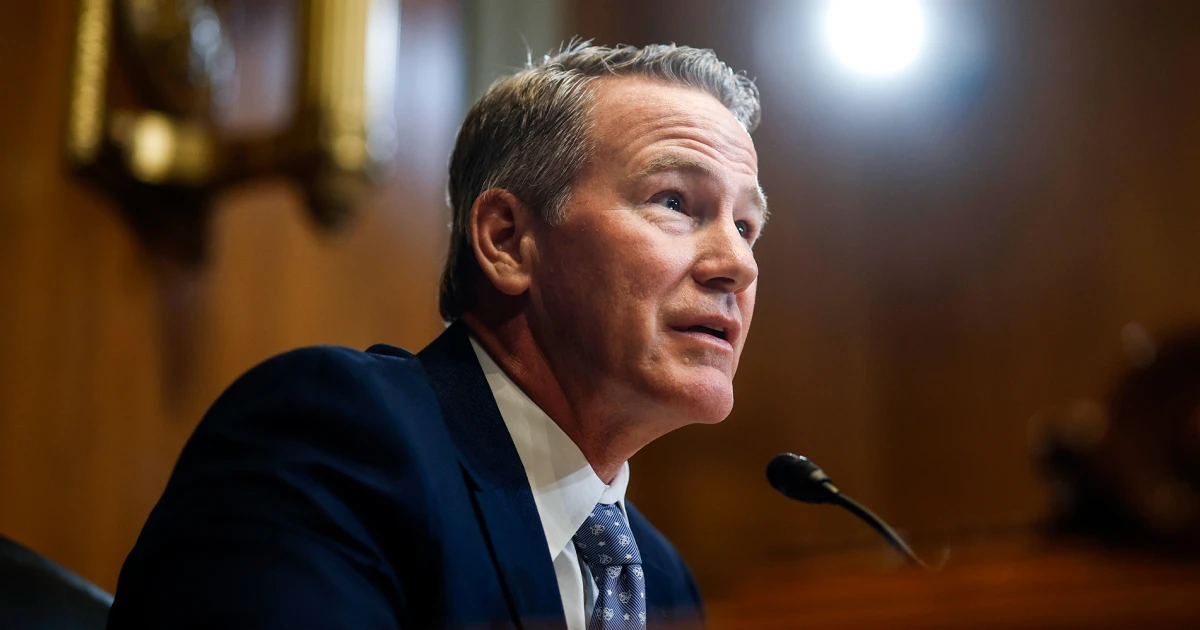
A legislative effort to shield American households from rising utility costs associated with data center expansion failed to move forward in the Senate this week. Despite receiving overwhelming bipartisan support in the House of Representatives earlier this month, the measure fell short of the 60 votes required to overcome a filibuster, highlighting a deep divide over how the federal government should regulate the energy-intensive tech industry.
What happened
On Wednesday, Senate Democrats blocked the Ratepayer Protection Act in a 57-43 vote. The legislation, championed by Senator Jon Husted (R-Ohio), sought to establish federal guidelines for state public utility commissions. The primary goal of the bill was to ensure that developers of massive data centers—which consume vast amounts of electricity and water—are held responsible for the infrastructure costs they generate, rather than passing those expenses on to local residential consumers.
The Senate’s rejection stands in stark contrast to the bill’s performance in the House, where it passed with a nearly unanimous 417-3 vote. Senate Majority Leader John Thune (R-S.D.) pointed to this broad House support, including votes from high-profile Democrats, as evidence that the bill was a common-sense solution. However, Senate leadership on the other side of the aisle viewed the proposal through a different lens.
Senate Minority Leader Chuck Schumer (D-N.Y.) labeled the act a “fraud” and “toothless,” arguing that because the federal standards were essentially optional for states, the bill would fail to provide meaningful protections. Schumer suggested that the legislation was more about political posturing than substantive policy, urging the Senate to instead consider alternative bills that would impose stricter, mandatory requirements on data center developers.
Context
The legislative battle is unfolding against a backdrop of intense political competition in Ohio. Senator Husted, an appointee currently seeking a full term, has faced significant criticism from his Democratic challenger, former Senator Sherrod Brown. Brown has attempted to link Husted to the rapid growth of data centers in Ohio, a trend that has become increasingly controversial among local residents concerned about their utility bills.
Public sentiment regarding data centers appears to be reaching a tipping point. Recent polling suggests that these facilities are broadly unpopular, with many voters indicating they would be less likely to support candidates who facilitate their construction. This anxiety is largely driven by the fear that the massive energy requirements of AI and cloud computing will strain local power grids and force everyday citizens to subsidize corporate infrastructure.
Even within the Republican party, there is some acknowledgement that the bill was partially intended as a messaging tool. Retiring Senator Thom Tillis (R-N.C.) noted that while it was important to highlight the issue of utility costs, he believed that such matters are best handled by state and local utility commissions rather than through federal intervention.
Why it matters
The failure of the Ratepayer Protection Act leaves a vacuum in federal oversight as the data center industry continues to boom. As artificial intelligence technologies demand more computing power, the strain on the nation’s electrical grid is expected to intensify. Without a unified federal standard, the responsibility for managing these costs remains with a patchwork of state regulators, leading to inconsistent protections for consumers.
For voters, the issue has become a litmus test for how candidates balance economic development with consumer protection. The debate in the Senate suggests that while both parties recognize the potential for data centers to drive up utility prices, they remain fundamentally at odds over whether federal “guardrails” should be mandatory or advisory. Until a consensus is reached, the financial burden of expanding the digital frontier may continue to fall on the shoulders of local ratepayers.