A Republican-backed effort to curb stock trading among members of Congress failed to clear a critical procedural hurdle in the Senate on Wednesday. While both parties have expressed public support for tightening ethics rules regarding financial investments, the legislation collapsed due to sharp disagreements over the scope of the restrictions and the inclusion of a contentious voter identification requirement.
The vote, which concluded 53 to 47 along strict party lines, fell short of the 60 votes necessary to overcome a filibuster. The defeat marks the latest setback in a multi-year effort to address public concerns regarding insider trading and financial conflicts of interest on Capitol Hill.
What happened
The legislation in question, titled the Stop Insider Trading Act, had previously passed the House of Representatives in July with nearly unanimous Republican support. The bill proposed a ban on the purchase of publicly traded stocks by lawmakers, their spouses, and their dependent children. It also sought to increase transparency by requiring officials to disclose any intended stock sales at least seven days in advance.
However, Senate Democrats argued that the bill’s provisions were insufficient. They pointed out that while the act prohibited new purchases, it did not mandate a total divestment from existing holdings or an outright ban on all trading activities. Furthermore, the minority leadership criticized the bill for excluding the executive branch, claiming that the White House and administrative officials should be held to the same ethical standards as members of Congress.
The most significant point of contention was a late addition to the bill: a provision requiring photo identification for federal elections. Democrats labeled this a “poison pill,” arguing that the requirement was an unrelated political maneuver designed to restrict mail-in voting and ensure the bill’s failure.
Context
The push for this legislation comes at a time of heightened political sensitivity as senators prepare for a recess to campaign for the upcoming midterm elections. Senate Majority Leader John Thune defended the bill as a “common-sense” approach to ethics, framing it as a necessary step to restore public trust. By forcing a vote, Republican leadership aimed to put Democrats on the record regarding two high-profile issues: congressional ethics and election integrity.
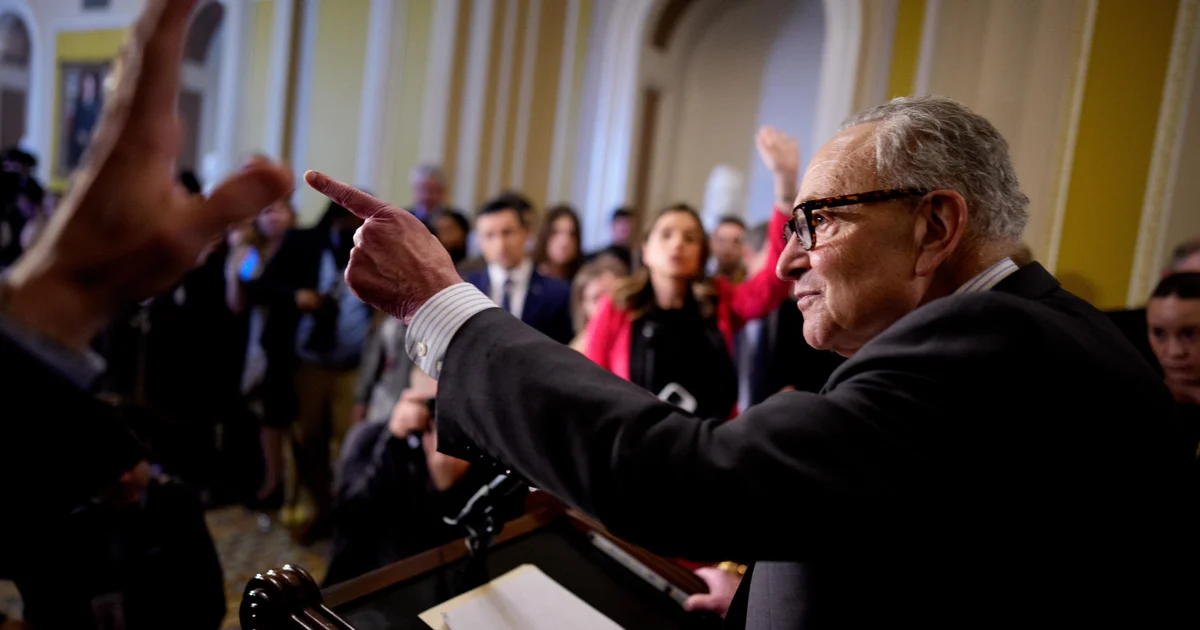
On the other side of the aisle, Senate Minority Leader Chuck Schumer led the opposition, characterizing the bill as a hollow gesture. He argued that Republicans intentionally crafted a weak proposal to “save face” without implementing meaningful reform. Schumer noted that his caucus remains open to a comprehensive ban on stock trading but only if it includes more rigorous enforcement and applies to all branches of government.
Why it matters
The failure of the Stop Insider Trading Act highlights the deep partisan divide that continues to stall ethics reform. Despite a rare consensus among the American public that lawmakers should not be able to profit from non-public information, the path to a legislative solution remains blocked by broader political battles.
For voters, the gridlock illustrates the difficulty of separating popular policy goals from partisan “riders”—unrelated provisions added to bills to serve a political agenda. As the control of the Senate remains a toss-up heading into the next election cycle, the inability to pass even limited trading restrictions will likely become a recurring theme on the campaign trail. Both parties are now poised to use the failed vote as ammunition, with Republicans accusing Democrats of blocking ethics reform and Democrats accusing Republicans of using the issue as a vehicle for voter suppression.