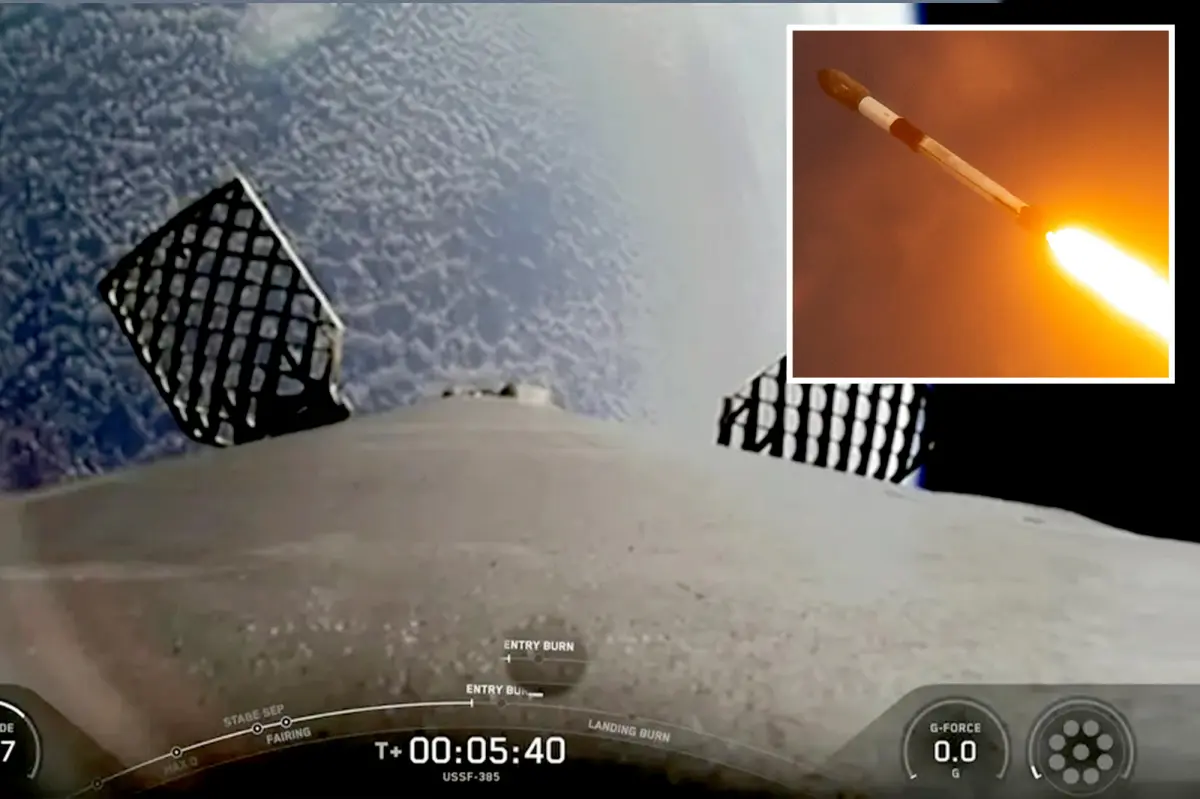
Residents across California’s Central Coast experienced a thunderous start to their Saturday morning as SpaceX successfully deployed a secretive mission for the United States military. The launch, which originated from Vandenberg Space Force Base, sent a Falcon 9 rocket into the early morning sky, leaving a trail of sonic booms that resonated through Santa Barbara, San Luis Obispo, and Ventura counties. As the aerospace company continues its rapid-fire launch schedule, this latest operation underscores the deepening partnership between Elon Musk’s private enterprise and the nation’s defense infrastructure.
What happened
At approximately 7 a.m. on September 26, the Falcon 9 ignited its engines and ascended from the coastal launchpad, carrying the USSF-385 mission. Due to the sensitive nature of the cargo, the specifics of the payload, its intended orbit, and its operational objectives remain strictly classified. This secrecy extended to the public broadcast of the event; SpaceX terminated its live webcast shortly after the initial ascent, a standard protocol for missions involving national security.
Despite the mystery surrounding the satellite itself, the mechanical performance of the rocket followed SpaceX’s signature recovery pattern. Roughly eight and a half minutes after liftoff, the rocket’s first-stage booster—the component responsible for providing the initial thrust to escape Earth’s atmosphere—successfully navigated its way back to a drone ship positioned in the Pacific Ocean. This precision landing ensures the booster can be refurbished and reused for future flights, a cornerstone of the company’s business model.
Context
This launch is part of an intensive period of activity for both SpaceX and the U.S. Space Force at the Vandenberg facility. The USSF-385 mission represents the third classified national security flight launched from the base in just over two weeks. It follows closely on the heels of the USSF-153 and USSF-259 missions, which were sent into orbit on September 10 and September 16, respectively.
The frequency of these launches highlights the immense reliability and high-tempo capabilities of the Falcon 9 platform. In the current calendar year alone, the Falcon 9 has been utilized for more than 100 missions. While a significant majority of these flights—approximately three-quarters—are dedicated to expanding SpaceX’s own Starlink satellite internet constellation, the remaining slots are increasingly filled by critical government and commercial contracts. Currently, the Starlink network consists of over 11,000 low-orbit satellites, providing a massive backbone for global connectivity.
Why it matters
The successful deployment of USSF-385 is a testament to the shifting landscape of space exploration and defense. The U.S. government’s reliance on private contractors like SpaceX for sensitive military operations marks a departure from the era of exclusively government-run programs. By utilizing reusable rocket technology, the Space Force is able to deploy assets more frequently and at a lower cost than previously possible.
Furthermore, the commercial success of these missions has had a profound impact on the global economy and the personal wealth of SpaceX’s leadership. Following a surge in the company’s market valuation this summer, Elon Musk reached the milestone of becoming the world’s first trillionaire. The continued dominance of SpaceX in both the commercial and defense sectors suggests that the company will remain the primary gatekeeper for American access to orbit for the foreseeable future. As the pace of launches from the California coast accelerates, the intersection of private innovation and national defense continues to redefine the final frontier.