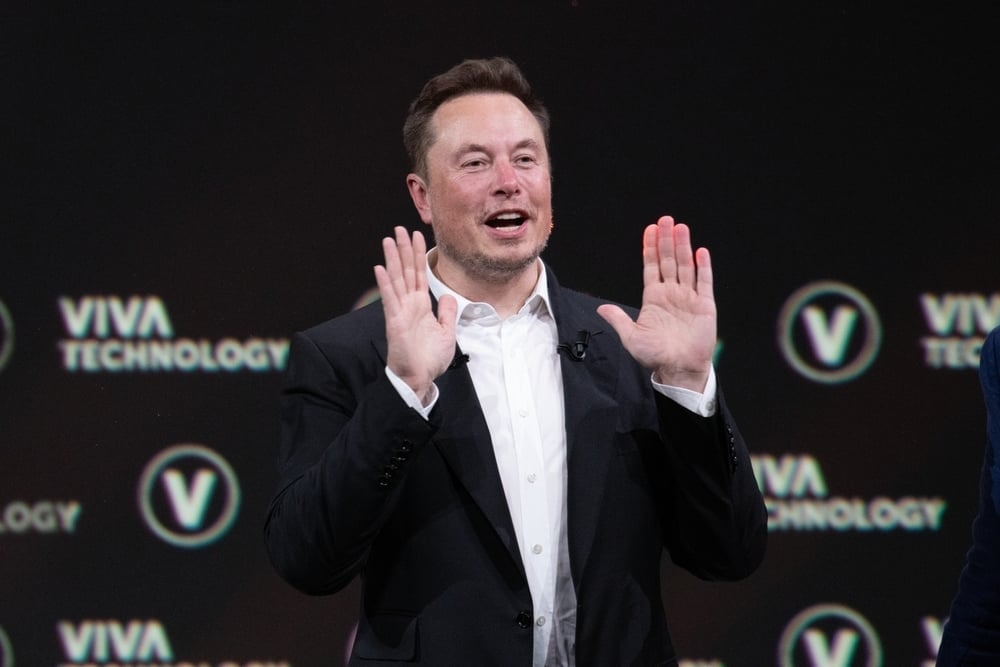
Today marks a historic transition for SpaceX as it prepares to host its first earnings call as a publicly traded company. After the closing bell, the aerospace giant, trading under the ticker SPCX, will provide investors with their first official glimpse into its financial health. While traditional analysts are focused on the bottom line, prediction markets are buzzing with activity, betting not just on the numbers, but on the specific rhetoric CEO Elon Musk will use to frame the company’s future.
What happened
Anticipation for the 4:30 p.m. ET call is reflected in the high volume of activity on prediction platforms like Polymarket and Kalshi. Currently, sentiment is cautious; traders on Polymarket give the company only a 34% chance of exceeding earnings expectations. Wall Street analysts are bracing for a quarterly loss of approximately 23 cents per share on revenue of roughly $6.9 billion.
The financial backdrop is a challenging one. While SpaceX reported a net loss of $4.9 billion on $18.7 billion in revenue last year, the stock is currently struggling to regain its footing. Closing Monday at $114.53, the share price has dropped 15% from its initial public offering price of $135 and is trading at nearly half of its June peak of $225.64. Investors are particularly focused on the company’s massive capital expenditure, with roughly $10.2 billion earmarked for AI-related infrastructure—a figure that dwarfs the $1.42 billion in operating profit generated by the Starlink satellite division.
Context
The narrative surrounding SpaceX is shifting from pure space exploration to a dual focus on aerospace and artificial intelligence infrastructure. This is evidenced by the $60 billion stock acquisition of the AI coding firm Cursor, a deal expected to close this quarter. Furthermore, SpaceX is repositioning its “Colossus” supercomputer as a powerhouse for a burgeoning AI-infrastructure business. High-profile clients like Google, Anthropic, and Reflection AI are reportedly contracted to pay billions monthly as their capacity increases.
On the hardware side, the company’s strategic priorities have also evolved. While Mars has long been Musk’s primary obsession, the focus has shifted toward a more immediate goal: a permanent lunar city. Musk recently suggested that a settlement on the Moon could be achieved within a decade, a sharp pivot from his previous stance that lunar missions were a “distraction.” This shift is critical as SpaceX navigates its relationship with NASA and the Artemis program, which has recently seen its timeline delayed and its competitive field widened to include rival firms like Blue Origin.
Why it matters
For the first time, SpaceX must answer to the rigors of public market scrutiny. The era of “philosophical” updates, where Musk speaks of “consciousness” and the far future, is being replaced by a demand for “arithmetic.” Investors want to know how the company will balance its astronomical AI spending with the actual returns from Starlink and its new “Starmind” satellite constellation—a planned network of one million satellites designed to host data centers in orbit.
The outcome of this call will likely determine whether the market views SpaceX as a sustainable aerospace leader or an overextended AI venture. With traders betting heavily on keywords like “AI,” “Data Center,” and “Grok,” the pressure is on Musk to prove that his vision for space-based computing can offset the heavy losses of the company’s traditional launch and exploration sectors. As the stock remains well below its IPO price, the market’s patience for visionary rhetoric may be wearing thin in favor of a clear path to profitability.