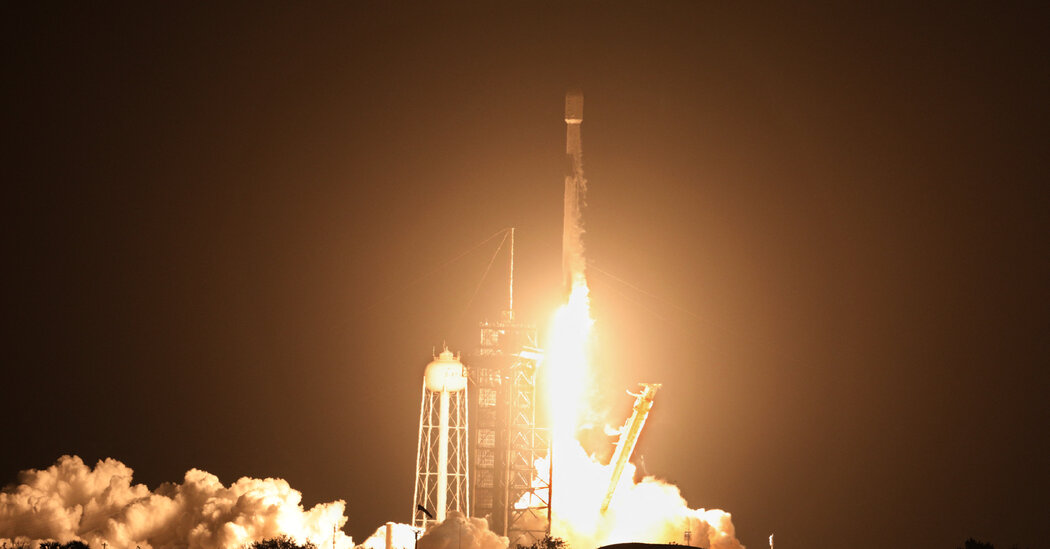
On Wednesday morning, the lunar surface will experience a high-speed encounter with a piece of human-made machinery. A spent second-stage booster from a SpaceX Falcon 9 rocket is projected to crash into the moon, highlighting the growing presence of orbital debris in deep space. While the impact is unintentional, it serves as a stark reminder of the physical footprint humanity leaves behind as it pushes further into the solar system.
What happened
The upper stage of the Falcon 9 rocket, which has been adrift in a chaotic orbit for several months, is expected to slam into the moon during the early hours of Wednesday. This particular piece of hardware was used during a mission last year to transport two private lunar landers toward their destination. After successfully deploying its payloads and exhausting its fuel, the stage was left in a high, unstable orbit.
Over the intervening months, the complex gravitational interplay between the Earth, Moon, and Sun has gradually altered the stage’s flight path. This “orbital decay” eventually locked the discarded hardware onto a terminal trajectory. Experts tracking the object indicate that the impact will occur on the lunar surface, likely in a region not immediately visible from Earth at the moment of contact. Because the moon lacks an atmosphere to slow the object down, the rocket stage will strike the surface at several thousand miles per hour, resulting in a kinetic explosion and the formation of a new crater.
Context
This specific Falcon 9 stage was instrumental in launching private lunar missions, a sector that has seen rapid growth over the last two years. In a typical SpaceX launch, the first-stage booster returns to Earth or a drone ship for refurbishment and reuse. However, the second stage is designed to deliver payloads into high-energy orbits or onto interplanetary trajectories, often leaving it with insufficient fuel to return to Earth’s atmosphere.
While many spent rocket stages eventually fall back to Earth and burn up safely over the ocean, those sent toward the moon often enter a “graveyard” of unpredictable orbits. This is not the first time human artifacts have struck our celestial neighbor. Since the mid-20th century, the moon has been the final resting place for various defunct satellites, crashed landers, and intentionally de-orbited rocket stages from the Apollo era. What makes this event notable is the unintentional nature of the collision and the fact that it involves hardware from a commercial entity rather than a national space agency.
Why it matters
The impending impact raises significant questions regarding the management of “space junk” beyond low Earth orbit. As private companies like SpaceX ramp up their lunar delivery schedules, the area between Earth and the moon—often called cis-lunar space—is becoming increasingly crowded with discarded technology. Without stricter international guidelines or improved tracking capabilities, these unintentional collisions may become more frequent.
However, the event also presents a unique, if unplanned, scientific opportunity. Researchers often use such impacts to study the moon’s composition. When the Falcon 9 stage hits the surface, it will kick up a plume of lunar dust and regolith. Orbiting spacecraft, such as NASA’s Lunar Reconnaissance Orbiter, may be able to observe the impact site or the resulting debris cloud. By analyzing the size of the new crater and the material ejected from beneath the surface, scientists can gain insights into the lunar subsurface that are otherwise difficult to obtain.
Ultimately, while the crash is a form of celestial littering, it serves as a case study for the future of space traffic management. As humanity prepares for a permanent presence on the moon through programs like Artemis, managing the debris of the past will be essential for the safety of the missions of the future.