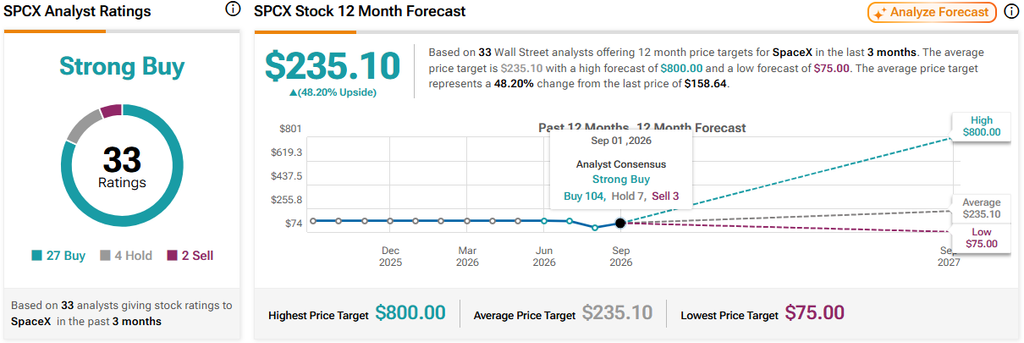
Elon Musk’s primary ventures saw a significant boost on Wall Street this past Friday, with both SpaceX and Tesla recording notable gains. While investor sentiment pushed both stocks higher, a closer look at analyst projections reveals a stark contrast in where the most significant future growth is expected. While Tesla continues to dominate the electric vehicle market, Wall Street experts are signaling that SpaceX may have far more room to run, with some price targets suggesting an upside nearly ten times that of the automotive giant.
What happened
SpaceX shares climbed approximately 7% following a flurry of activity in both its aerospace and technology divisions. The company successfully executed its Starship Flight 14 mission, which reached orbit and deployed its first batch of operational Starlink V3 satellites. This milestone marks a transition for Starship from a test vehicle to a functional commercial asset. Additionally, SpaceX is deepening its ties with Nvidia, planning to integrate high-performance Vera Rubin NVL72 systems into its upcoming Starmind AI satellites. This move suggests SpaceX is positioning itself as a leader in orbital computing, not just launch logistics.
Tesla, meanwhile, saw its stock rise by roughly 5% on the back of strong third-quarter delivery numbers. The company handed over 486,532 vehicles to customers, significantly outpacing the 461,974 units that analysts had anticipated. This delivery beat occurred even as production stayed slightly lower at 464,391 units, helping to clear existing inventory. However, the news was not entirely positive; Tesla’s energy storage deployments fell short of expectations, coming in at 13.7 GWh against a forecasted 15.9 GWh.
Context
The divergence in analyst expectations highlights the different stages of maturity for these two companies. SpaceX is currently viewed through a lens of aggressive expansion. With 33 analysts covering the stock, the consensus is a “Strong Buy.” The average price target of $235.10 represents a potential 48% increase from its current valuation. This optimism is fueled by the company’s ability to maintain a grueling launch schedule—completing three missions in a single 13-hour window—while simultaneously opening new revenue streams in satellite-based artificial intelligence.
Tesla’s outlook is more conservative. While the company remains the leader in the EV sector, Wall Street is split on its remaining growth potential. With a “Moderate Buy” consensus and 25 analysts weighing in, the average price target of $391.40 implies a modest 5% upside. Investors appear to be waiting for more than just delivery beats; they are looking toward the October 21 financial report to see if the company can maintain margins while pivoting toward newer technologies.
Why it matters
The contrast in these projections suggests that while Tesla is a proven entity with established delivery metrics, SpaceX represents a new frontier of industrial and technological integration. The partnership with Nvidia to put AI infrastructure in orbit indicates that SpaceX is evolving into a diversified tech conglomerate rather than a simple rocket manufacturer. For investors, this suggests that the “Musk premium” is currently shifting toward the stars.
For Tesla, the focus is now shifting from quarterly delivery volume to long-term innovation. The upcoming earnings report will likely be a turning point, as investors seek clarity on the progress of Full Self-Driving (FSD) software, the much-anticipated robotaxi unveiling, and the development of the Optimus humanoid robot. Until these high-margin technologies prove their commercial viability, analysts seem content to keep Tesla’s price targets grounded while SpaceX’s valuation is projected to soar.