The U.S. Supreme Court has declined to intervene in a legal dispute involving a Michigan school district’s decision to prohibit students from wearing clothing featuring a controversial political slogan. By refusing to hear the appeal, the nation’s highest court allows lower court rulings to stand, effectively upholding the school’s authority to regulate certain types of student attire deemed inappropriate for the classroom environment.
What happened
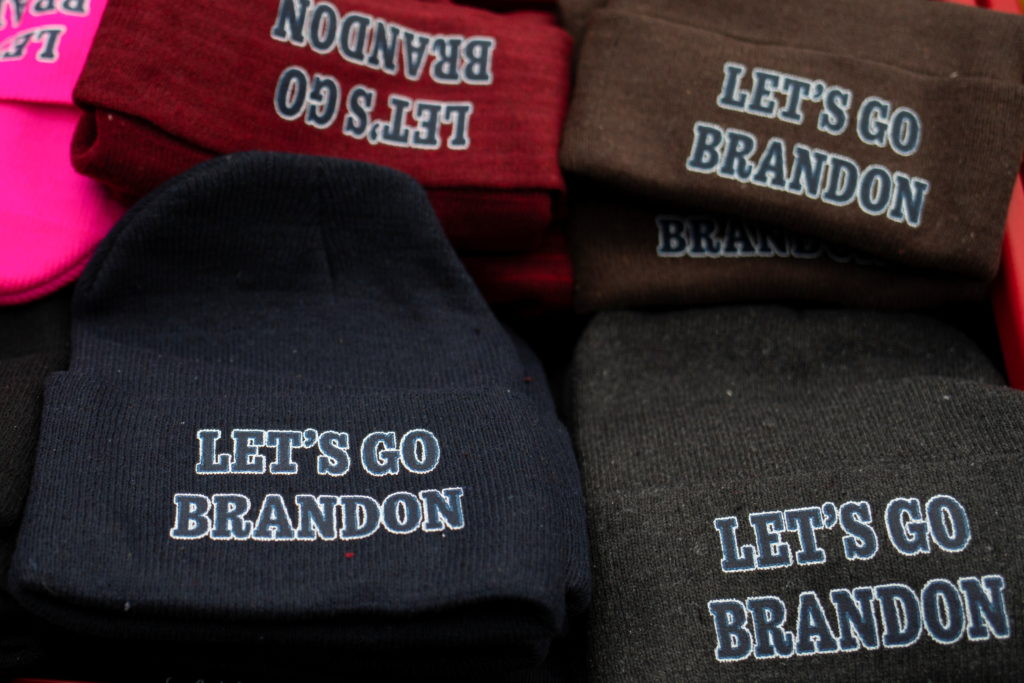
The legal battle began after a Michigan mother provided her two sons with sweatshirts bearing the phrase “Let’s Go Brandon” for Christmas in 2022. When the boys wore the apparel to school, administrators instructed them to remove the items, citing district policies regarding student dress and conduct.
The mother subsequently filed a lawsuit against the school district, alleging that the ban violated her children’s First Amendment rights. She argued that the clothing represented a form of protected political expression and that the school’s intervention constituted unconstitutional censorship. After failing to find success in the lower courts, she petitioned the Supreme Court to review the case. With the Court’s recent decision to rebuff the appeal, the legal challenge has reached its end.
Context
The phrase “Let’s Go Brandon” emerged as a viral political slogan in late 2021 following a NASCAR race. During a televised interview with driver Brandon Brown, the crowd behind him could be heard chanting a vulgarity directed at President Joe Biden. The reporter covering the event suggested the crowd was actually chanting “Let’s Go Brandon.”
Consequently, the phrase became a popular “coded” substitute for the original profanity. In the context of a school setting, administrators have frequently argued that such slogans, even when coded, carry a vulgar connotation that disrupts the educational process. While the landmark 1969 case Tinker v. Des Moines established that students do not lose their constitutional rights at school, subsequent rulings have given administrators more leeway to restrict speech that is considered lewd, indecent, or inherently offensive.
Why it matters
This decision reinforces the authority of school administrators to maintain order and decorum within public institutions. By declining to hear the case, the Supreme Court has signaled a continued reluctance to micromanage local school board policies, particularly those involving language that can be interpreted as profane or disruptive.
For educators and administrators, the outcome provides a level of protection when enforcing dress codes that target “coded” vulgarities. However, for free speech advocates, the rejection of the appeal may be seen as a missed opportunity to further define the boundaries of student political expression in an increasingly polarized climate. As political symbols continue to find their way into the classroom, the balance between student rights and institutional discipline remains a central point of contention in American education law.