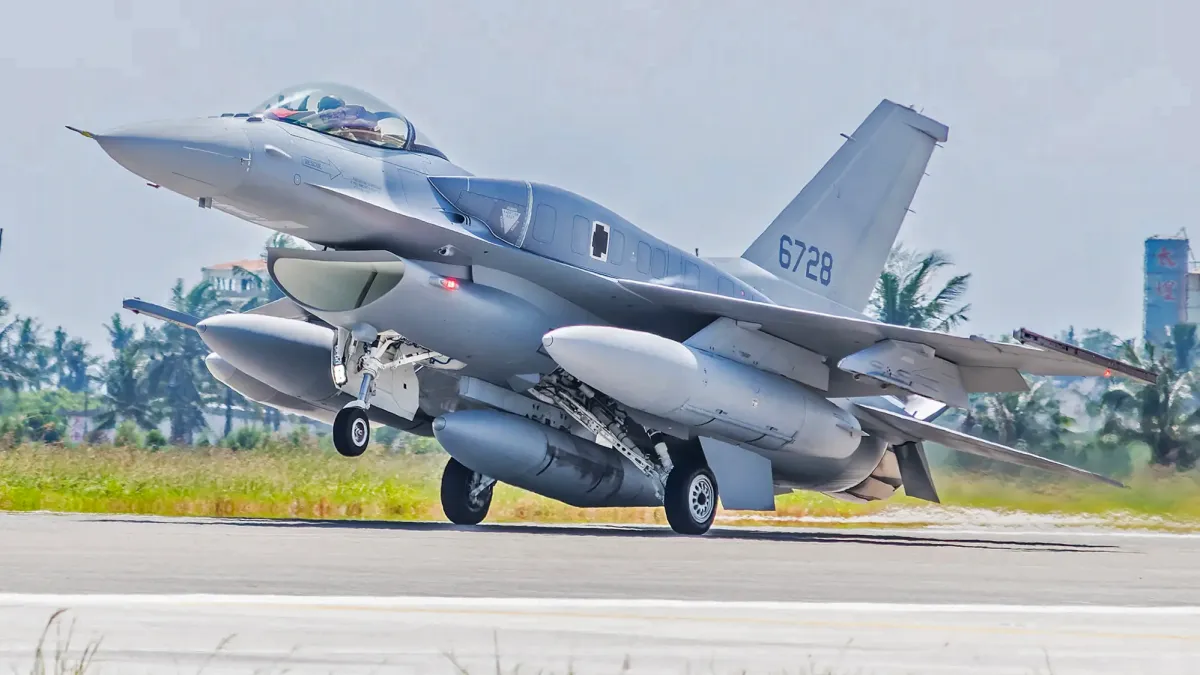
After a wait lasting nearly seven years, the Republic of China Air Force (ROCAF) has officially begun the next chapter of its modernization efforts. On October 2, 2026, the first two aircraft from a long-delayed order of 66 F-16C/D Block 70 fighters touched down in Taiwan. This arrival marks the first delivery of factory-new fighter jets to the island in a quarter-century, signaling a significant leap in the nation’s ability to defend its airspace.
What happened
The two single-seat F-16C aircraft, identified by serial numbers 6727 and 6728, arrived at Chihhang Air Base near Taitung at approximately noon. Their journey from the Lockheed Martin production facility in Greenville, South Carolina, was both lengthy and complicated. After departing the United States on August 17, the jets were grounded in Hawaii for over a month. While official reasons for the hold-up were not explicitly detailed, analysts suggested that a combination of inclement weather and aerial refueling tanker availability may have contributed to the delay.
Following the extended stay in Hawaii, the Vipers resumed their trans-Pacific transit on October 1, stopping briefly in Guam before completing the final leg to Taiwan. These two jets represent the vanguard of the “Peace Phoenix Soaring” project, an $8 billion procurement program intended to bolster Taiwan’s aging fighter fleet. Taiwanese Defense Minister Wellington Koo confirmed the arrival and noted that additional aircraft are expected to be delivered before the conclusion of the year.
Context
The path to this delivery has been fraught with logistical and technical hurdles. Originally, Taiwan expected to begin receiving the Block 70 jets much earlier, but the program was hit by a series of cascading setbacks. Factors such as global supply chain disruptions, production line adjustments, and the lingering effects of the COVID-19 pandemic all played a role in pushing back the schedule.
Furthermore, technical challenges regarding software integration and the development of specialized hardware also caused friction. A primary factor in the recent delays involved the AN/ALQ-254(V)1 “Viper Shield” electronic warfare suite. Developed by L3Harris, this advanced self-protection system was still moving through the production phase even as the airframes were nearing completion. Taiwan specifically opted for this system over the versions used by the U.S. Air Force, requiring a dedicated development and testing timeline that only recently reached the stage where the first units could be deployed.
Why it matters
The arrival of the Block 70 Vipers is a milestone for regional security. As military activity and incursions from mainland China continue to escalate, Taiwan’s need for advanced, multi-role platforms has never been more urgent. The Block 70 is widely considered the most advanced version of the F-16 ever built, featuring Northrop Grumman’s APG-83 AESA radar, enhanced avionics, and a structural life extended well beyond earlier models.
For the ROCAF, these 66 new aircraft provide more than just a numerical increase in airframes; they provide a qualitative edge in electronic warfare and situational awareness. By integrating the Viper Shield system and modern radar technology, Taiwan gains a more robust defense against sophisticated aerial threats. As the rest of the fleet is delivered over the coming years, these fighters will form the backbone of Taiwan’s deterrent strategy, ensuring that its air force remains capable of responding to the increasingly complex security environment in the Taiwan Strait.