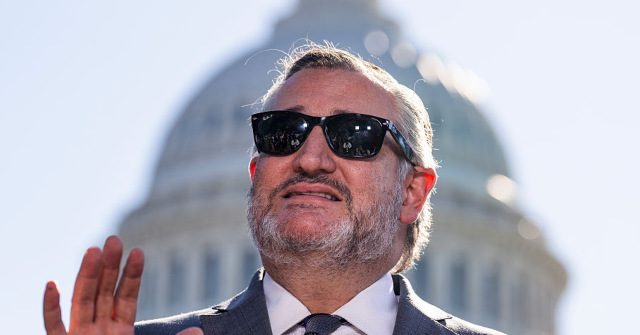
Senator Ted Cruz (R-TX) is championing a new legislative effort that critics argue could provide a shield for left-wing media personalities while creating a fresh avenue for “lawfare” against Donald Trump. The Senate Commerce Committee, led by Cruz, recently advanced the JAWBONE Act, a bill intended to limit the government’s ability to influence private media content. While framed as a protection of free speech, the legislation has sparked concerns among conservatives who see it as a move that could punish Republican officials for pushing back against biased reporting.
What happened
The JAWBONE Act was recently marked up by the Senate Commerce Committee and is now positioned for potential action on the Senate floor. The bill is a bipartisan effort co-sponsored by Senator Ron Wyden (D-OR). Its stated objective is to prohibit federal agencies, officers, or employees—including the President and Vice President—from “coercing” or attempting to coerce broadcasters regarding their content decisions.
Crucially, the legislation includes a provision that allows private plaintiffs to sue for monetary damages if they believe they have been the target of such coercion. This creates a legal mechanism where government officials could be held financially liable for their public rhetoric or social media posts if those communications are interpreted as a pressure tactic against a media outlet.
Context
The bill arrives against a backdrop of long-standing tension between Donald Trump and establishment media figures. For years, Trump has used his platform to criticize broadcasters like ABC’s Jimmy Kimmel and various news networks, occasionally suggesting that their broadcast licenses should be reviewed or that individuals should be terminated for what he describes as “fake news” or personal attacks.
Under current law, these statements are generally viewed as constitutionally protected speech by a public official. However, if the JAWBONE Act becomes law, those same comments could be categorized as illegal “coercion.” For instance, if Trump were to post on social media that a broadcaster should be fired for a specific segment—as he did following Jimmy Kimmel’s disparaging remarks about the former Second Lady—he could face significant legal jeopardy.
This is not the first time Senator Cruz has faced scrutiny for legislation involving the media. He previously supported the Journalism Competition and Preservation Act (JCPA), which critics argued favored large establishment media cartels at the expense of independent conservative outlets. Some political analysts suggest these moves may be part of a broader strategy to gain favor with mainstream media institutions ahead of a potential future presidential bid.
Why it matters
The primary concern regarding the JAWBONE Act is its potential to be weaponized by political opponents. By allowing for monetary damages and punitive measures, the bill could empower activist state attorneys general or private citizens to file ruinous lawsuits against Republican leaders. If a prominent conservative official pushes back against a defamatory news story, they could find themselves in court defending against claims of “coercion.”
Furthermore, the bill effectively shifts the burden of proof onto the defendant. In a legal setting, a Republican official would essentially be required to prove their innocence by demonstrating that their speech falls within the bill’s very narrow exceptions. This environment facilitates extensive and expensive “discovery” phases, where partisan litigants could gain access to private communications.
While there is a consensus among many conservatives that the government should not censor everyday citizens—as seen in controversies surrounding social media moderation during the Biden administration—critics of the JAWBONE Act argue this bill goes too far in the other direction. They contend it creates a protected class for establishment media while silencing the ability of elected officials to challenge what they perceive as unfair or inaccurate coverage.