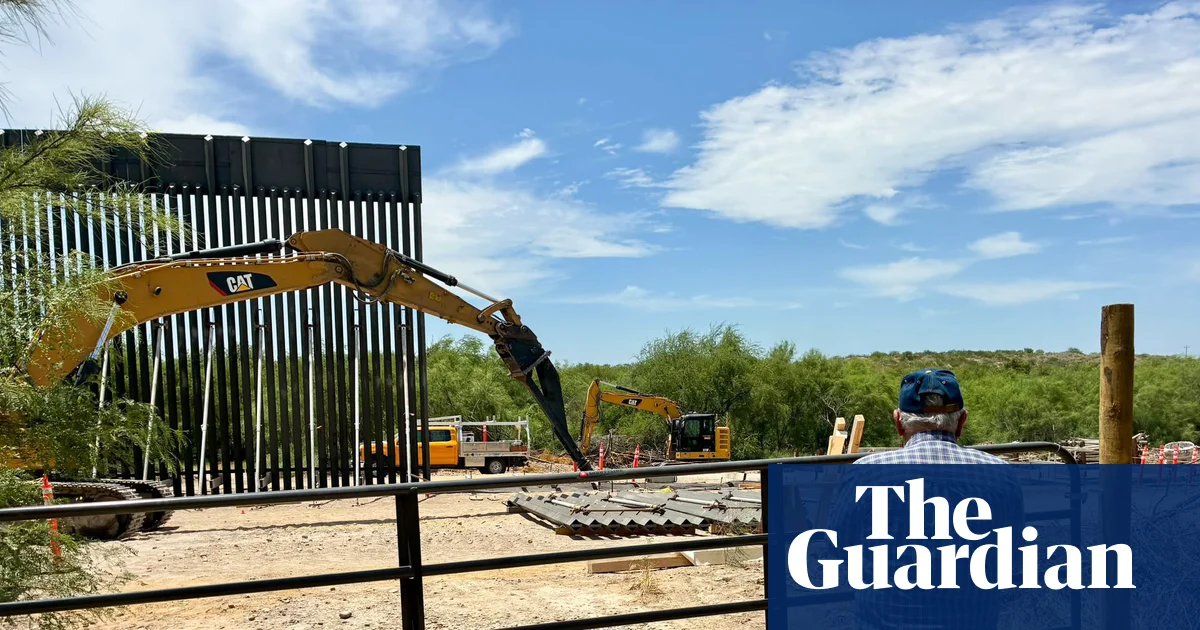
In the historic community of San Ygnacio, Texas, a group of citizens has successfully, if temporarily, halted the construction of a federal border wall. This town of roughly 400 people, situated directly along the Rio Grande, is drawing on its history of resistance to protect its private property and ecological heritage from federal encroachment. For residents like 90-year-old Joel Ruiz, the fight is deeply personal, as heavy machinery recently tore through the riverfront land he has tended for decades to install a steel barricade of 30-foot-high bars.
What happened
The conflict reached a boiling point this past summer when construction crews began clearing land without formal notice to the community. Residents discovered a “man camp” surfacing at the edge of town, and by June, contractors were actively gouging the earth where native mesquite and dense brush once grew. In response, a small but determined group of locals took direct action. They confronted equipment operators, blocked bulldozers, and in some cases, faced arrest to protect their land.
Beyond physical protests, the residents of San Ygnacio have engaged in a complex legal battle. They have unearthed land records dating back 75 years and filed lawsuits challenging the federal government’s authority to build on privately owned riverfront property. While the government claims a decades-old right to the land, the community has secured a verbal reprieve that has paused construction for now. However, the situation remains fragile, as the federal funding is still in place and no formal court order has permanently barred the crews from returning.
Context
San Ygnacio is a town defined by its heritage and its proximity to the water. Founded in 1830, its plaza remains lined with historic homes built from sandstone quarried from the very riverbanks currently under threat. Located in Zapata County, the town exists in an economically vulnerable region where the poverty rate is high and the median household income is approximately $39,000. Paradoxically, while the community fights the wall, the Border Patrol remains a primary regional employer.
The current construction push is part of a massive federal expansion funded by the One Big Beautiful Bill Act. To expedite the project, the Department of Homeland Security (DHS) invoked its power to waive 30 federal laws, including the Clean Water Act and the National Environmental Policy Act. By bypassing these regulations, the government avoided the standard environmental reviews that would typically be required for a project of this magnitude, leaving residents to feel their safety and property rights have been disregarded.
Why it matters
The implications of the border wall extend far beyond politics; for the people of San Ygnacio, the risks are existential. The Rio Grande serves as the town’s only source of drinking water, and the wall is being erected within its floodplain. Without the federal environmental reviews, the Laredo-based Rio Grande International Study Center (RGISC) conducted its own assessment, which warned that the wall could cause catastrophic flooding. Experts fear the structure will “straitjacket” the river, forcing floodwaters to rise higher and move faster toward residential areas.
Furthermore, the project represents a significant loss of natural and cultural beauty. Long-time residents like Elsa Hull, a former environmental investigator, have seen sacred spaces—where they once watched sunsets and local wildlife—destroyed by construction debris. As the legal battle continues, the residents of San Ygnacio remain vigilant, knowing that while they have won a temporary battle, the future of their riverfront remains uncertain.