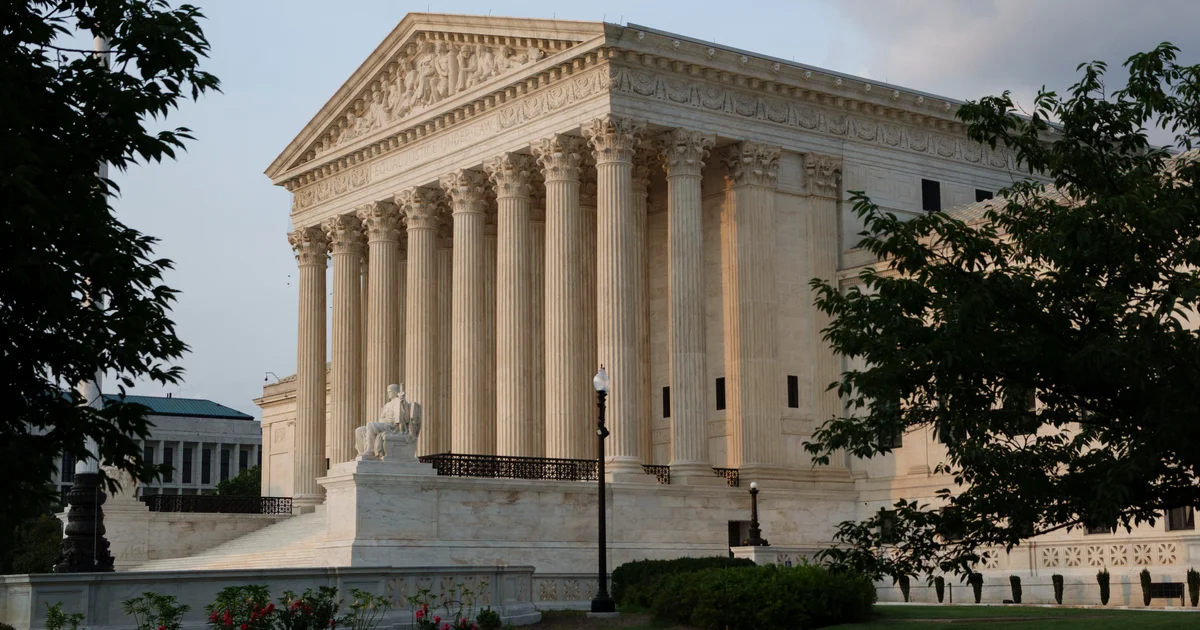
The Trump administration has officially escalated its legal battle over the rights of transgender individuals in federal custody, filing an emergency request with the Supreme Court on Monday. The administration is asking the nation’s highest court to lift a lower court’s injunction, which currently prevents the government from enforcing a policy that eliminates gender-affirming medical treatments and social accommodations for federal inmates. This move signals a significant push to implement restrictive healthcare policies within the Bureau of Prisons (BOP) as part of the administration’s broader executive agenda.
What happened
The Justice Department’s appeal to the Supreme Court follows a string of losses in lower courts. The conflict centers on a policy introduced by the Bureau of Prisons that seeks to terminate various forms of medical intervention for inmates diagnosed with gender dysphoria. This includes the suspension of hormone therapy and gender-reassignment surgeries, as well as the prohibition of social accommodations such as breast padding, wigs, and chest binders.
Last month, U.S. District Judge Royce Lamberth issued an order that blocked the administration from enforcing these rules. Judge Lamberth’s ruling required the government to continue providing necessary medical care to a class of transgender inmates who had challenged the policy. Following that decision, the U.S. Court of Appeals for the District of Columbia Circuit declined to restore the policy while the legal proceedings continued.
In the emergency filing to the Supreme Court, Solicitor General D. John Sauer argued that the district court had overstepped its authority. The administration contends that the Bureau of Prisons should have the autonomy to determine its own protocols based on “institutional security” needs. Sauer asserted that the lower court’s decision effectively nullifies the expert judgment of prison officials and prevents the executive branch from implementing its chosen policy framework.
Context
The legal dispute began shortly after President Trump began his second term and issued an executive order prohibiting the use of federal funds for transgender-related medical procedures within the federal prison system. In response to this directive, the Bureau of Prisons initially issued guidance that restricted clothing accommodations and federal funding for medical treatments.
However, in February, the BOP introduced a revised policy that it claimed was developed independently of the president’s executive order. While this new policy promised to maintain mental health services for inmates with gender dysphoria, it explicitly banned clinical interventions like surgeries and hormone treatments.
Judge Lamberth was skeptical of this “independent” claim. In his June decision to block the rules, he suggested the agency’s policy appeared to be “reverse engineered” specifically to satisfy the requirements of the executive order rather than being based on medical or administrative necessity. The judge’s injunction aimed to preserve the status quo for inmates already receiving care until the full merits of the lawsuit could be decided.
Why it matters
This case carries significant weight for both the limits of executive power and the constitutional rights of incarcerated individuals. At its core, the dispute highlights a fundamental disagreement over whether the government can unilaterally withdraw established medical care for a specific group of inmates.
From a legal standpoint, the administration is testing the “deference doctrine,” which suggests that courts should generally defer to the expertise of prison administrators regarding security and internal operations. By claiming that gender-affirming care poses a threat to institutional security, the Justice Department is asking the Supreme Court to prioritize agency discretion over judicial oversight of inmate welfare.
Conversely, advocates for the inmates argue that denying treatment for gender dysphoria—a recognized medical condition—constitutes a violation of the Eighth Amendment’s prohibition against cruel and unusual punishment. If the Supreme Court grants the administration’s request, it could set a precedent for how federal agencies implement ideologically driven policies that intersect with established medical standards. For now, the health and daily lives of hundreds of federal inmates remain in the balance as the justices consider whether to intervene.