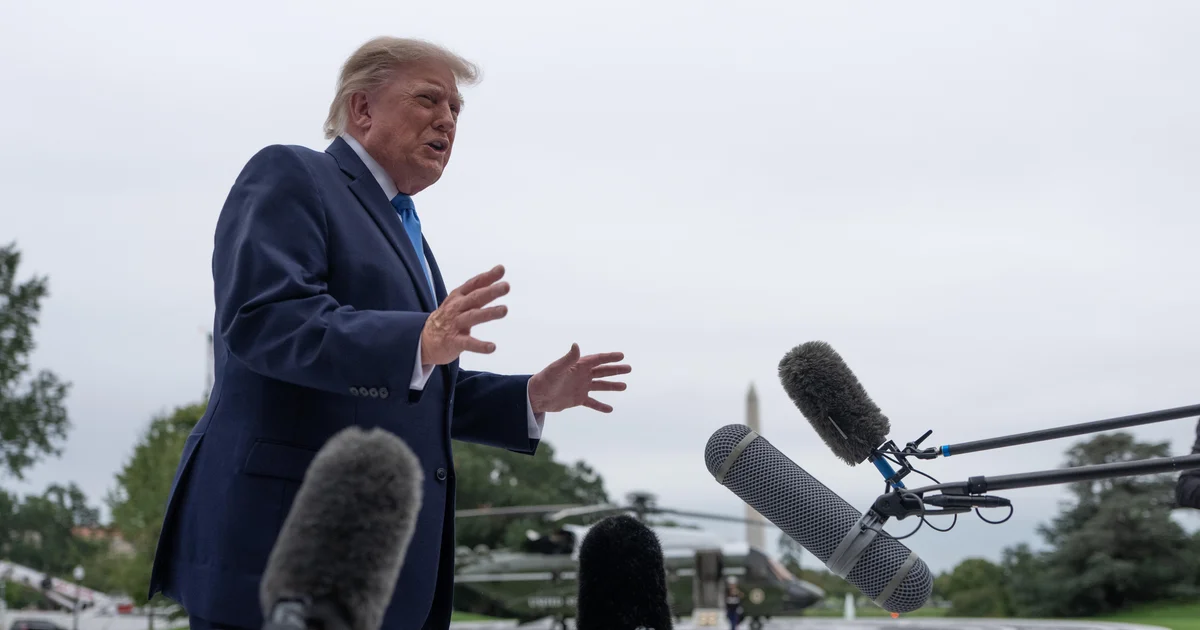
In a significant move to reshape the landscape of American technology, President Trump has officially announced the creation of the “Super Intelligence Force” (SIF). This new task force is designed to consolidate federal efforts and ensure the United States remains the global leader in advanced computing. The announcement follows a high-level summit with the nation’s most influential technology executives and marks a formal shift in how the government categorizes and manages artificial intelligence.
What happened
Following a weekend announcement on Truth Social, President Trump introduced the Super Intelligence Force as the primary body for coordinating the nation’s approach to high-level computing. The President notably directed all federal agencies to transition away from the term “artificial intelligence,” replacing it with “Super Intelligence.” This new entity will be responsible for a broad range of engagement, facilitating dialogue between the government and diverse stakeholders, including consumer advocates, religious groups, and industrial leaders.
The leadership of the SIF reflects a cross-disciplinary approach to governance. Jay Clayton, the Director of National Intelligence, has been appointed to lead the force, effectively serving as the nation’s “AI czar.” He will be joined by a leadership team that includes FTC Chairman Andrew Ferguson, Pentagon Chief Technology Officer Emil Michael, and OPM Director Scott Kupor. This leadership group is tasked with reporting directly to the President and White House Chief of Staff Susie Wiles to ensure that technological advancement remains a top executive priority.
Context
The formation of the SIF is the direct result of the “White House Accord on Super Intelligence,” a landmark meeting held last week. This summit brought together the heads of the country’s dominant tech firms, including representatives from OpenAI, Anthropic, Google, Meta, Nvidia, and Elon Musk’s SpaceXAI. During these discussions, industry leaders committed to a set of voluntary safety standards aimed at mitigating the risks associated with increasingly powerful models.
Under the terms of this accord, the participating companies agreed to a rigorous oversight framework consisting of four distinct layers of control. This includes internal safety evaluations, audits performed by independent third-party firms, and oversight from each company’s respective board of directors. Additionally, the firms have pledged to meet on a regular basis to refine best practices and establish shared safety benchmarks. President Trump characterized these commitments as “morally binding,” expressing confidence that the industry is capable of effective self-policing.
Why it matters
This initiative represents a pivotal moment in the intersection of government policy and technological innovation. By rebranding the sector as “Super Intelligence,” the administration is framing the technology not just as a tool, but as a critical pillar of national power and prestige. The decision to appoint high-ranking officials from the Pentagon and the FTC suggests that the SIF will treat advanced computing as both a national security priority and a major economic engine.
Furthermore, the administration’s reliance on voluntary standards and “self-policing” signals a specific regulatory philosophy. Rather than imposing rigid legislative hurdles that might slow down development, the White House is opting for a collaborative model with the private sector. This approach seeks to maintain a rapid pace of innovation to stay ahead of international competitors while theoretically maintaining safety through the “four layers of controls.” How these voluntary audits and “morally binding” agreements hold up under the pressure of intense commercial competition will be a major point of observation for policymakers and the public alike in the coming years.