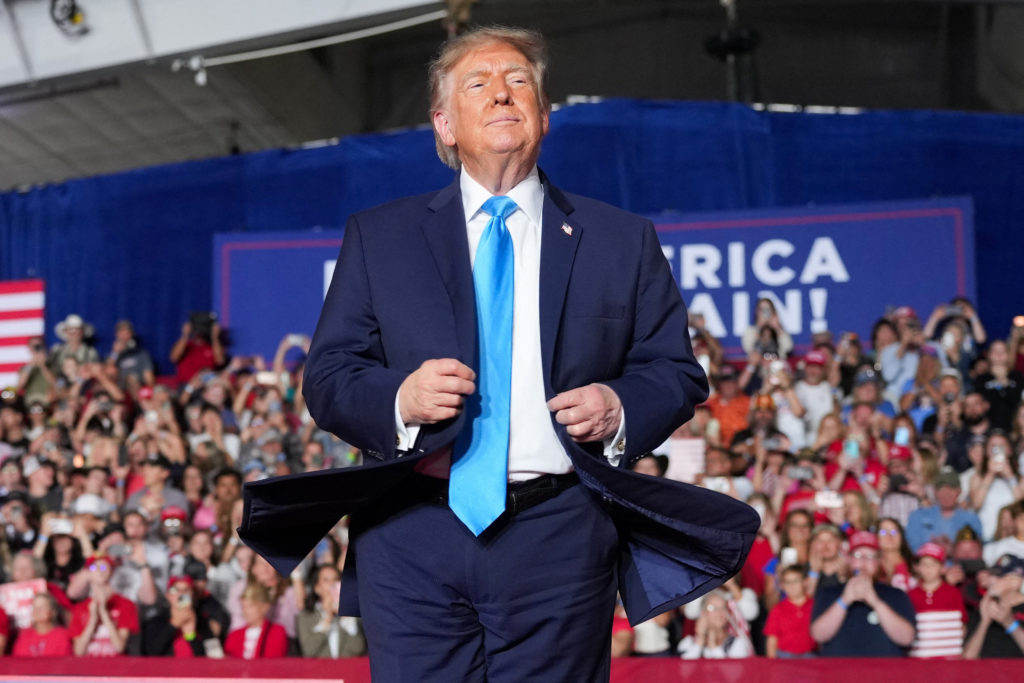
During a recent campaign stop in Nebraska, former President Donald Trump sparked immediate controversy with provocative remarks concerning national security and the threat posed by Iran. While addressing supporters on a range of economic and foreign policy issues, Trump specifically alluded to the possibility of Iranian strikes on American soil, naming major metropolitan areas in a manner that has since drawn sharp rebukes from political analysts and security experts.
What happened
At the Nebraska event, Trump was discussing his hardline stance on Tehran and the resulting impact on global energy markets. In a move that surprised many observers, he veered into a hypothetical scenario regarding Iran’s military capabilities. He suggested that Iran possessed the capability to strike U.S. cities, specifically mentioning Los Angeles and San Diego as potential targets.
The remarks were delivered in a casual tone, with the former president stating that Iran could “take out” these West Coast hubs. While the immediate crowd response included cheers, the comments quickly became a focal point of intense criticism as the footage circulated through news outlets. Critics pointed out the apparent indifference toward the safety of millions of American citizens living in those regions.
Context
The backdrop of these comments is the ongoing tension between the United States and the Iranian government. Trump has long advocated for “maximum pressure” campaigns involving heavy sanctions, which he argues are necessary to curb Tehran’s nuclear ambitions and regional influence. During the rally, he attempted to frame rising fuel costs as a necessary sacrifice for these foreign policy objectives, insisting that high gas prices were a temporary but worthwhile trade-off for his administration’s aggressive posture toward Iran.
However, the pivot from economic strategy to the hypothetical destruction of American cities represents a significant escalation in political rhetoric. Historically, U.S. leaders avoid flippant remarks regarding domestic casualties or the targeting of specific states, particularly those that lean toward the opposing political party. By singling out California cities, Trump’s comments were seen by some as a reflection of his ongoing political friction with “blue” states.
Why it matters
These remarks highlight a deepening polarization in American political discourse. By suggesting that certain cities might be expendable or using them as rhetorical props in a foreign policy debate, the former president risks undermining the concept of national unity in the face of external threats. From a security perspective, such language can be interpreted as a lack of resolve or a dangerous blurring of the lines between partisan grievances and national defense.
Critics argue that the safety of American citizens in Los Angeles or San Diego should never be used as a punchline or a hypothetical concession in an international standoff. As the election cycle continues, this incident serves as a reminder of how foreign policy discussions can quickly devolve into domestic controversy when the security of the homeland is treated with anything less than absolute seriousness. The reaction to these comments may further solidify the divide between those who view his rhetoric as refreshing plain-talk and those who see it as a disqualifying disregard for national stability.