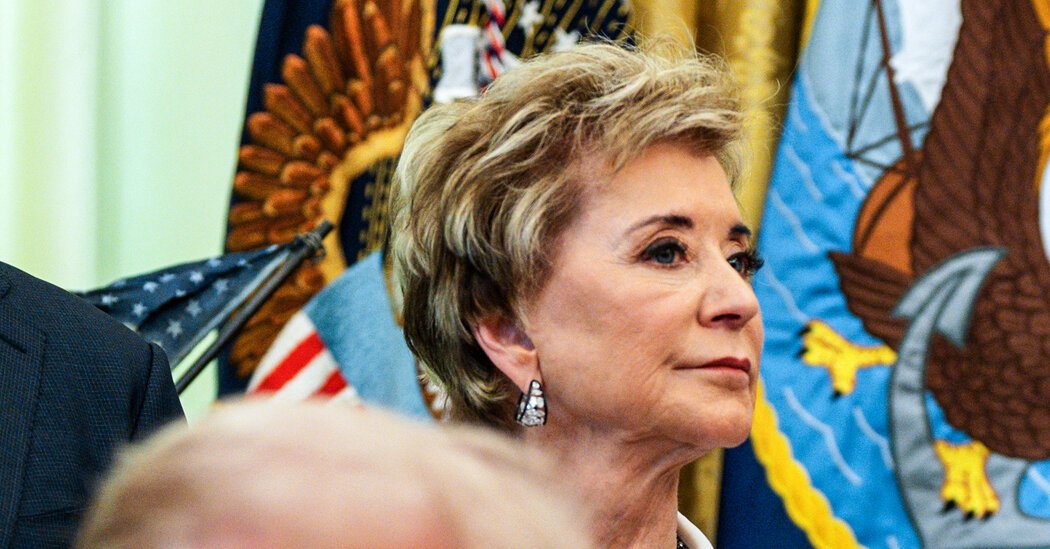
The Trump administration has renewed its efforts to influence the landscape of American higher education, pivoting from a rejected formal agreement to a more direct rhetorical appeal. On Monday, Education Secretary Linda McMahon issued an open letter to university leaders nationwide, calling for a reevaluation of campus policies that the administration argues have alienated the public. This latest move marks a strategic shift in how the White House interacts with academic institutions, focusing on dialogue and accountability rather than immediate financial ultimatums.
What happened
In her communication to university presidents and chancellors, Secretary McMahon requested that institutions respond to several key concerns regarding their internal governance and broader cultural impact. The letter highlights a perceived erosion of trust between the ivory tower and the American taxpayer, urging a return to principles the administration deems essential for national progress. This outreach differs significantly from previous tactics; it lacks the explicit “quid pro quo” elements found in earlier proposals, which attempted to link the distribution of federal research dollars to the adoption of specific administrative agendas. Instead, the letter serves as a formal invitation for universities to account for their current trajectories and suggest how they might better align with the administration’s vision for educational reform.
Context
The backdrop for this letter is a series of stalled negotiations between federal officials and the academic sector. Last year, the administration floated a “compact” designed to incentivize university cooperation through increased research funding. However, that proposal faced significant pushback from college administrators who viewed it as a coercive measure that threatened academic independence. By rejecting the compact, universities signaled that they were not willing to trade institutional autonomy for financial gain under those specific terms.
The current letter from Secretary McMahon represents a recalibrated approach. While it is less forceful than the compact, it maintains the administration’s critical stance on how universities are managed, shifting the pressure from the financial office to the public relations and policy departments. It demonstrates that while the administration may have failed to secure a formal agreement, it has not abandoned its goal of reshaping the higher education sector.
Why it matters
This development is significant because it highlights the ongoing tension between federal oversight and institutional autonomy. For decades, universities have operated with a high degree of independence, but the Trump administration’s focus on “eroded trust” suggests a belief that higher education has become too insulated from the values and concerns of the general public. By sending an open letter, the Department of Education is essentially putting university leaders on notice, signaling that their policies are under federal scrutiny even if direct financial penalties are not currently on the table.
Furthermore, this tactic may serve as a precursor to more robust legislative or regulatory actions. By establishing a paper trail of concerns and requests for response, the administration builds a case for future intervention if university leaders are seen as unresponsive. For the institutions themselves, the challenge lies in defending their traditional independence while addressing the valid critiques of their stakeholders. As the debate over the role of higher education in society intensifies, this letter serves as a reminder that the relationship between the government and the campus is undergoing a fundamental transformation.