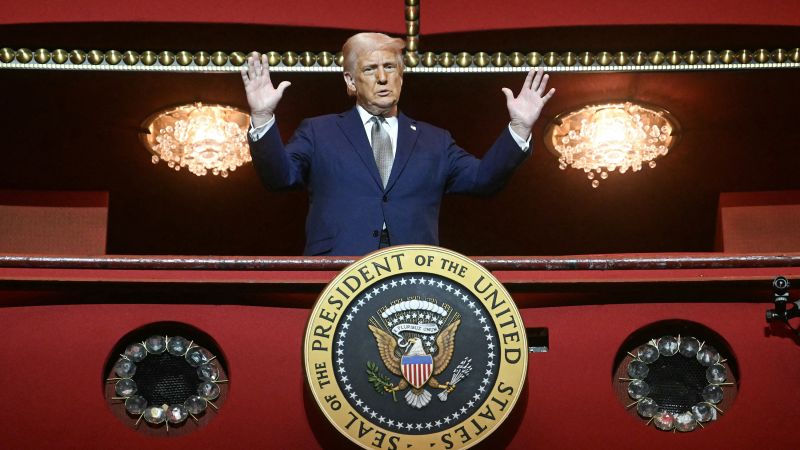
The Kennedy Center for the Performing Arts, long regarded as a crown jewel of American culture, is currently navigating an existential crisis that has left the institution physically and financially depleted. Nine months after Donald Trump’s name was first mounted on its famous marble exterior, the center faces a precarious future defined by legal disputes, crumbling infrastructure, and a mass exodus of the artistic talent and donor support that once sustained it.
What happened
Recent weeks have seen a dramatic escalation in the conflict between the Trump administration and those seeking to preserve the center’s original mission. Following a lawsuit filed by Representative Joyce Beatty, an ex-officio board member, a federal judge ordered the removal of Trump’s name from the building’s façade and blocked attempts to shut down the facility entirely. In response, the President has signaled a more aggressive stance, suggesting the building should be demolished. His administration recently filed court documents arguing the venue must close for two years to address “dangerously dilapidated” conditions.
The internal turmoil has also resulted in significant personnel cuts. More than a dozen employees, including the center’s primary spokesperson, were recently dismissed, further hollowing out a staff that was already operating at a minimum. Amidst this administrative chaos, the physical state of the building continues to decline, with reports of darkened halls and failing infrastructure. While a court mandate now requires a 30-day notice before any significant structural changes can occur, the President has been seen with materials suggesting a total demolition remains a possibility.
Context
The current state of the center follows a year of unprecedented presidential intervention. After shifting control of the institution’s operations and management to the executive branch, Trump replaced long-standing leadership norms with a more direct, partisan approach. While there was a brief moment of hope among some board members that the center might return to the stewardship of former chairman and philanthropist David Rubenstein, those expectations were quickly extinguished when Trump confirmed he would remain chairman.
The administration has frequently blamed previous leadership for the center’s dire financial situation. However, current and former officials, along with industry insiders, contend that the decline was accelerated by the President’s decision to rebrand a monument dedicated to John F. Kennedy. This move sparked a significant backlash from the arts community, leading to a wave of performance cancellations and a freeze in private fundraising.
Why it matters
The situation at the Kennedy Center represents more than just a localized management dispute; it signifies a fundamental breakdown in the relationship between the federal government and the national arts landscape. As a “national showcase” in the heart of Washington D.C., the center’s stability is vital to the country’s cultural health. The alienation of major donors and world-class performers suggests long-term damage that may persist regardless of whose name is eventually displayed on the building.
Industry leaders warn that the loss of prestige is becoming permanent. Without the return of major Broadway productions and high-level philanthropic backing, the center risks losing its status as a premier global stage. For many who have spent decades associated with the institution, the fear is that the political polarization of the venue has fundamentally altered its identity, leaving a legacy of division at a site intended to celebrate American creative achievement.