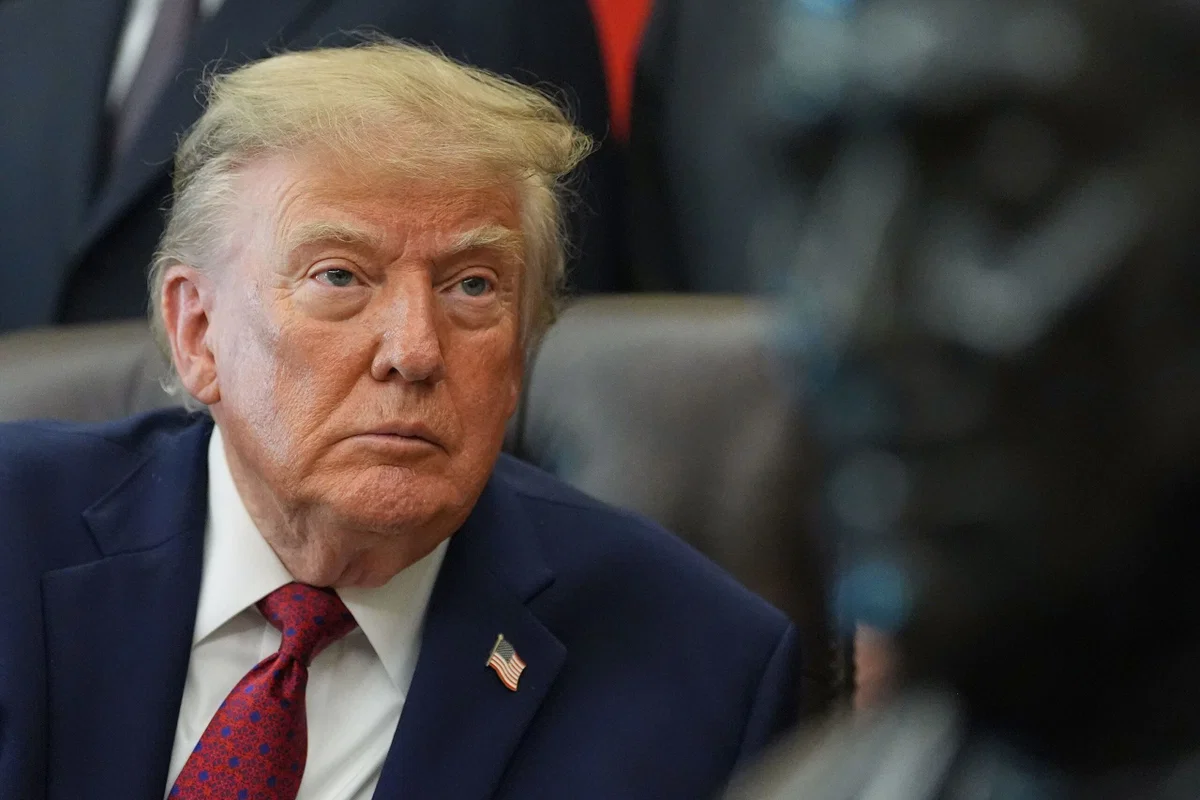
Recent polling data suggests that President Donald Trump is facing a historic level of public dissatisfaction regarding his economic policies. According to new data, a vast majority of the American electorate is critical of the administration’s approach to rising prices, creating a political vulnerability that surpasses nearly every major presidential crisis or scandal in modern history. With eight in ten Americans expressing disapproval, the issue of inflation has become a defining challenge for the current administration.
What happened
A new AP-NORC poll released this Thursday highlights a staggering gap between the administration and the public. The data shows that 82% of Americans disapprove of the president’s handling of cost-of-living issues, while only 17% approve. In the world of political polling, reaching a 70% consensus on any topic is considered rare; reaching 82% signals a nearly universal level of frustration across the country.
This figure is not merely a single-poll anomaly. Recent surveys have consistently shown that the public is deeply unsettled by the current economic climate. While the 2026 midterm elections are still on the horizon, these numbers represent a significant hurdle for the Republican party as they attempt to maintain their legislative momentum. The data indicates that the “pocketbook” concerns of average citizens are currently outweighing other national priorities.
Context
To understand the gravity of an 82% disapproval rating, one must look at the most difficult periods faced by previous U.S. presidents. Historically, even the most unpopular wars and the deepest political scandals failed to unite the public in disapproval to this extent.
For comparison, President George W. Bush saw his disapproval peak at 77% during the height of the 2008 financial crisis. President Jimmy Carter, who was famously plagued by “stagflation,” reached a 74% disapproval rating on the economy in 1980. Even the most controversial military engagements in American history—the Vietnam War and the Iraq War—resulted in disapproval ratings that stayed in the 60% to 70% range.
Even when compared to major scandals, the current dissatisfaction over inflation stands out. During the peak of the Watergate investigation, Richard Nixon’s disapproval on domestic issues reached approximately 71%. Similarly, Ronald Reagan’s lowest point during the Iran-Contra affair saw disapproval hit 69%. The fact that Trump’s numbers on inflation have climbed higher than these historical benchmarks suggests that the cost of daily life is a more potent political force than even the most significant constitutional crises or botched foreign interventions.
Why it matters
The political implications of these numbers are profound. When 80% of the country agrees on a negative assessment of a president’s core policy, it creates a “historic liability” for the incumbent party. For President Trump, this economic dissatisfaction appears more damaging to his standing than the fallout from the January 6 Capitol attack or his controversial handling of foreign conflicts, both of which also saw high, but lower, disapproval rates.
Republicans in Congress appear to be sensing the shift in public mood. The urgency to pass affordability-focused legislation has increased as the party looks toward the upcoming election cycle. If the administration cannot find a way to shift the narrative or provide tangible relief for consumers, the current dissatisfaction could translate into significant losses at the ballot box. In a polarized era where voters rarely agree, the unified frustration over inflation represents a rare and dangerous consensus for the White House.