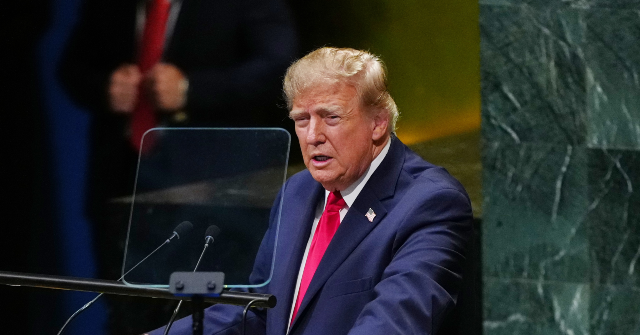
Speaking before the United Nations General Assembly in New York, President Donald Trump presented a stark ultimatum to the leadership in Tehran, framing the future of the Islamic Republic as a binary choice between total destruction and unprecedented prosperity. As Arab mediators work behind the scenes to facilitate a diplomatic breakthrough, the U.S. administration is simultaneously ramping up pressure, calling on the international community to sever economic ties with the Iranian regime until it abandons its nuclear ambitions and regional aggression.
What happened
During his address to world leaders on Tuesday, President Trump highlighted what he described as a “big decision” regarding the next phase of American policy toward Iran. The President contrasted two vastly different outcomes for the nation. On one hand, he held out the prospect of a negotiated settlement that would provide a path for Iran to modernize and potentially become a leading global power. On the other, he warned of a swift and decisive military response aimed at the “annihilation” of the state to ensure it never gains the capacity to threaten other countries again.
Beyond the military rhetoric, Trump issued a call for “complete economic isolation” of the Islamic Republic. He urged other nations to join the United States in a unified front, applying maximum financial pressure until Tehran agrees to cease its support for terror, halts its interference with commercial shipping lanes, and permanently relinquishes its nuclear program.
Context
This high-stakes rhetoric comes amid a flurry of back-channel diplomacy. Several Arab nations, including Qatar, have emerged as pivotal intermediaries attempting to bridge the gap between Washington and Tehran during the General Assembly. Qatari Prime Minister Sheikh Mohammed bin Abdulrahman Al-Thani recently met with Iranian Foreign Minister Abbas Araghchi, signaling a renewed effort to open a reliable diplomatic channel.
The Iranian delegation has reportedly presented a proposal through these intermediaries, suggesting they could reopen the Strait of Hormuz to Gulf shipping within seven days if the United States lifts its maritime blockade and eases military pressure. While Secretary of State Marco Rubio confirmed that Washington remains open to engagement, he stressed that no formal meetings have been scheduled and that the administration’s primary objective remains the total prevention of an Iranian nuclear weapon.
Trump also addressed the timing of these developments in relation to domestic politics. While suggesting that Iranian leaders might be waiting for the results of the U.S. midterm elections before committing to a path, the President asserted that the outcome of those elections would not alter his administration’s firm stance on nuclear non-proliferation.
Why it matters
The current standoff carries immense implications for global security and the international energy market. The Strait of Hormuz is a critical artery for the world’s oil supply, and any agreement involving its security would have an immediate impact on global economic stability.
Furthermore, the President’s “all-or-nothing” approach forces the international community to choose between supporting the U.S. strategy of isolation or continuing to engage with Tehran. The success of the current mediation efforts by Arab neighbors will likely determine whether this “big decision” leads to a landmark diplomatic resolution or a significant military escalation in the Middle East. With Iran signaling a “golden opportunity” for diplomacy and the U.S. maintaining a posture of extreme pressure, the coming weeks will be a decisive period for regional peace.