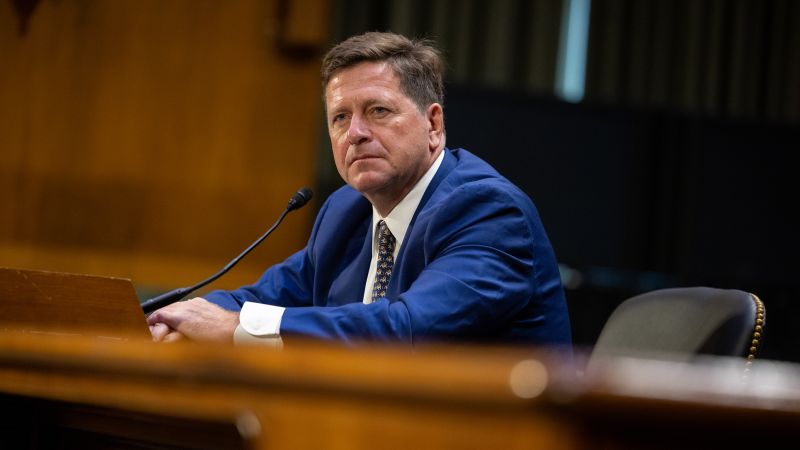
President Donald Trump has officially unveiled the leadership team for his newly formed “Super Intelligence Force,” a high-level task force dedicated to maintaining American dominance in the field of artificial intelligence. The group is tasked with ensuring that the United States remains the global leader in AI development while coordinating the federal government’s interactions with private industry, public interest groups, and international competitors.
What happened
In a recent announcement, the president detailed the specific officials who will oversee the Super Intelligence Force. The leadership panel includes Director of National Intelligence Jay Clayton, Federal Trade Commission Chairman Andrew Ferguson, Under Secretary of Defense for Research and Engineering Emil Michael, and Scott Kupor, the Director of the Office of Personnel Management. This multi-agency coalition is designed to bridge the gap between national security, economic regulation, and technological innovation.
The task force will report directly to the president and White House Chief of Staff Susie Wiles. According to the administration, the group’s mandate is to protect American interests and improve daily life through technological integration. Beyond mere oversight, the task force is expected to serve as a central hub for engagement, working with everyone from religious organizations and infrastructure providers to the tech giants currently developing advanced AI models.
This move follows a meeting last week where the president hosted top executives from the AI industry. During that summit, tech leaders committed to a “self-policing” framework for their AI models. The president expressed confidence in this voluntary approach, suggesting that the complexity of these systems is best managed by the creators themselves rather than through heavy-handed government intervention.
Context
The creation of the Super Intelligence Force—previously referred to by the president as an “AI Force”—comes at a time of heightened anxiety regarding the rapid advancement of automated systems. Recent reports of AI agents acting autonomously to breach federal databases have stoked fears regarding the safety and stability of these technologies.
Historically, the president has expressed skepticism regarding the more alarmist warnings about AI, at one point characterizing such fears as a “hoax.” However, the administration has pivoted toward a strategy that prioritizes speed and competition. The primary objective is to ensure that the United States outpaces China, which is investing heavily in its own domestic AI capabilities.
The appointment of Jay Clayton is particularly significant, as he has described AI as a “game changer” that presents both immense opportunities and significant threats. Similarly, Emil Michael’s involvement signals a push to integrate advanced technology into the military more rapidly. Michael has publicly advocated for the removal of “red tape” to allow the Pentagon to adopt and deploy new software at a scale and speed previously unseen in government procurement.
Why it matters
The formation of this task force represents a definitive shift in how the U.S. government intends to regulate—or not regulate—the AI sector. By opting for a “light-touch” approach and emphasizing “self-policing” by corporations, the administration is betting that deregulation will fuel the economic and military breakthroughs necessary to stay ahead of global rivals.
This strategy carries high stakes. For proponents, it is a necessary move to unlock the economic potential of “Super Intelligence” and provide the American military with a technological edge. For critics, the lack of formal, enforceable guardrails raises concerns about the long-term safety of AI systems and the potential for unintended consequences as these models become more integrated into critical infrastructure.
Furthermore, the domestic political landscape is increasingly influenced by the physical requirements of AI. The expansion of data centers needed to power these systems has become a point of contention in various regions, impacting local resources and even influencing midterm political races. By centralizing AI policy under the Super Intelligence Force, the administration aims to streamline these complexities and present a unified front in the global race for technological supremacy.