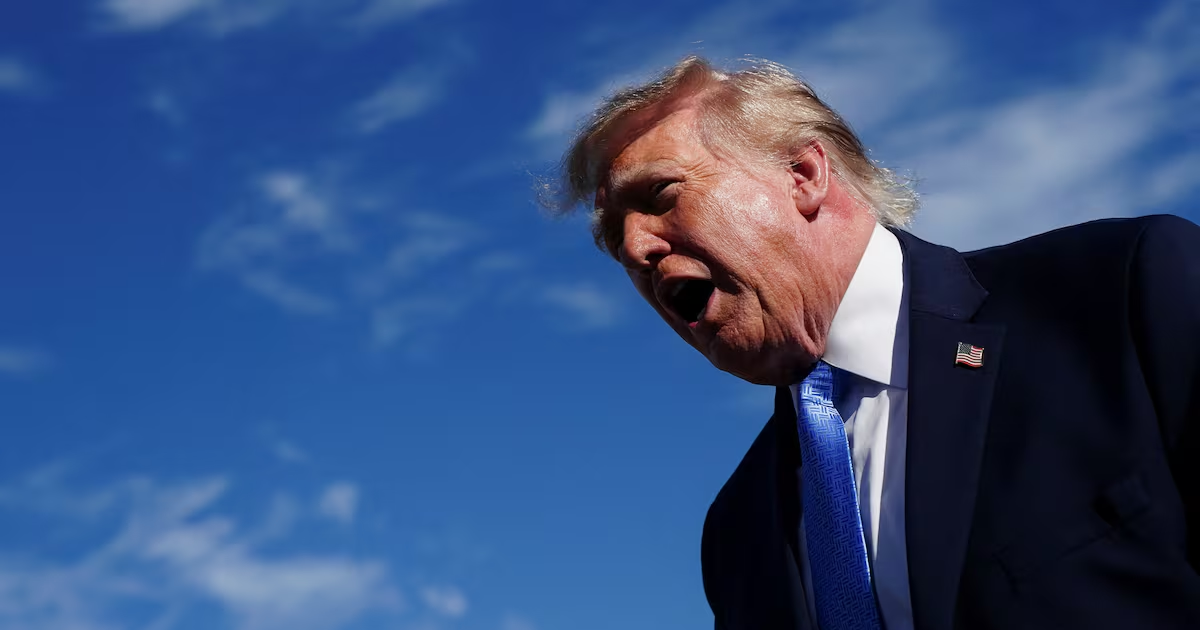
Donald Trump has voiced sharp criticism toward the Supreme Court following a recent decision that blocked a proposed Republican-led redistricting plan in Missouri. In a series of statements posted to Truth Social on Sunday, the 80-year-old president targeted the high court—including justices he originally appointed—after they declined to allow a new electoral map to take effect ahead of the upcoming midterm elections. The ruling marks the third time the nation’s highest court has sided against the state’s efforts to redraw its congressional boundaries in a manner favoring the GOP.
What happened
The controversy centers on a Sunday morning outburst where Trump lamented the court’s refusal to grant Missouri what he termed an “Election Victory.” The president expressed frustration that the Supreme Court has repeatedly overruled lower-court judges who had initially supported the Republican-backed redistricting efforts. This latest blow came in the form of an unsigned ruling from the bench, which featured no public dissents, signaling a unified front among the justices.
The court’s rationale for the rejection was primarily logistical. According to the decision, the election cycle is already too far advanced to implement a new map. Officials noted that ballots based on the existing 2022 boundaries have already been printed and distributed to voters. Furthermore, the court highlighted that absentee, military, and overseas voting are already underway, making a last-minute change to the districts nearly impossible to execute without compromising the integrity of the process.
Context
The legislative battle in Missouri is part of a broader national strategy directed by the president to reshape electoral boundaries in favor of Republican candidates. The contested Missouri map was designed specifically to provide the GOP with a significant advantage, potentially allowing the party to flip a seat currently held by Democrats. A key feature of the proposal involved dividing Kansas City into several different districts, a move intended to unseat long-term Democratic Representative Emanuel Cleaver.
This redistricting initiative began in Texas and has since been mirrored by Republican-controlled legislatures in states such as North Carolina, Florida, Ohio, and Tennessee. While Trump celebrated a previous Supreme Court intervention that blocked a Democratic-drawn map in Virginia, he has found far less success with his own party’s efforts in Missouri. Even Justice Brett Kavanaugh, a Trump appointee, had previously joined in blocking the Missouri map before the full bench issued its recent unanimous rejection.
Why it matters
The Supreme Court’s refusal to intervene has significant implications for the GOP’s hopes of maintaining or expanding its influence in the House of Representatives. With the midterms approaching, the Republican party is facing a difficult political environment. The president’s approval ratings have seen a notable decline, driven largely by public dissatisfaction regarding the rising cost of living and the ongoing, controversial war in Iran.
As the GOP attempts to ward off a projected “blue wave,” the inability to secure more favorable maps in key states like Missouri represents a major strategic setback. For Trump, the defeat is also personal; his public lashing out at his own appointees suggests a growing friction between the executive branch and a judiciary that he expected to be more aligned with his political goals. For now, Missouri will proceed with its 2022 map, which currently splits the state into six Republican-held seats and two Democratic-held seats, leaving the political balance of the state unchanged as voters head to the polls.