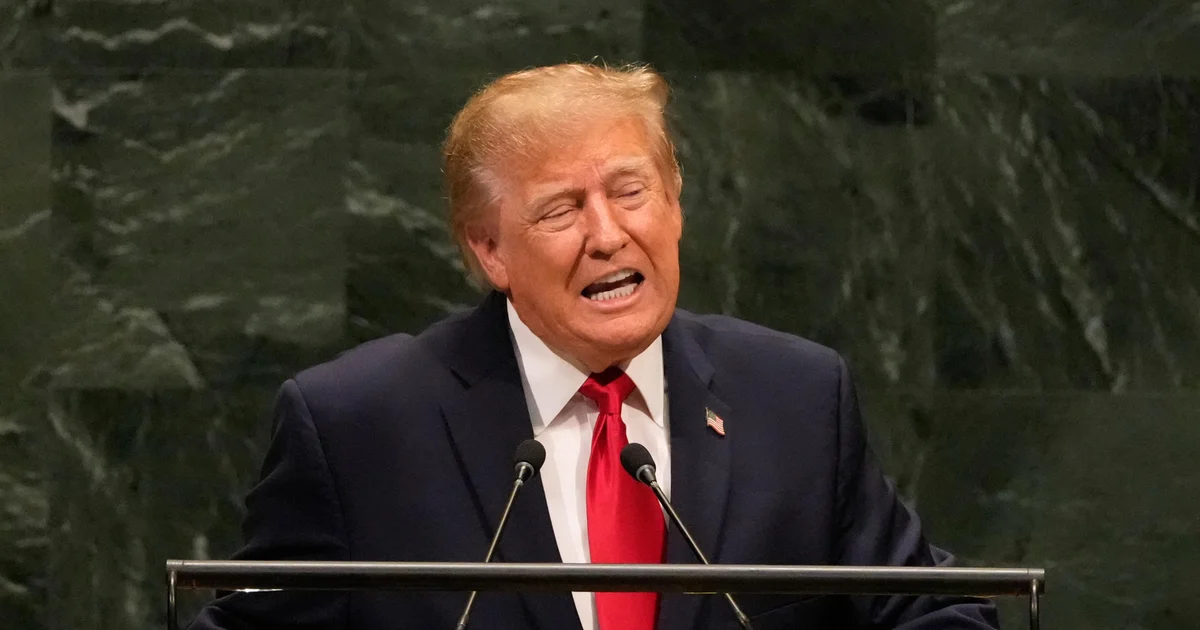
President Donald Trump took to the global stage at the United Nations General Assembly on Tuesday, delivering a forceful defense of his administration’s recent military interventions and diplomatic strategies. Speaking as the conflict with Iran enters its seventh month, the President framed his “America First” approach as the only effective way to resolve long-standing global disputes that have stumped his predecessors. Throughout the address, he balanced aggressive military rhetoric with the suggestion that major diplomatic breakthroughs are on the horizon.
What happened
During his 35-minute address, President Trump focused heavily on the war with Iran, which he stated was initiated to prevent the nation from obtaining nuclear weapons. He presented a stark choice for the leadership in Tehran: face total destruction or negotiate a transformative peace deal. Despite the current hostilities, Trump expressed optimism that a resolution would be reached shortly after the upcoming U.S. midterm elections, suggesting that Iranian officials are waiting to see the political landscape in Washington before committing to terms.
Beyond the Middle East, the President highlighted a significant shift in U.S. policy toward the Western Hemisphere. He confirmed that the United States has secured access to billions of barrels of oil following an intervention in Venezuela, invoking the philosophy that the “spoils” of such actions naturally belong to the victor. Additionally, the President announced the signing of a new security pact with Denmark and Greenland. This agreement allows the U.S. military to establish new “defense areas” in Greenland, which Trump described as the essential northern frontier of the continent.
Context
The President’s remarks come at a time of significant strain for the U.S. military and its traditional alliances. While Trump dismissed concerns regarding weapon supplies, claiming the nation possesses an abundance of munitions, a recent report from the Pentagon’s inspector general suggested otherwise. That report pointed to “strategic inventory shortfalls” caused by the sustained intensity of the seven-month-long Iranian campaign.
This address also follows a year of friction with long-term allies. Tensions have flared with Canada and European nations over trade, defense spending, and Trump’s demands for NATO assistance in the war against Iran. Furthermore, while the administration has seen success in securing resources in Venezuela, other major conflicts remain unresolved. Efforts to finalize a peace agreement between Israel and Hamas in Gaza are ongoing, and the administration continues to seek an end to the Russian invasion of Ukraine.
Why it matters
The speech signals a hardening of the “peace through strength” doctrine that has defined Trump’s second term. By explicitly linking military success to the procurement of natural resources—as seen in Venezuela—the administration is charting a path that diverges significantly from traditional post-Cold War foreign policy. This “victor’s spoils” mentality may further complicate relations with international bodies and allies who prioritize sovereign resource control.
Moreover, the focus on the 2026 midterms as a catalyst for diplomacy suggests that domestic politics continue to be deeply intertwined with global security. As the U.S. expands its military footprint in the Arctic through the Greenland deal and remains embroiled in the Middle East, the administration’s ability to manage its munitions stockpiles and alliance commitments will be under intense scrutiny. The coming months will determine if the President’s prediction of a “deal” with Iran is a realistic diplomatic goal or a rhetorical strategy to manage the pressures of an ongoing war.